



The Unseen Danger of the Moon
The lunar surface is an incredibly hostile environment. Beyond the extreme temperature swings from blistering daylight to frigid night, the biggest threat to long-term human settlement is radiation. Unlike Earth, which is protected by a magnetic field
and a thick atmosphere, the Moon is constantly bombarded by galactic cosmic rays (GCR) and unpredictable solar particle events (SPEs). This radiation can cause severe health problems for astronauts, making any surface habitat a risky proposition. While a short visit is manageable, a permanent base requires a more robust solution. Building thick radiation shields on the surface would be incredibly expensive and complex, requiring vast amounts of material to be launched from Earth or processed on site.
Nature's Perfect Shield
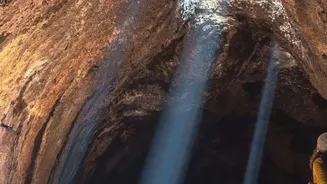
The most promising solution may have been waiting for billions of years: lunar lava tubes. These are vast, underground tunnels and caverns formed by ancient volcanic activity. When lava flowed across the Moon, the outer layers cooled and solidified while the molten rock inside continued to flow, eventually draining away to leave a hollow tube. Scientists believe these structures could be enormous, with some potentially over a kilometer wide. The thick ceiling of solid rock would provide a natural and highly effective shield, drastically reducing radiation exposure. Studies suggest that the radiation levels inside a lava tube could be reduced to levels comparable to those experienced on Earth, making them ideal locations for safe, long-term habitats.
Enter the Robotic Cave Explorers
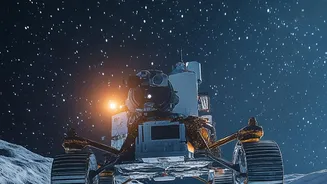
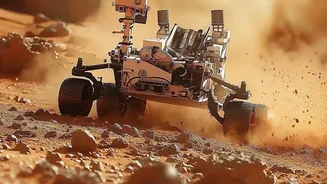
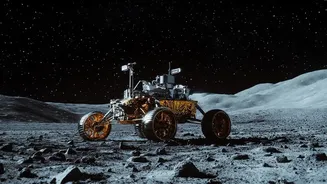
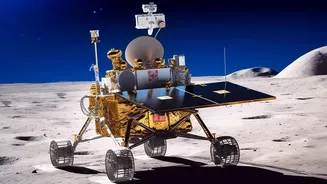
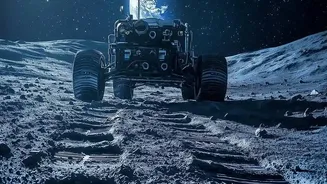
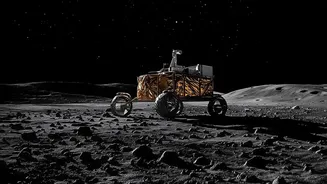
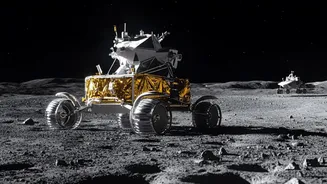
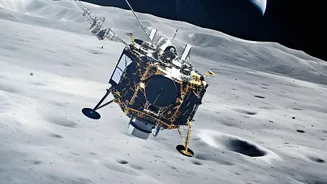
Before we can build a city in a cave, we have to map it. This is where a new generation of robotic rovers comes in. Sending humans into these unknown, potentially unstable environments is too risky. Instead, space agencies and private companies are developing specialized robots to be the first explorers. These aren't your typical surface rovers. They must be able to navigate dark, uneven, and unpredictable terrain without a direct line of sight to operators on Earth. Concepts range from wheeled rovers to tracked vehicles and even laser-powered drones designed to fly into deep pits, or 'skylights,' that serve as gateways to the tubes below. A recent NASA-funded project, the Lunar Underground eXplorer (LUX), proposes a drone tethered to a surface rover, receiving power via a laser through a fiber-optic cable.
From Data to Dwellings
The primary mission of these rovers is reconnaissance. They will be equipped with a suite of instruments to create detailed 3D maps of the caverns, test the structural integrity of the walls and ceiling, and, most importantly, measure the ambient radiation levels. They will also analyze the composition of the rock, search for water ice deposits, and assess the stability of the internal temperature, which remains constant in the tubes, unlike the volatile surface. This data is crucial for habitat designers. Knowing the size, shape, and safety of a lava tube allows engineers to create blueprints for habitats that can be built inside. These plans often involve deploying inflatable modules or using 3D-printing technologies with local lunar regolith to construct internal structures, turning a natural cave into a livable, human-friendly environment.