



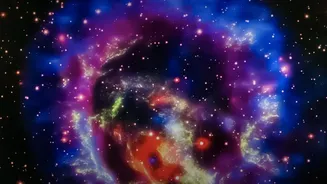
A Glimpse into Our Sun’s Future
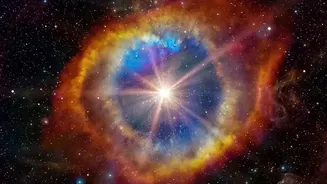
Located about 650 light-years away in the constellation Aquarius, the Helix Nebula is what astronomers call a planetary nebula. The name is a historical misnomer; it has nothing to do with planets. Instead, it’s the final, beautiful act of a star similar
to our own sun. After exhausting the hydrogen fuel in its core, the star shed its outer layers of gas and dust. This material is now expanding into space, illuminated by the intense ultraviolet radiation from the star’s hot, dense core, known as a white dwarf. For astronomers, the Helix Nebula isn’t just a beautiful object; it’s one of the closest examples of this process, offering a preview of the fate that awaits our own solar system in about five billion years.
What Webb's Infrared Vision Reveals
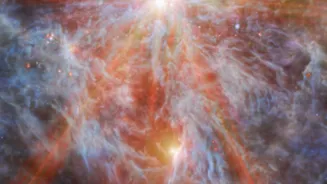
Previous images from telescopes like Hubble captured the ethereal glow of the Helix Nebula, but Webb’s powerful near-infrared camera, NIRCam, cuts through the haze to reveal the underlying structure in stunning detail. The new image highlights the violent interaction between the star's past and present. Blistering winds of hot gas, moving at high speeds from the central white dwarf, are crashing into the cooler, slower-moving shells of material that the star ejected earlier in its life. This collision is what sculpts the space around the star, creating intricate textures and shaping the entire nebula. Webb’s view shows a stark transition from the hottest gas near the star to the coolest material farther out, providing a clear map of the nebula's temperature and chemistry.
A Storm of Cometary Knots
One of the most fascinating features brought into sharp focus by Webb are thousands of so-called “cometary knots.” These are dense clumps of gas and dust, each with a mass similar to Earth's but spanning a size several times larger than Pluto's orbit. While previously observed, their origins are still not fully understood. Webb’s image shows these knots in unprecedented detail, revealing them as pillars with long, streaming tails that point away from the central star. They are essentially giant cosmic raindrops forming within the expanding cloud of gas, surviving the intense radiation from the white dwarf. These knots demonstrate how even in the chaotic environment of a dying star, dense pockets of matter can persist, containing the raw materials for future cosmic construction.
The Great Cosmic Recycling Program
Ultimately, the image is more than just a snapshot of destruction; it’s a portrait of creation. The elements forged inside the dying star—like carbon and oxygen—are being returned to the cosmos. This ejected material seeds the interstellar medium, the vast expanse between stars, with the building blocks for the next generation of stars and planets. Webb’s data allows scientists to see this recycling process in action, observing how the hot gas from the star interacts with its surroundings and begins to cool, eventually forming molecular hydrogen and dust. In a very real sense, the death of this star is providing the ingredients necessary for new life to begin elsewhere in the galaxy. The image shows not just an end, but a vital link in the continuous cycle of stellar life and death that made our own existence possible.