
Meet the Microscopic Survivors
A study led by NASA scientists has revealed that certain microbes commonly found with humans could temporarily withstand the brutal conditions on the Moon. The research, published in Science Advances, did not involve sending microbes to the Moon but rather
used sophisticated computer simulations based on data from NASA's Lunar Reconnaissance Orbiter. The models focused on the Moon's South Pole, a region of intense interest for future Artemis missions. The study examined five microorganisms often found in spacecraft environments. These included two types of fungi, Aspergillus niger (a common black mould) and Fusarium, and three types of bacteria: Bacillus subtilis, Staphylococcus aureus, and Deinococcus radiodurans. The results showed that the fungal species were generally more resilient than the bacteria, with Aspergillus niger emerging as the toughest of the group.
Simulating the Moon on Earth
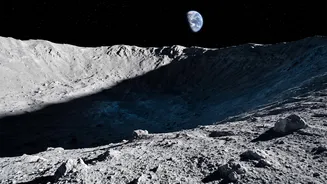
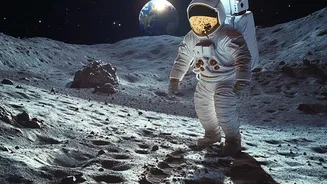
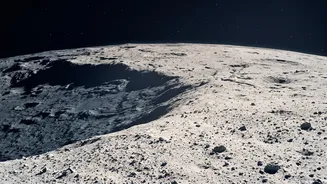
The lunar surface is a hostile place, battered by extreme temperatures, intense ultraviolet (UV) radiation, and a near-perfect vacuum. Daytime temperatures can soar to around 127 degrees Celsius, while plunging to deep freezes in the dark. To test microbial resilience, researchers modeled conditions at three potential Artemis landing sites near the South Pole: Nobile Rim, Connecting Ridge, and de Gerlache Rim. The key to survival, the models showed, lies in the shadows. Due to the Moon's minimal tilt, the sun hangs low on the polar horizon, creating permanently shadowed craters that are shielded from direct solar radiation and maintain ultra-cold, stable temperatures. These protected niches, some as small as a bootprint or as large as a crater floor, could act as temporary refuges for Earthly microbes. The study found that while no microbes could grow or reproduce, some could enter a dormant state, with the potential to survive for weeks or even months in these shadowed zones.
The Toughest Organisms
The microbes chosen for the study are not necessarily considered 'extremophiles'—organisms that thrive in harsh environments—which makes their potential durability surprising. Aspergillus niger, for instance, is a common mould found in bathrooms and ventilation systems on Earth, yet it has also been found living inside the International Space Station and has even survived on its exterior. This fungus showed a remarkable resistance to UV radiation in the lunar simulations, able to survive even in areas with some limited sunlight exposure. Another candidate, Deinococcus radiodurans, has been nicknamed "Conan the Bacterium" for its incredible ability to withstand massive doses of radiation—thousands of times more than would be lethal to a human. Its resilience is so great that some scientists believe it could survive for millions of years if buried beneath the surface of Mars. This inherent toughness in common microbes highlights how easily they can hitch a ride and persist in unexpected places.
A Challenge for Future Missions
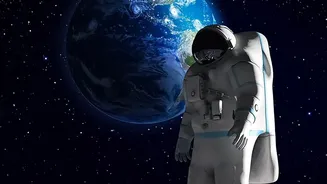
These findings have significant implications for the future of space exploration, particularly for NASA's Artemis program, which aims to establish a long-term human presence on the Moon. Humans are natural carriers of microbes, shedding millions of bacteria from their skin. It is impossible to travel to space without bringing these microscopic companions along. The risk is forward contamination: the unintentional transfer of Earth life to another celestial body. If terrestrial microbes survive on the Moon, they could compromise scientific experiments designed to study the Moon's pristine chemistry or search for signs of ancient, native organic material. Scientists need to establish a clear baseline of the lunar environment before it's altered by human presence. This knowledge is crucial not just for lunar science, but as a practice run for even more sensitive missions, like the search for life on Mars.
The Double-Edged Sword of Resilience
The study underscores the importance of what is known as 'planetary protection'—the practice of preventing contamination between Earth and other solar system bodies. The potential for microbes to survive on the Moon means that procedures for sterilizing equipment and managing astronaut activity will need to be carefully considered. However, the discovery is not just a warning. It is also a source of cautious optimism. The fact that certain microbes can endure such extreme conditions hints at the sheer tenacity of life. As lead scientist Prabal Saxena noted, this challenge also presents an opportunity to use the Moon as a natural laboratory to test the absolute limits of survival. Understanding how life clings on in the most unlikely places is a fundamental part of our quest to understand if we are alone in the universe, providing valuable clues in the ongoing search for life beyond Earth.