



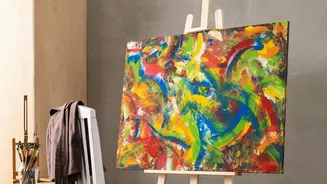
The Power of a Single Focal Point
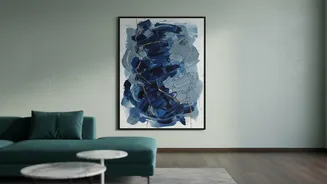
The concept of 'statement art' revolves around choosing one piece that is bold enough to command attention, becoming the anchor for the entire room. It’s a move away from scattered, smaller decorations that can create visual clutter. Instead of multiple
items whispering for attention, a single large artwork speaks with a clear, confident voice. This approach doesn't just fill a wall; it establishes a hierarchy, giving the eye a place to rest and making the entire space feel more intentional and cohesive. A large-scale piece can create an illusion of expansiveness, making a room feel larger and more open by drawing the eye to a single, compelling feature.
Choosing Your Centrepiece with Intention
Selecting a statement piece is a personal journey. The goal is not to find something loud, but something with presence. Start by considering the mood you want to create. A vibrant, colourful abstract might bring energy to a living room, while a serene landscape or a monochromatic photograph could foster calm in a bedroom. The art should resonate with you personally, reflecting your taste and story. Don’t focus on matching colours perfectly to your existing decor. A piece that introduces a new accent colour or provides a thoughtful contrast can be far more interesting, so long as that new colour is subtly repeated elsewhere in the room.
Mastering Scale and Placement
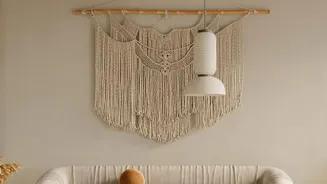
Proportion is critical to making statement art work. A piece that is too small for its wall can look like an afterthought, while one that is too large can feel overwhelming. A widely used guideline for hanging art above furniture like a sofa, bed, or console table is the 'two-thirds to three-quarters' rule. The artwork should span roughly two-thirds of the furniture's width to feel visually connected. On a large, empty wall, ensure the art is substantial enough to hold its own; pieces that are at least 48 inches on their longest side often work well. Proper placement also considers light. Avoid hanging delicate or dark, nuanced pieces in direct, harsh sunlight, which can cause damage or flatten details.
Letting Other Decor Play a Supporting Role
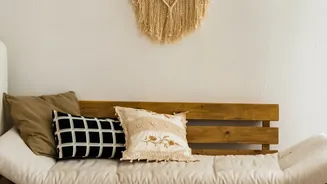
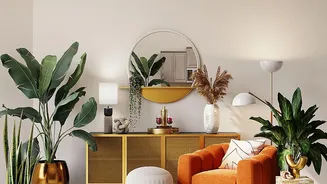
Once your statement piece is in place, the rest of the room’s decor should step back and play a supporting role. This is the essence of simplification. The artwork becomes the star, so other elements should be edited and curated to complement it without competing. Opt for furniture with clean lines and a more neutral colour palette. Reduce the number of purely decorative objects, like smaller trinkets and an abundance of throw pillows, to minimise visual noise. When the art provides the primary colour and pattern, the surrounding space can be calmer and more restful. This balance ensures the room feels curated and sophisticated rather than chaotic.
Beyond the Living Room Wall
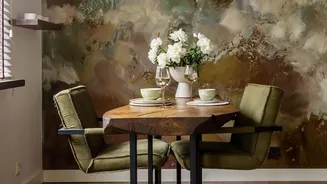
The principle of simplifying with statement art is not limited to the living room. It can bring focus and personality to almost any area of your home. A tall, vertical piece can draw the eye upward in a hallway with high ceilings. In a dining room, a captivating artwork can serve as a conversation starter for guests. Even in a bedroom, a large, calming piece above the headboard can create a tranquil and luxurious atmosphere, acting as the room's main decorative feature. By identifying a key wall in any space and giving it a single, powerful voice, you can apply this decluttering design strategy throughout your home for a cohesive and elegantly simple feel.