





Why Your Cat Craves the High Ground
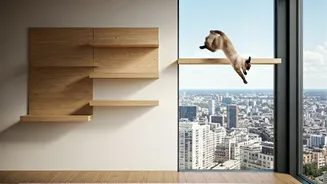
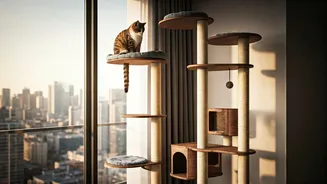
Ever wonder why your cat loves scaling your bookshelf or perching atop the refrigerator? It’s not just curiosity; it's instinct. In the wild, cats are both predators and prey. Height offers a strategic advantage. From a high vantage point, they can survey
their territory for potential threats and spot prey (or in your home, their favourite toy). Climbing is also a form of exercise that keeps their muscles toned and their minds engaged. For an indoor cat, especially one in a compact apartment, the lack of vertical territory can lead to boredom, stress, and even behavioural issues. By providing vertical spaces, you are catering directly to their innate need for security and stimulation, making them feel safer and more in control of their environment.
Introducing the Vertical Cat Superhighway
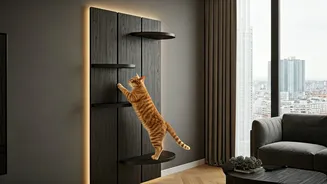
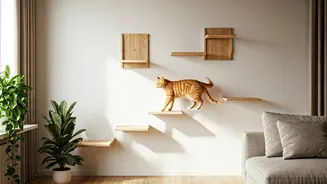
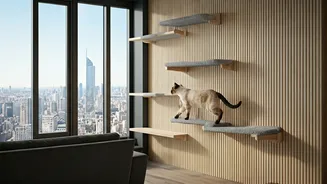
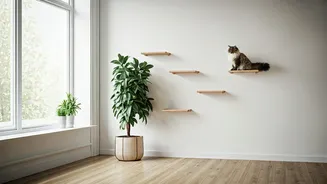
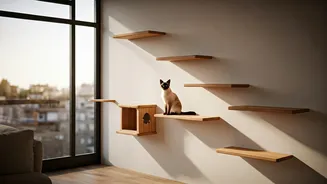
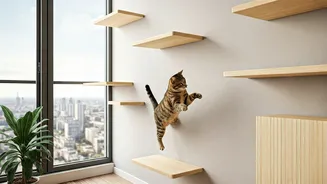
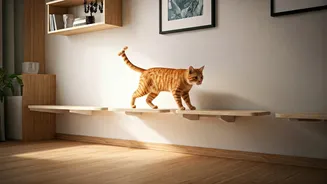
The concept of a 'cat superhighway' involves creating an interconnected network of shelves, perches, and bridges along the walls of your home. This allows your cat to navigate a room without ever touching the floor. It’s their own private expressway, away from the foot traffic of people, children, or other pets. Vertical wooden wall bridges are a key component of this system. They act as connectors between different perches or shelves, encouraging movement and exploration. Unlike a single cat tree, a wall-mounted highway transforms an entire wall—or even multiple walls—into a dynamic, three-dimensional playground. This isn’t just about adding one piece of furniture; it’s about redesigning your cat’s world within the confines of your own.
The Ultimate Small Space Solution
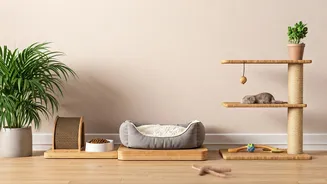
This is where vertical furniture truly shines for high-rise dwellers. In a small flat, every square foot of floor space is precious. Traditional, bulky cat trees can eat up a significant chunk of your living area, making a room feel cluttered. Wall-mounted systems free up that floor space entirely. Your cat gets an enriched environment, and you get your living room back. Furthermore, these setups can be aesthetically pleasing. Modern wooden designs, with clean lines and natural finishes, can complement your decor, acting as a unique design feature rather than an eyesore. They turn a blank wall into a functional work of art that serves both you and your pet.
Choosing the Right Components
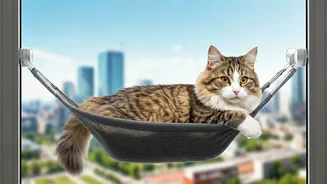
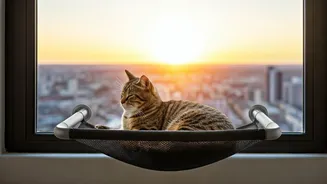
When building your cat’s vertical paradise, variety is key. Start with a few simple shelves or steps to act as entry and exit points. A sturdy wooden wall bridge can then span a doorway or connect two separate wall sections. Consider adding a wall-mounted hammock or a cushioned perch for napping. Look for materials that are safe and durable. Solid wood like pine or birch is a popular choice for its strength and appearance. Ensure any fabric elements, like carpeting on shelves or cushions, are securely attached and easy to clean. Think about the flow: plan a route that is intuitive for your cat, with manageable distances between jumps and no dead ends where they might feel trapped.
Safety and Installation First
A wobbly shelf is a dangerous one. Proper installation is non-negotiable. The most important step is to locate the wall studs—the solid wooden beams inside your walls. Mounting shelves and bridges directly into studs provides the strongest possible support. If studs aren't conveniently located, use heavy-duty drywall anchors specifically designed to hold significant weight. Always check the weight capacity of both the furniture and the anchors. Before letting your cat explore, test every single component by applying firm pressure. Ensure there are no sharp edges or exposed screws. A well-planned, securely installed vertical highway is a safe and joyful addition to your home, but a poorly installed one is a serious hazard.