



Why Cooking Fumes Are a Concern
Every time you cook, especially with methods like frying, searing, or roasting, tiny particles and gases are released into the air. These include fine particulate matter (PM2.5), which can get deep into your lungs, and volatile organic compounds (VOCs).
Gas stoves can also produce pollutants like nitrogen dioxide and carbon monoxide. Over time, frequent exposure to this cocktail of indoor air pollution can irritate the respiratory system and may worsen conditions like asthma. This is particularly true in modern, airtight homes where pollutants can get trapped, or in small kitchens where they become highly concentrated.
Start With Simple, No-Cost Habits
The first line of defence is often the simplest. Make it a habit to open windows and doors before you even start cooking to create cross-ventilation. This simple act helps move polluted air out and bring fresh air in. When possible, use the back burners on your stove, as most exhaust hoods are more effective at capturing fumes from the rear. Another easy trick is to cover your pots and pans with a lid whenever you can. This traps a significant amount of steam, grease, and fumes, preventing them from escaping into your kitchen.
The Power of Mechanical Ventilation
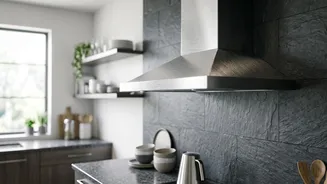
A good quality exhaust fan or chimney is the most effective tool for removing cooking fumes at the source. There are two main types: ducted and ductless. Ducted hoods are more effective because they vent the polluted air directly outside your home. Ductless, or recirculating, hoods pull air through filters (usually charcoal) and release it back into the kitchen. While easier to install, especially in apartments, they are less efficient at removing all pollutants and require regular filter changes to remain effective. When choosing a chimney, look for a high suction capacity, measured in cubic meters per hour (m³/hr), to handle the heavy-duty cooking common in many Indian households.
Supplement with an Air Purifier
For renters or those unable to install a powerful chimney, an air purifier can be an excellent supplementary tool. Look for a model with a multi-stage filtration system that includes both a True HEPA filter and an activated carbon filter. The HEPA filter is crucial for capturing tiny particulate matter like smoke and grease particles, while the activated carbon filter is essential for adsorbing odours and gaseous pollutants like VOCs. While an air purifier won't capture fumes as effectively as a range hood right at the source, it plays a vital role in cleaning the air that circulates throughout the kitchen and adjoining rooms.
Consider Your Cooking Methods and Tools
The way you cook also impacts fume production. High-temperature cooking like deep-frying and charring generates more smoke and pollutants. Using oils with a higher smoke point, such as avocado or canola oil, can help reduce the amount of smoke produced when cooking at high heat. Additionally, keeping your stovetop burners and oven clean is important, as leftover food scraps and grease can burn and create extra smoke and fumes during subsequent cooking sessions. Even simply being mindful of your cooking temperature and avoiding burning food can make a noticeable difference in your kitchen's air quality.
Natural Ways to Neutralise Lingering Odours
After you’ve dealt with the harmful pollutants, you might still have lingering smells. Several natural solutions can help. Placing bowls of baking soda or used coffee grounds on your counter can absorb unwanted odours. Another popular method is to simmer a small pot of water with white vinegar or citrus peels like lemon or orange. While these methods primarily mask or neutralise smells rather than removing harmful particles, they can leave your kitchen smelling fresh and clean after a heavy cooking session.