






Meet the Crew of Soyuz MS-29
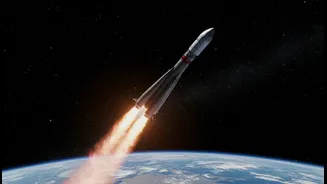
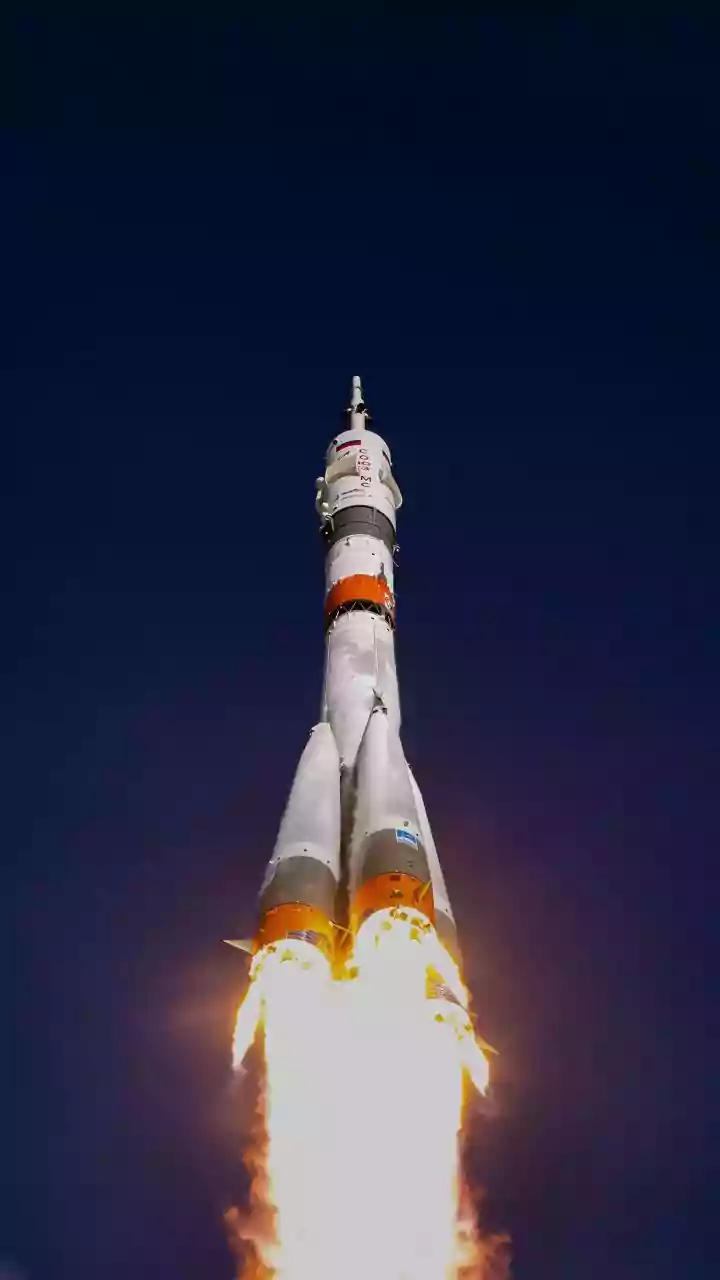
Lifting off from the historic Baikonur Cosmodrome in Kazakhstan, Soyuz MS-29 will carry a three-person crew on a fast-track, three-hour journey to the International Space Station (ISS). The crew consists of two Roscosmos cosmonauts, Commander Pyotr Dubrov
and Flight Engineer Anna Kikina, alongside NASA astronaut Anil Menon, who will be making his first journey into space. For Dubrov and Kikina, this will be their second spaceflight. Upon arrival, they will join the seven astronauts and cosmonauts already aboard the orbiting laboratory, officially becoming part of the Expedition 74 and 75 crews for a mission expected to last around eight months.
An Orbital Ballet with No Room for Error
The phrase "space traffic" might sound like science fiction, but for the ISS, it's a complex reality. The station is a busy hub, with cargo ships and crew vehicles from different nations arriving and departing on a tightly managed schedule. The July 14 launch of Soyuz MS-29 is choreographed to fit perfectly within this orbital ballet. Any significant delay on the ground could have a cascading effect, potentially interfering with future cargo deliveries or the rotation of other crews. Mission planners must account for the precise orbital path of the 400-tonne station, which travels at 17,500 miles per hour. The Soyuz must launch at an exact moment to ensure it can perform a series of engine burns to catch up and dock with the ISS just a few hours later. This level of precision is a testament to the decades of experience behind the Soyuz program, a system that has been the workhorse of human spaceflight for over 50 years.
Cooperation Above a Divided World
Every joint mission between NASA and Roscosmos is a reminder that some partnerships can transcend geopolitics. While relations on Earth remain complex, the ISS continues to be a symbol of international cooperation. Planning a mission like MS-29 requires constant, clear communication between mission control centers in Houston and Moscow. Crews train together in both Russia and the United States, learning each other's languages and procedures to function as a single, cohesive team in a high-stakes environment. This collaboration is foundational to the station's success and safety. Even as both nations develop their own future space plans, the day-to-day work of keeping the ISS running demonstrates a shared commitment that remains crucial. The handshake in space, first seen during the Apollo-Soyuz Test Project in 1975, continues with every crew exchange.
The Science Awaits
The primary purpose of these long-duration missions is to conduct scientific research that is impossible to perform on Earth. For his eight-month stay, NASA's Anil Menon has a packed schedule. He will conduct experiments to better understand how microgravity affects human physiology, including blood flow and the cardiovascular system. His work also includes testing new technologies, such as methods to produce IV fluids from the station's water supply and refining the in-space manufacturing of semiconductor crystals. This research not only helps NASA plan for future long-duration missions to the Moon and Mars but also has direct benefits for life on Earth, from new medical treatments to advanced materials. Each experiment is carefully planned years in advance, and the arrival of a new crew is a critical step in advancing this ongoing research.
An Aging Outpost, A Crucial Mission
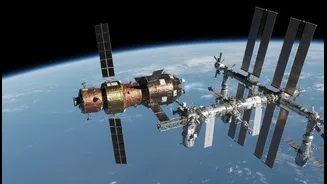
The International Space Station has been continuously inhabited since November 2000. It is a marvel of engineering, but it is also an aging facility. With plans firming up for its eventual decommissioning around 2030, every mission is more critical than ever. The goal is to maximize the scientific return from the station in its final years of operation. Careful planning ensures that the station remains fully staffed and that a steady stream of scientific hardware and supplies gets to orbit. Missions like Soyuz MS-29 are vital for maintaining the pace of research and ensuring a smooth transition as NASA and its partners look toward a future of commercial space stations in low-Earth orbit.