



Choosing Quality Materials
The foundation of beautiful, safe decor lies in the quality of your items. When selecting handmade clay diyas, look for ones that are properly kiln-fired, not just sun-dried or air-dried, as these are for decorative use only. Check for a stable, flat
base that doesn't rock. Inspect each diya for hairline cracks or chips, which can make it unsafe to light. For solar fairy lights, choose a set designed for outdoor use, which will be more durable against weather. Check the battery capacity (measured in mAh) for longer-lasting light, and consider sets where the solar panel is separate from the lights. This allows you to place the panel in the sunniest spot while arranging the lights in a shaded area.
Safety First: Prepping Your Balcony
Before you place a single light, prepare your balcony to prevent any fire hazards. Clear the area of flammable materials like paper decorations, dry leaves, and fabric throws. Since balconies can be windy, which poses a risk to open flames, create a sheltered spot for your diyas. Never place them near curtains, furniture, or anything that could easily catch fire. It's crucial to ensure every open flame has at least a foot of clear space around it. For solar lights, ensure the cords are not placed where they can be tripped over or pinched in windows or doors, which could damage the insulation.
The Art of Placing Clay Diyas
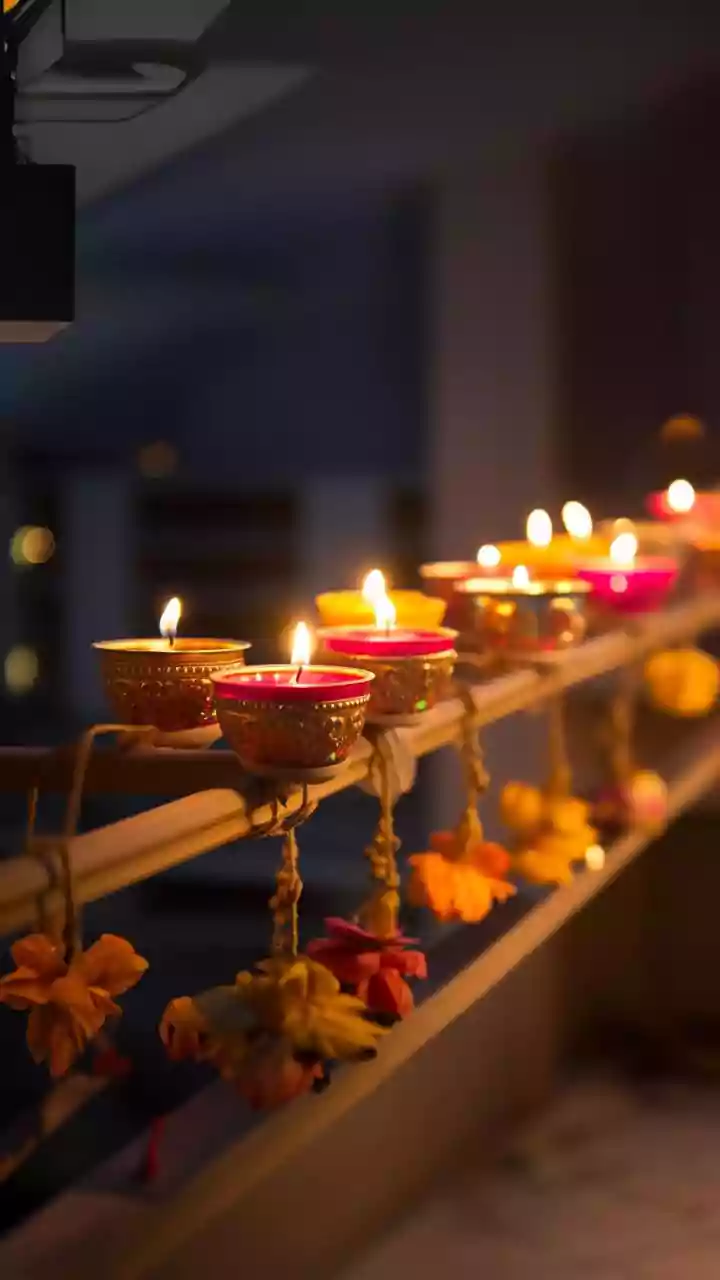
Traditional diyas offer an unmatched glow, but require care. Always place them on a stable, non-combustible surface like a metal tray or a ceramic plate. This catches any dripping oil and provides a heat-resistant base. Arranging them along the floor or on low, sturdy tables is safer than placing them on railings where they can be knocked over. To prevent the flame from getting too large or sooty, use a cotton wick that isn't too long. Most importantly, never leave a lit diya unattended. Always extinguish them completely before you go to bed or leave the house.
Harnessing Solar Power Effectively
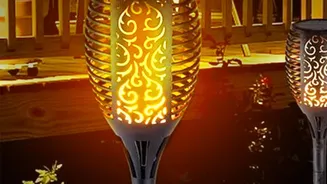
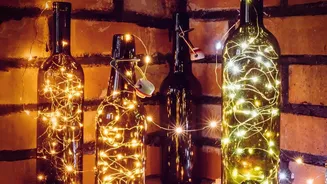
Solar fairy lights are a fantastic, eco-friendly option. For them to work effectively, the solar panel needs several hours of direct sunlight. Position the panel on a railing or wall that gets maximum sun exposure, ideally facing south or west. Many apartment windows have UV-blocking coatings that significantly reduce charging efficiency, so placing the panel outside is always best. Before hanging your lights, test them by covering the solar panel to simulate darkness. When arranging them, use clips or UV-resistant zip ties instead of nails or staples to avoid damaging the wiring. Wrapping them around railings or weaving them through potted plants can create a stunning effect without any installation damage.
Creative and Safe Combinations
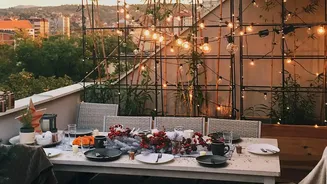
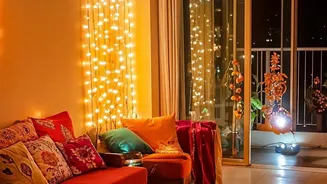
The magic happens when you blend the steady flicker of diyas with the consistent sparkle of solar lights. Use the diyas to create focal points on the floor or a centrepiece on a table. You can place them inside a larger decorative urli bowl filled with water and flower petals for an elegant, contained display. Meanwhile, use the solar fairy lights for broader coverage. Drape them along the railings, hang them as a curtain of light against a wall, or wrap them around plants and balcony furniture. This layering technique gives your balcony depth and ensures it remains beautifully lit even if the wind blows out a diya. Using LED diyas in windy spots is another safe alternative.