





A Thermometer for the Moon
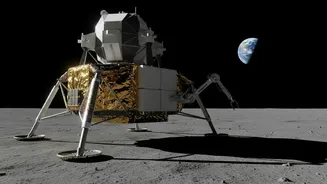
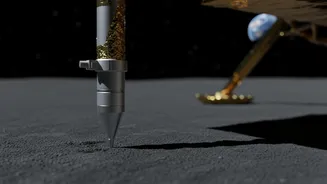
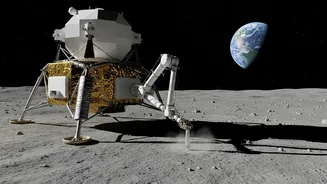
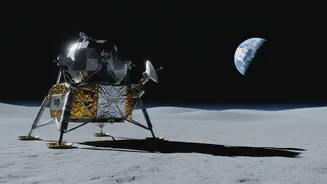
The groundbreaking new information comes from a specific instrument aboard the Vikram lander: the Chandra’s Surface Thermophysical Experiment, or ChaSTE. This ingenious device is essentially a high-tech thermal probe designed to penetrate the lunar soil,
or regolith. With ten precise temperature sensors, ChaSTE was able to measure the temperature profile of the Moon's topsoil down to a depth of 10 centimetres for the first time ever at the lunar south pole. While previous Apollo missions had measured heat flow deeper into the crust, ChaSTE’s mission was to understand the behaviour of the crucial topmost layer, something never before done in this region. This first-of-its-kind in-situ measurement has provided a unique window into how the lunar surface interacts with the harsh environment of space.
An Unexpected Thermal Shock
When the first readings from ChaSTE came back, scientists were met with a major surprise. They observed a massive temperature difference between the lunar surface and just a few centimetres below it. Data showed that while the surface could be as hot as 60 degrees Celsius, the temperature plunged to around -10 degrees Celsius at a depth of just 10 centimetres. This is a far steeper temperature gradient than any existing model had predicted. It revealed that the Moon's topsoil is an incredibly effective thermal insulator—it does not conduct heat well at all. This property means the extreme temperature swings that occur on the surface during the long lunar day and night do not penetrate deep into the ground.
What Makes the Subsurface 'Dynamic'?
The term 'dynamic' here doesn't refer to geological activity like earthquakes or volcanoes. Instead, it describes this active and unexpected thermophysical behaviour. The Moon's subsurface isn't just passively absorbing and releasing heat as expected; its highly insulating top layer creates a distinct, stable thermal environment just beneath the chaotic surface. This dynamic response to solar radiation is what's rewriting the textbooks. Scientists believe this is due to the loose, porous nature of the lunar regolith. Unlike packed soil on Earth, the powdery, loose topsoil on the Moon has significant gaps between its particles, preventing heat from travelling through it efficiently. This powerful insulating property means the subsurface is a far more stable and predictable environment than previously thought.
Rewriting the Lunar Rulebook
These findings have profound implications for the future of lunar exploration. The discovery that the regolith is such a good insulator is a game-changer for designing future lunar habitats. It suggests that building structures just a short distance underground could provide natural protection from the extreme surface temperatures, which can swing by hundreds of degrees. This could significantly reduce the energy needed to heat and cool a lunar base. Furthermore, this stable subsurface temperature could be crucial for the presence and preservation of resources like water ice. While ChaSTE did not detect water directly, its findings on thermal behaviour help scientists refine their models of where water ice could remain stable just below the surface in polar regions, making it a critical piece of the puzzle for future resource-hunting missions.