


The Fact That Broke the Internet
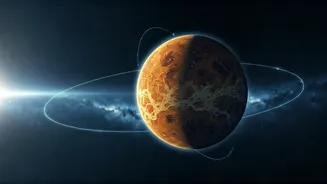
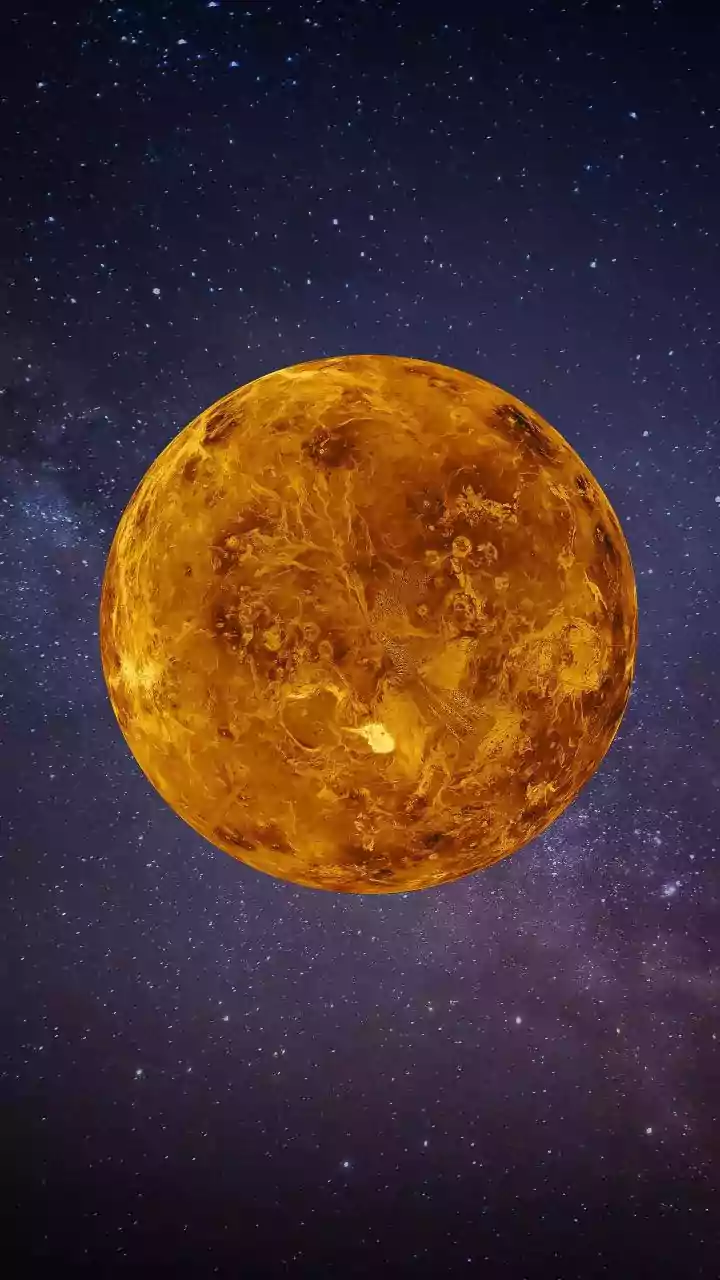
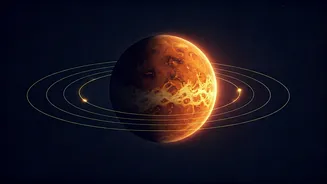
Let’s get the mind-bending numbers out of the way first. Venus takes about 225 Earth days to complete one orbit around the Sun. This is its year. However, it takes a staggering 243 Earth days for Venus to complete one rotation on its axis. This is its day.
So, yes, a day on Venus is longer than a year on Venus. If you were born on Venus, you would celebrate your first birthday before you had lived through your first full day-night cycle. It's a concept so alien to our Earthly experience of quick days and a long year that it’s no wonder the fact continues to go viral every few months. It fundamentally challenges our intuitive sense of how time and planetary motion should work.
Putting It in Perspective
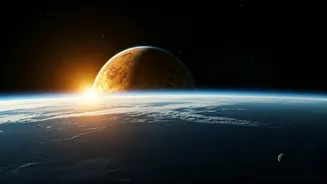
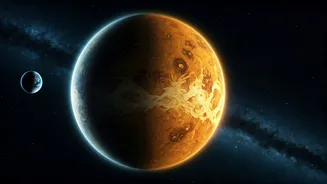
To truly grasp how bizarre this is, let's compare it to home. Earth spins on its axis once every 24 hours, and orbits the sun once every 365.25 days. Our days are short, and our year is long. This relationship governs our seasons, our sleep cycles, and our entire calendar. Now consider Venus. Not only is its day longer than its year, but it also spins backwards. Most planets in our solar system, including Earth, rotate counter-clockwise on their axis. Venus spins clockwise. This is known as retrograde rotation. So, if you could stand on the surface of Venus (and survive), you would see the Sun rise in the west and set in the east. This combination of an incredibly slow spin and a retrograde direction makes Venus a true oddball in the planetary family.
Why Is Venus So Slow and Backwards?
Scientists don't have one definitive answer, but there are two leading theories that could explain Venus's strange behaviour. The first theory involves a cataclysmic event in the distant past. Early in the solar system's history, when planets were still forming, it was a cosmic shooting gallery. One hypothesis suggests that a massive, planet-sized object collided with Venus, violently altering its spin and potentially even flipping it upside down. This impact would have been so powerful that it could have slowed its rotation to the crawl we see today and set it spinning in the opposite direction. The second theory is less dramatic but equally fascinating. It suggests that Venus’s incredibly thick atmosphere is to blame. The atmosphere is about 90 times denser than Earth's and creates immense friction against the planet's surface. Over billions of years, the gravitational pull from the Sun on this bulky atmosphere (a phenomenon called atmospheric tides) could have acted as a powerful brake, gradually slowing the planet's rotation to its current state. It's possible that a combination of both theories—an ancient impact followed by eons of atmospheric braking—is responsible for the unique Venusian day.
Earth's Twisted Sister Planet
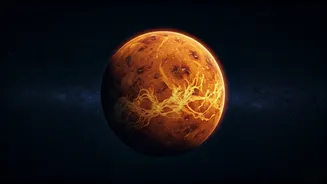
The long day is just one of many extreme features of Venus. Often called 'Earth's twin' due to its similar size, mass, and composition, Venus is anything but hospitable. It is a cautionary tale of a runaway greenhouse effect. Its thick carbon dioxide atmosphere traps heat, leading to surface temperatures of around 465°C—hot enough to melt lead. The atmospheric pressure on the surface is equivalent to being 900 metres deep in Earth's ocean, a pressure that would crush a submarine. The planet is perpetually shrouded in thick clouds of sulphuric acid. So while the idea of a day longer than a year is a fascinating bit of trivia, it's part of a much larger picture of a planet that is one of the most hostile and extreme environments in our solar system.