
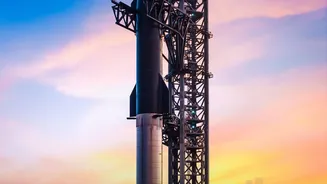


It sounds like science fiction: a skyscraper-sized rocket falls from the sky, only to be caught moments before impact by a pair of giant mechanical arms. This isn't a movie scene; it's SpaceX's audacious plan for its Starship rocket system.
Meet 'Mechazilla': The Rocket-Catching Tower
At the heart
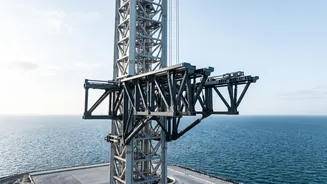
of this strategy is the launch and catch tower, unofficially nicknamed 'Mechazilla'. This colossal structure, standing around 480 feet tall, does more than just support the rocket before launch. It's equipped with two large, powerful arms—often called 'chopsticks'—that can move up and down the tower. After the Super Heavy booster separates from the Starship upper stage, it performs a series of burns to fly back to the launch site. As it descends, the chopsticks extend to intercept and grab onto the booster, securing it in mid-air just seconds before its engines shut down. This manoeuvre has already been proven successful, with SpaceX first catching a Super Heavy booster on its very first attempt in October 2024.
The Art of a Perfectly Controlled Fall
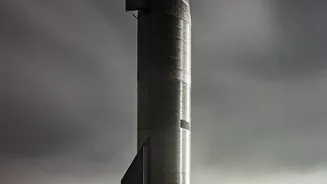
The catch itself is visually stunning, but it's only possible because of the booster's incredibly precise, controlled descent. This is where the real engineering magic happens. After separating from the Starship, the booster uses a combination of its Raptor engines and four large, titanium grid fins at its top to steer its way back through the atmosphere. These grid fins, which look like giant waffle irons, are not wings; they are control surfaces that manipulate airflow to roll, pitch, and yaw the massive rocket stage. Tiny adjustments to their angle can shift the booster's trajectory by hundreds of feet, ensuring it arrives at the tower within a capture window of just a few meters. In the final moments, a landing burn using a subset of its 13 engines slows the booster from supersonic speeds to a gentle hover next to the tower, allowing the arms to close in.
Why Not Just Use Landing Legs?
SpaceX pioneered propulsive landings with its Falcon 9 rocket, which uses deployable landing legs. So why the radically different and more complex approach for Starship? The answer lies in mass and efficiency. Landing legs, along with all their associated deployment mechanisms and structural reinforcements, are heavy. That weight has to be carried all the way up during launch, reducing the amount of payload the rocket can carry to orbit. By eliminating landing legs and moving the 'landing' hardware to the ground-based tower, the booster becomes lighter and more efficient. This engineering philosophy follows the principle of removing everything that isn't absolutely essential to the vehicle's primary function, increasing its payload capacity.
The Ultimate Goal: Rapid Reusability
The tower catch is the key to unlocking SpaceX's ultimate ambition: making Starship a fully and rapidly reusable launch system, akin to how commercial airlines operate. A booster caught by the tower is already positioned on the launch mount, ready to be inspected, refueled, and have a new Starship upper stage stacked on top. This could slash turnaround time from weeks or days—required for ocean recoveries—to mere hours. This speed is critical for SpaceX's long-term vision, which includes deploying next-generation Starlink satellites and building a propellant depot in orbit for missions to the Moon and Mars. Such ambitious plans require an unprecedented launch cadence, potentially with multiple flights per day, which is only feasible if recovery and relaunch are near-seamless operations.
Next Up: Catching the Starship
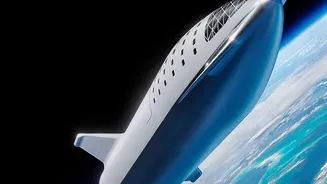
While SpaceX has successfully caught the Super Heavy booster multiple times, that's only half the equation. The next, more difficult step is to catch the Starship upper stage itself. This vehicle reenters the atmosphere from orbital velocity, enduring extreme heat before it can perform its own landing flip and descent to the tower. While booster catches have become more routine, SpaceX has been clear that catching the ship is the next major milestone. As of October 2026, Elon Musk has indicated that an attempt to catch the Starship upper stage could happen on Flight 15, targeted for late 2026. Successfully completing this second half of the catch would mark the first time an entire orbital-class rocket system has been fully recovered for reuse.