

More Than Meets the Eye
Our eyes can only perceive a tiny sliver of reality known as visible light. But the universe is communicating across a vast range of signals called the electromagnetic spectrum, from low-energy radio waves to high-energy X-rays and gamma rays. Different
cosmic events produce different types of light. Cool, dim objects like dust clouds shine in infrared, while extremely energetic events like exploding stars or supermassive black holes blaze in X-rays. If we only looked in visible light, we’d be missing most of the story. Telescopes are our superpower, allowing us to see this invisible universe. However, just as you can't use a radio to see X-rays, different telescopes are engineered to capture specific wavelengths of light.
A Cosmic Dream Team
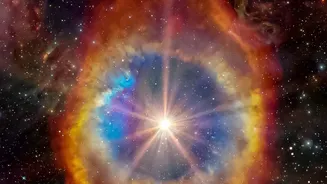
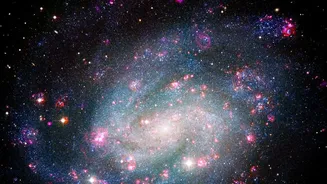
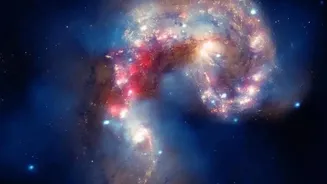
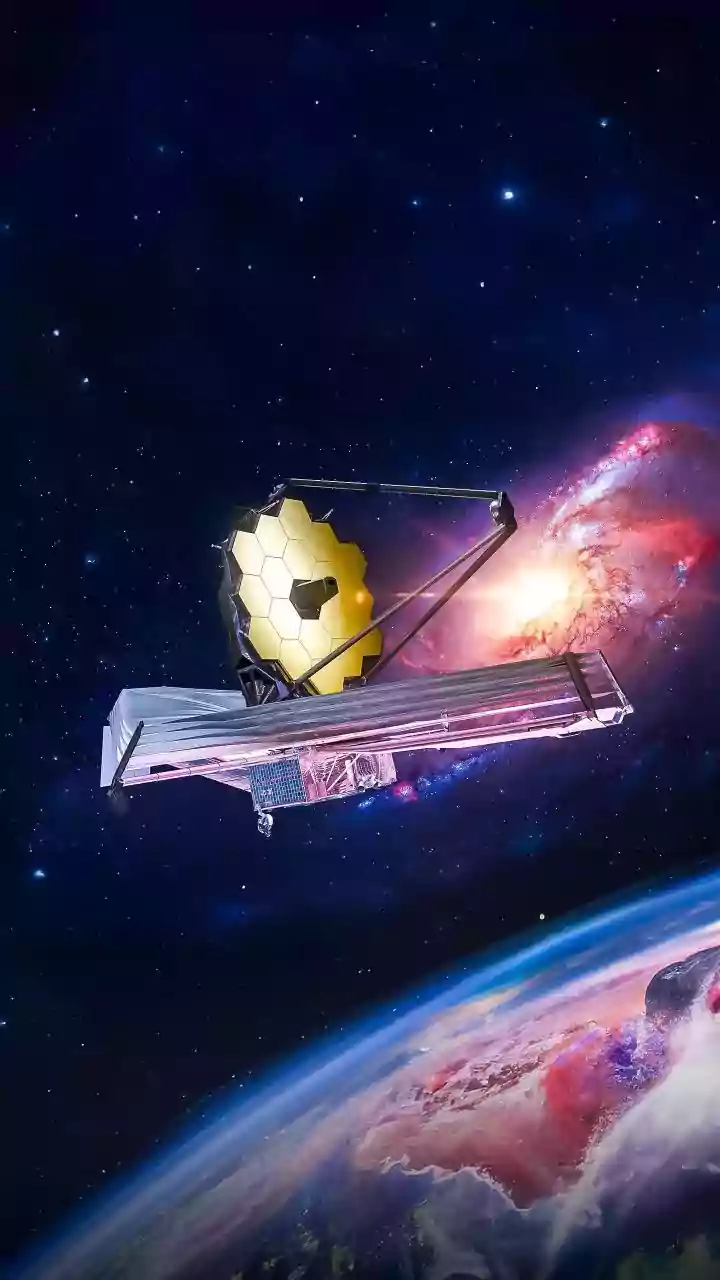
Think of it as assembling a team of specialists. The Hubble Space Telescope is the veteran expert in visible and ultraviolet light, showing us the stars and shapes of galaxies. The James Webb Space Telescope (JWST) is the infrared master, peering through cosmic dust to witness the birth of new stars that are hidden in visible light. Then there's the Chandra X-ray Observatory, the high-energy detective, which tracks superheated gas, the remnants of supernovae, and the chaotic environments around black holes. Many of the most famous images, like those of the Pillars of Creation or the Phantom Galaxy, are created by combining data from these observatories. Each telescope provides a crucial piece of the puzzle.
Deconstructing a Galaxy
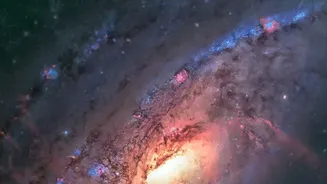
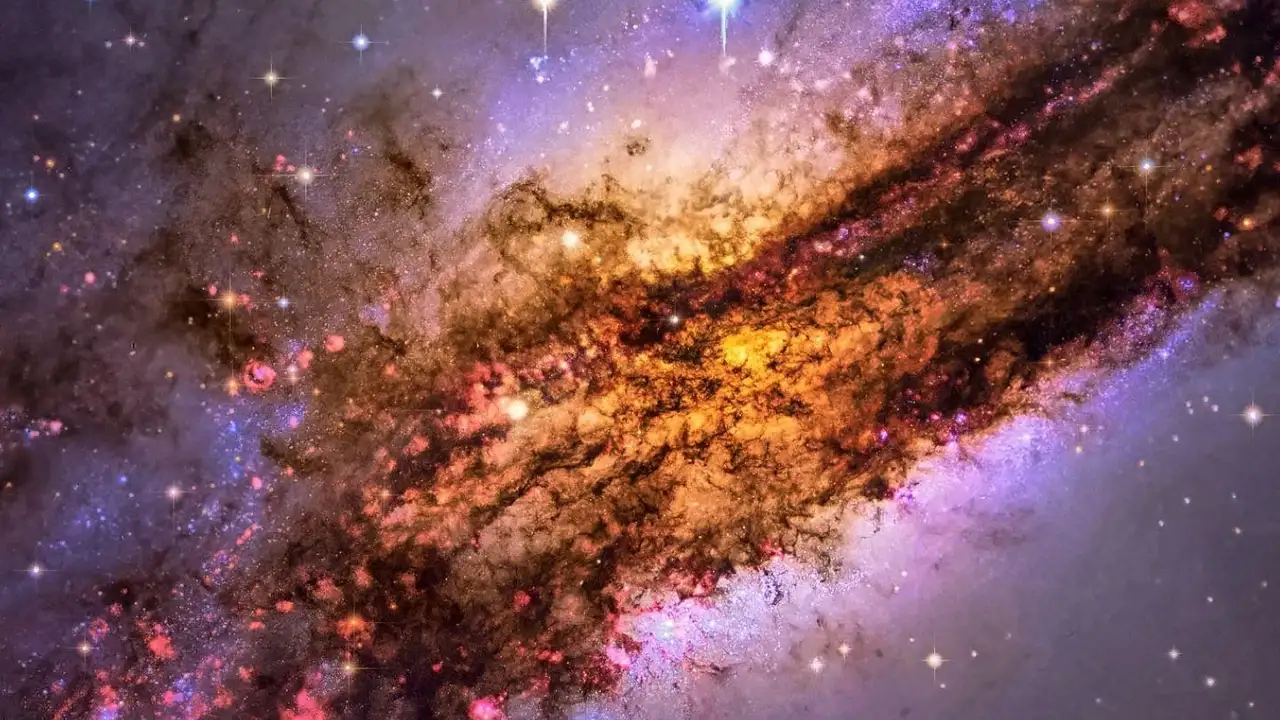
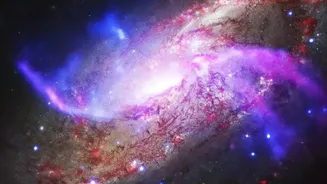
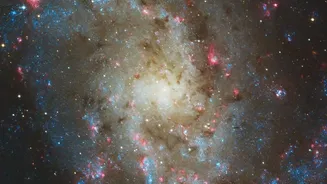
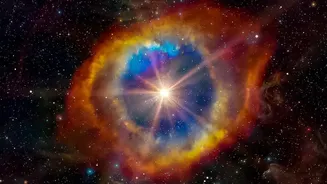
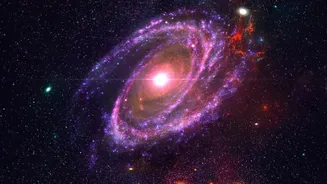
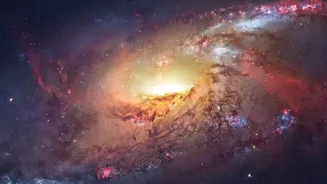
Let’s take a spiral galaxy like Messier 74, the Phantom Galaxy. In a visible-light image from Hubble, you see the grand spiral arms and the distribution of stars. But when the JWST adds its infrared view, those dark dust lanes that obscure the view in visible light suddenly glow, revealing the raw material for future star formation. Then, Chandra adds its X-ray data, peppering the image with bright dots that represent high-energy phenomena, such as young, massive stars and material spiralling into black holes. By assigning visible colours to these invisible wavelengths—for instance, red for infrared, blue for X-ray—scientists create a single, information-rich composite image that reveals the galaxy’s complex structure and life cycle in a way no single telescope ever could.
India’s Eye in the Sky
This collaborative, multiwavelength approach is the future of astronomy, and India is a key player. India's own space observatory, AstroSat, launched by ISRO in 2015, is a powerful example. It is the country's first dedicated multi-wavelength space telescope, capable of observing the universe simultaneously in the visible, ultraviolet, and X-ray bands. This unique capability allows Indian scientists to conduct cutting-edge research, from studying black holes to discovering light from galaxies billions of light-years away, all from a single, integrated platform. With AstroSat, which recently completed its primary mission duration but continues to operate, India has cemented its place in the global community of space-based astrophysics.