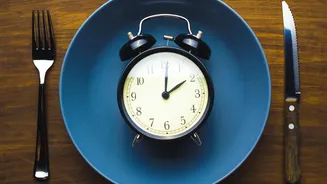







Understanding Your Body's Clock
At the heart of this connection is your circadian rhythm, the body's internal 24-hour clock that governs everything from when you feel tired to when you feel hungry. This master clock, located in your brain, responds primarily to light, but it also coordinates
a series of 'mini-clocks' throughout your body, including in your digestive system. These peripheral clocks mean your organs have optimal times for certain functions. For your digestive system, peak efficiency is during the day when you are active. At night, as your body prepares for rest, your digestive processes naturally slow down.
The Problem with a Heavy Dinner
When you eat a large, heavy meal close to bedtime, you're essentially forcing your digestive system to work overtime when it should be winding down. This can disrupt sleep in several ways. Firstly, digestion is an active process that generates heat, raising your core body temperature. However, a slight drop in body temperature is a key biological signal that tells your body it's time to sleep. A late, large dinner can delay this cooling process, making it harder to fall asleep and stay asleep. It can lead to indigestion, increased blood sugar, and a greater likelihood of waking up during the night, preventing you from reaching the deepest, most restorative stages of sleep.
The Power of a Larger Lunch
This is where the concept of 'front-loading' your calories comes in. By making lunch your main meal of the day, you align your energy intake with your body's peak metabolic and digestive efficiency. During the middle of the day, your body is primed to process food, use the nutrients for energy, and regulate blood sugar effectively. Consuming the bulk of your daily calories at lunch means that by the time evening arrives, the heavy lifting of digestion is already done. This allows your body to focus on rest and repair overnight, rather than grappling with a full stomach. Studies suggest that people who eat their calories earlier in the day often report better sleep quality and more stable energy levels.
How to Shift Your Meal Timings
Transitioning to a larger lunch and a lighter dinner doesn't have to be a drastic overnight change. Start by gradually increasing the size and complexity of your lunch, ensuring it is a balanced meal with protein, complex carbohydrates, and healthy fats. Simultaneously, begin to reduce the portion size of your evening meal. A good rule of thumb is to finish eating your last meal at least two to three hours before you go to bed. Your evening meal should be easily digestible—think soups, steamed vegetables, or lean proteins rather than rich, fatty, or fried foods. If you feel hungry before bed, a light snack like a banana or a small handful of almonds can work without disrupting your sleep.