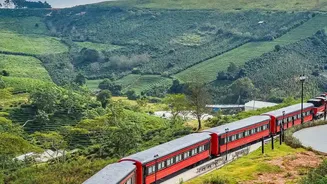



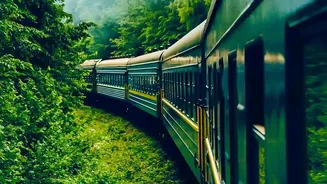
What is the Mixed Service?
The 'mixed train' service on the Kalka-Shimla line, which was recently restored on July 16, 2026, is a unique operational model designed for both efficiency and utility. Unlike dedicated passenger or freight trains, this service combines both. A single
train carries coaches for passengers alongside wagons for parcels or goods as needed. This makes it a highly economical and versatile service for a narrow-gauge mountain route. The six-coach train, now the sixth daily service on the section, serves a dual purpose: it caters to tourists while also fulfilling the essential transportation needs of local communities living along the 96-kilometre track.
The Capacity and Pricing Conundrum
The Kalka-Shimla route faces a constant struggle between high tourist demand and limited capacity. The introduction of Vistadome coaches and other premium services caters to travellers seeking a scenic, comfortable experience, often at higher prices. However, the mixed service addresses a different need. With a fare as low as ₹50 for the full journey, it stands in stark contrast to the more expensive tourist-centric trains. This service ensures that the railway remains an accessible mode of transport for daily commuters, students, and small businesses. By stopping at all 18 stations along the route, it provides crucial connectivity to smaller towns, reinforcing its role as a public utility rather than just a tourist attraction.
Defining its Public Purpose
The very existence of the mixed service brings the railway's core purpose into focus. Is it a nostalgic joyride for tourists or a lifeline for the region? The answer, as the mixed service demonstrates, is both. While new, faster trains with modern amenities like the Diesel Hydraulic Multiple Unit (DHMU) are being tested to reduce travel time and attract more tourists, the humble mixed train ensures the railway doesn't lose its soul. It represents a commitment to the local populace, who depend on it for daily travel. This balancing act is crucial for the line's identity, especially as it undergoes modernisation under schemes like the Amrit Bharat Station scheme, which aims to upgrade station infrastructure.
Heritage vs. Modernisation
Every new development on the Kalka-Shimla line is scrutinised through the lens of its UNESCO World Heritage status. The introduction of new coaches and the exploration of greener technologies, such as hydrogen-powered trains, represent a push towards a sustainable future. This is part of a larger goal by Himachal Pradesh to become a 'green energy state'. However, these modernisations must be carefully implemented. Proposals like the electrification of the track have faced criticism from heritage experts who fear it could damage the line's historical and environmental integrity. The mixed service, being a traditional operational format, aligns well with the heritage character of the railway, even as it serves a very practical, modern-day need for affordable and comprehensive local transport.