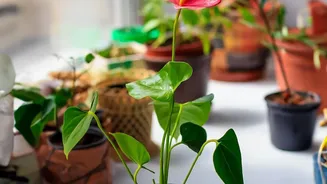





1. Peace Lily (Spathiphyllum)
The Peace Lily is more than just an elegant plant with beautiful white flowers; it's a natural dehumidifier. It absorbs moisture from the air through its large, glossy leaves. Since it thrives in humid conditions and prefers indirect light, it's an excellent
choice for bathrooms and kitchens—areas often prone to dampness. Beyond tackling humidity, Peace Lilies are renowned for their ability to filter common indoor air pollutants. For best results, keep its soil consistently moist but not waterlogged, and wipe the leaves occasionally to help them absorb moisture effectively.
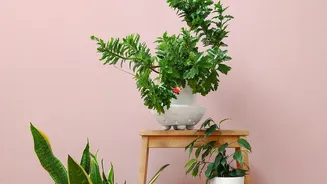
2. Snake Plant (Dracaena trifasciata)
Often called 'mother-in-law's tongue', the Snake Plant is famously low-maintenance and incredibly resilient. It helps manage humidity and can absorb airborne mould spores. One of its unique qualities is that it releases oxygen at night, making it a great addition to bedrooms. Unlike many other plants, it prefers drier soil, so be careful not to overwater it. Its ability to tolerate a wide range of light conditions, from low to bright, makes it one of the most versatile plants for any room in an Indian home.
3. English Ivy (Hedera helix)
English Ivy is a classic trailing vine that is particularly effective at reducing airborne mould spores. It grows well in hanging baskets, where it can add a touch of cascading greenery while purifying the air in damp spaces. It prefers bright, indirect light and moderate humidity. While it enjoys moisture, it's important to ensure its pot has good drainage to prevent root rot. Keep it in kitchens or near windows to help manage moisture levels effectively. Note that this plant can be toxic to pets, so it's best placed out of their reach.
4. Spider Plant (Chlorophytum comosum)
The Spider Plant is a hardy and adaptable choice, perfect for beginners. It's known for being effective at removing excess moisture and common toxins from the air. These plants thrive in a variety of conditions and are quite forgiving if you occasionally forget to water them. They adapt well to the humid climates found across many Indian regions. Their ability to produce 'spiderettes' or baby plants also means you can easily propagate them and expand your collection of natural air purifiers. They work well in kitchens and bathrooms.
5. Boston Fern (Nephrolepis exaltata)
Boston Ferns are natural humidity regulators. With their dense, lush fronds, they are excellent at drawing moisture from the surrounding air, helping to balance humidity levels indoors. They are particularly well-suited for the steamy environment of a bathroom that gets some natural light or a shaded balcony. To keep a Boston Fern happy, its soil should remain consistently moist. If the leaves start to turn yellow, it may be a sign that it needs more humidity.
Beyond Plants: Clay Dehumidifying Tools
For an extra line of defence, especially in enclosed spaces like cupboards and wardrobes, consider clay dehumidifying tools. These are typically made from natural minerals like bentonite or montmorillonite clay. They work through a process called adsorption, where the porous structure of the clay attracts and traps moisture molecules from the air. These clay absorbers are non-toxic, environmentally friendly, and often reusable. Once they become saturated with water, many can be 'recharged' by simply drying them out in an oven at a low temperature, making them a sustainable and cost-effective solution for preventing musty smells and mould growth in smaller areas.