





Identifying the Annoying Intruder
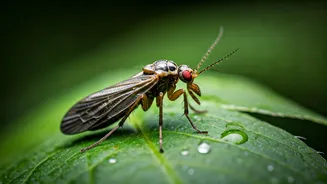
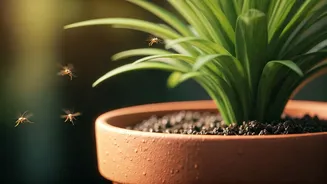
Those small, dark, mosquito-like insects flitting around your potted plants are likely fungus gnats. Adults are typically about 2 to 4 millimetres long, with long legs and a weak, erratic flight pattern. You'll often see them emerge when you water your plants or
disturb the soil. The good news is that adult fungus gnats don't bite people or pets, and they don't harm the plants themselves. They are primarily a nuisance. The real issue lies with their larvae, which live in the top few inches of moist potting soil.
Why Monsoon Is Prime Time for Gnats
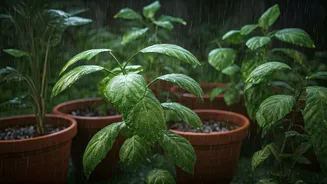
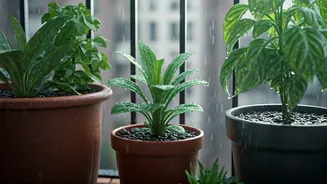
Fungus gnats thrive in moist soil rich in organic material. The monsoon season creates a perfect storm for them. High humidity means the soil in your pots takes much longer to dry out. Coupled with a tendency to overwater plants during this period, the soil surface remains consistently damp, creating an ideal breeding ground. A female gnat can lay hundreds of eggs in this moist soil during her short, one-week lifespan. These eggs hatch into tiny, maggot-like larvae that feed on fungi and decaying organic matter in the soil. If the population becomes large enough, the larvae can start to feed on delicate plant root hairs, which can be particularly damaging to seedlings and young plants.
Prevention: Your First Line of Defence
The most effective way to control fungus gnats is to make your pots less hospitable. The key is to manage soil moisture. Allow the top one to two inches of soil to dry out completely between waterings. This simple step disrupts their life cycle by creating a dry environment where eggs and larvae can't survive. Ensure your pots have excellent drainage and don't let them sit in saucers full of water. You can also add a layer of sand or vermiculite to the soil surface; this helps keep the top layer dry and physically blocks adult gnats from laying eggs.
A Two-Step Plan to Eliminate Infestations
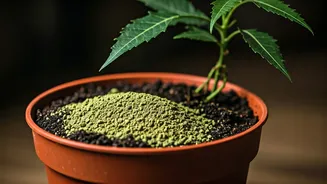
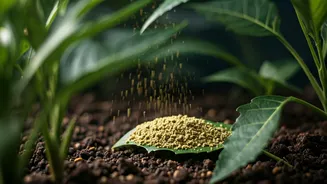
If you already have an infestation, you need to target both the flying adults and the larvae in the soil. For the adults, place yellow sticky traps near your plants. These traps are very effective at catching the flying gnats, which helps break the breeding cycle. For the larvae, several natural remedies are effective. A soil drench made with neem oil, a product native to India, can be very effective. Mix neem oil with water as per the product's instructions and use it to water your plants. This disrupts the larval stage. Soaking neem cake powder (neem ki khali) in water overnight and using the strained liquid to water plants is another popular remedy. These treatments may need to be repeated weekly to ensure you've eliminated all generations.
Long-Term Care and Other Solutions
To keep fungus gnats from returning, consistently practice good watering hygiene. Before bringing any new plant into your home, it's wise to inspect the soil for pests and quarantine it for a couple of weeks. Some people find success with homemade traps using apple cider vinegar and a few drops of dish soap in a small bowl; the gnats are attracted to the vinegar and get trapped. Another method is to place raw potato slices on the soil surface. The larvae are attracted to the potato, which you can then discard after a few hours, larvae and all. Ultimately, controlling moisture is the most crucial step for long-term prevention. By being mindful of how damp your soil is, you can enjoy your lush monsoon greenery without the buzzing annoyance of fungus gnats.