


The Problem with Sitting Still
Our bodies weren't designed to stay in one position for eight hours a day. Prolonged sitting, especially with the poor posture that often comes with computer work, puts immense strain on the muscles in your neck, shoulders, and upper back. This can lead
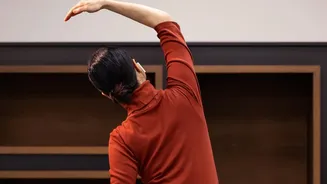
to what's often called 'tech neck', where your head drifts forward, increasing the effective weight on your cervical spine. For every inch your head moves forward, the load on your neck can increase by several kilograms, leading to chronic pain, tension headaches, and stiffness. Interrupting this static posture with short movement breaks is crucial for both immediate relief and long-term health. Chair yoga is an accessible and effective way to counteract these effects right at your desk.
Setting Up for Success
You don't need special clothes or equipment to practice chair yoga. Find a stable chair, preferably one without wheels, or lock the wheels if possible. Sit with your feet flat on the floor, about hip-width apart. Your back should be straight, but not rigidly so. Lengthen your spine by imagining a string pulling the crown of your head toward the ceiling. Relax your shoulders down and away from your ears. Take a few deep breaths to centre yourself before you begin, inhaling through your nose and exhaling slowly. This mindful breathing helps calm the nervous system and prepares your body for movement.
1. Seated Cat-Cow Stretch
This classic yoga movement is excellent for waking up the spine and relieving tension in the torso, shoulders, and neck. Place your hands on your knees and keep your feet flat on the floor. As you inhale, gently arch your back, push your chest forward, and look up toward the ceiling (Cow Pose). As you exhale, round your spine, drop your chin to your chest, and let your shoulders and head come forward (Cat Pose). Flow between these two positions for 5-10 breaths, moving with your breath to create a gentle rhythm. This pose is fantastic for improving spinal flexibility and easing back stiffness.
2. Simple Neck Rolls and Stretches
To directly target neck tension, start with slow, deliberate neck rolls. Sit up tall and gently lower your right ear toward your right shoulder, holding for a few breaths. Then, slowly roll your chin down to your chest, and over to the left side, bringing your left ear toward your left shoulder. Avoid rolling your head all the way back, as this can compress the cervical spine. Instead, repeat the motion from side to side. For a deeper stretch, you can gently place your hand on the side of your head to add a small amount of pressure, but never force the movement.
3. Seated Eagle Arms
Hunching over a keyboard tightens the shoulders and upper back. Seated Eagle Arms provides a deep stretch across the shoulder blades. Sit tall and extend your arms straight out in front of you. Cross your right arm over your left, bend your elbows, and try to bring your palms together. If your palms don't touch, press the backs of your hands together instead. Lift your elbows while keeping your shoulders relaxed and down. You should feel a stretch in your upper back. Hold for 15-30 seconds, breathe deeply, and then unwind and repeat with the left arm on top.
4. Chair Pigeon Pose
While neck pain is the focus, tightness in the hips from sitting can contribute to overall postural problems. This pose helps open the hips. While seated, cross your right ankle over your left knee, keeping your right foot flexed to protect the knee. Sit up straight, and if you already feel a good stretch in your outer right hip, stay there. For a deeper stretch, gently hinge forward from your hips, maintaining a long spine. Hold for 20-30 seconds, breathing into the stretch, then switch sides. This helps relieve lower back tension and improves hip mobility.
5. Seated Spinal Twist
A gentle twist can help relieve tension in the entire back, from your lumbar spine up to your neck. Sit tall with both feet on the floor. Exhale and gently twist your torso to the right, placing your left hand on your right knee and your right hand on the back or side of the chair for support. Use your breath; inhale to lengthen your spine and exhale to gently deepen the twist. Keep your hips facing forward. Hold for a few breaths, then return to the centre and repeat on the other side. This movement improves mobility and can feel incredibly refreshing.