






A Policy Overhaul Opens the Door
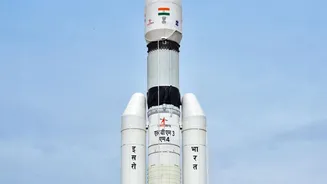
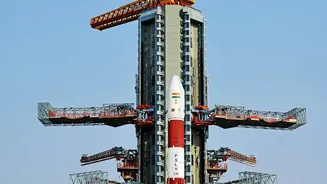
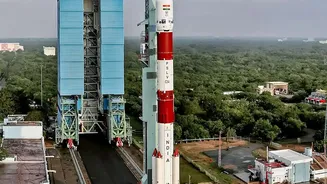
For decades, the Indian space sector was almost exclusively the domain of the Indian Space Research Organisation (ISRO). Private companies were limited to being suppliers and contractors. That landscape has been fundamentally altered by the Indian Space Policy
2023. The policy formally opened the door for private entities to undertake end-to-end space activities, from building rockets and satellites to owning and operating them. A new regulatory body, the Indian National Space Promotion and Authorisation Centre (IN-SPACe), was established to act as a single-window agency to promote, guide, and authorize private space activities, removing bureaucratic hurdles and providing much-needed clarity. This shift from a government-led to a government-facilitated model has been the single most important catalyst, signalling to the world that India is open for space business.
Foreign Investment Gets the Green Light
Following the policy changes, the Indian government significantly liberalised its Foreign Direct Investment (FDI) regulations for the space sector in 2024. The new rules create a tiered structure, allowing up to 100% FDI via the automatic route for manufacturing components and subsystems. For more complex activities, such as satellite manufacturing and operations, the automatic route is open for up to 74% FDI, while launch vehicle development allows up to 49% automatically. This move is designed to attract not just capital but also technology and expertise from established global players, accelerating the growth of domestic capabilities and integrating Indian startups into the global supply chain.
Innovation and Proven Success
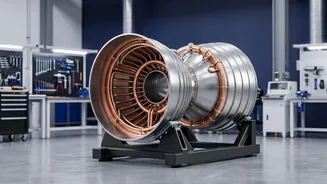
The policy changes are bearing fruit, with a surge in startup activity and funding. Indian space-tech startups raised nearly double the capital in 2026 compared to the previous year. Companies like Skyroot Aerospace, Agnikul Cosmos, and Pixxel are no longer just concepts on a whiteboard. Skyroot became the country's first private company to launch a rocket and has since achieved unicorn status. Agnikul has distinguished itself by opening India's first private launchpad and developing the world's first single-piece 3D-printed rocket engine. Meanwhile, Pixxel is making waves in the satellite imaging and data analytics space, securing international clients. These successes demonstrate tangible progress and a proven ability to execute complex engineering feats, giving investors the confidence to back their ambitious plans.
The Frugal Engineering Advantage
India's reputation for 'frugal innovation', most famously demonstrated by ISRO's low-cost missions to the Moon and Mars, is a significant asset for its private sector. Startups are building on this legacy, leveraging a deep pool of skilled engineering talent and domestic manufacturing capabilities to develop technology at a fraction of global costs. While some analyses suggest that India's per-kilogram launch costs are still higher than scaled-up players like those in the U.S., the overall cost-effectiveness for developing specific technologies, such as 3D-printed engines or specialized satellite components, remains a powerful draw. This cost advantage allows startups to offer competitive solutions in the global market, particularly in the burgeoning small satellite launch segment.
A Market Ready for Growth
The Indian space economy is on a steep growth trajectory. Valued at around $8.4 billion, it is projected to grow fivefold to over $44 billion by 2033. The government's goal is to capture a 10% share of the global space economy in the coming years, a significant jump from the current 2%. This ambition is supported by a growing domestic and international demand for space-based services, including satellite communications, Earth observation data for agriculture and climate monitoring, and navigation services. For investors, this translates into a large and expanding addressable market with opportunities across the entire value chain, from upstream manufacturing to downstream applications.