

What You Are Actually Seeing
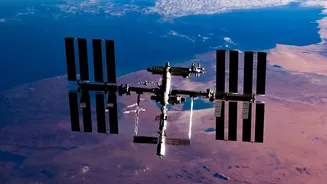
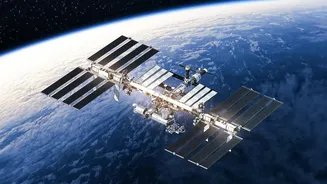
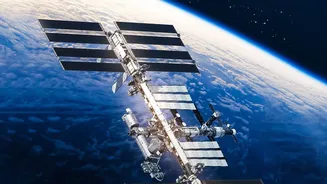
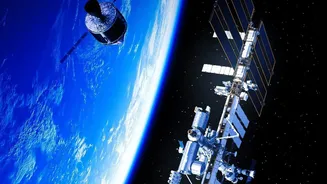
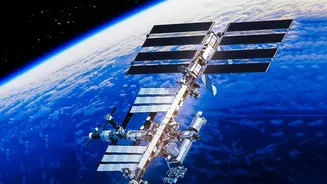
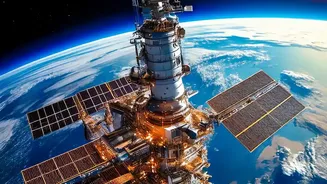
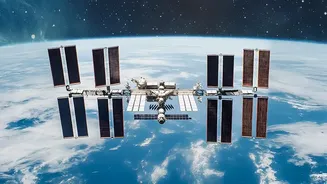
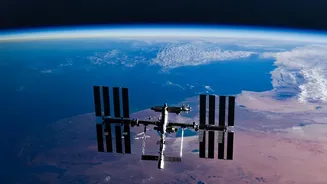
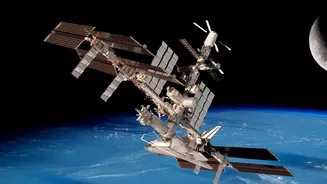
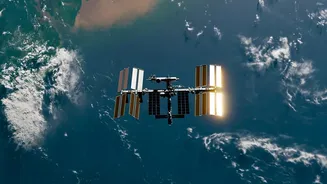
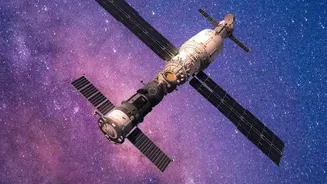
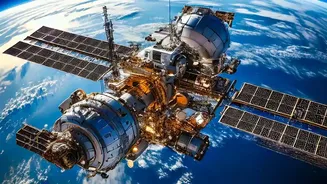
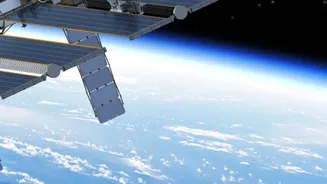
The International Space Station (ISS) is a massive orbiting laboratory, roughly the size of a football field, flying about 400 kilometres above Earth. It zips around the planet at an incredible 28,000 kilometres per hour, completing about 16 orbits every
single day. You don't need a telescope to see it; the ISS is visible to the naked eye because its vast solar panels and modules reflect sunlight. It appears as a very bright, steady point of light moving silently and quickly across the sky, often outshining every star and planet. Unlike an airplane, it doesn't have flashing lights and it doesn't change direction. The best times to spot it are during dawn or dusk, when the sky is dark but the station is high enough to still be illuminated by the sun.
The Magic of Skywatching Apps
The days of consulting complex astronomical charts are long gone. Modern smartphone apps do all the heavy lifting for you. They use your phone's GPS to determine your precise location and then cross-reference it with the ISS's real-time orbital data. The result is a simple, easy-to-understand schedule of upcoming viewing opportunities, complete with the exact time, duration, and direction of the pass. Many of these apps can even send you a push notification minutes before a pass is about to begin, ensuring you have enough time to step outside and look up. This technology makes spotting the station incredibly accessible, turning a celestial event into a predictable and exciting hobby for anyone.
Top Free Apps for Spotting the ISS
Several excellent and free apps are available for both Android and iOS to help you on your skywatching journey. Here are some of the most popular and reliable choices: ISS Detector: A favourite among enthusiasts, this app is incredibly user-friendly. Its main screen lists upcoming passes and uses a simple icon to indicate how good the viewing will be. It also checks local weather conditions to warn you if clouds might obstruct the view. The free version is dedicated to the ISS, with inexpensive extensions available to track other satellites like Starlink trains and the Hubble Space Telescope. Spot The Station: This is NASA's official app for tracking the ISS. It offers a clean interface, an augmented reality (AR) view that uses your camera to show the station's path across the sky, and real-time tracking on a 2D or 3D map. The app provides detailed information for each pass, including the maximum height it will reach and the exact compass points where it will appear and disappear. Heavens-Above: Originally a popular website, the Heavens-Above app provides precise pass predictions for the ISS and a multitude of other satellites. It features a live sky chart to show you what's overhead at any moment and allows you to add interesting passes directly to your calendar. Its detailed information is a great resource for those who want to dive deeper into satellite tracking. SkyView Lite: While not exclusively a satellite tracker, this popular stargazing app includes the ISS in its database. Its standout feature is its beautiful augmented reality interface; you just point your device at the sky to identify stars, planets, constellations, and passing satellites. It’s a fantastic all-in-one tool for exploring the wonders of the night sky.
Tips for the Best Sighting
Once you have your app and a confirmed pass time, a little preparation can make the experience even better. First, find a location with a clear, unobstructed view of the sky, away from tall buildings and bright city lights if possible. Give your eyes a few minutes to adjust to the darkness. When the time comes, use the app's compass or AR feature to know which direction to face. Remember that the ISS will rise, travel across the sky over several minutes, and then set. It will look like a fast-moving, non-blinking star. Knowing what to look for makes the moment of spotting it for the first time truly unforgettable.