







The Scent of the Season
It’s a ritual as old as memory for many. As soon as the monsoon sets in, makeshift stalls appear on street corners, their presence announced not by a sign, but by the unmistakable scent of corn roasting over hot coals. A man, often weathered by seasons
past, fans the embers with a piece of cardboard, turning the cobs until they are perfectly charred. This isn’t just cooking; it’s a performance. The hiss of the kernels, the rising smoke, and the glowing coals create a multi-sensory experience that is intrinsically linked to the cool, damp air of a rainy day. For millions, this simple sight and smell is the official welcome party for the monsoon, a comforting constant in a rapidly changing world.
More Than Just Corn
To call bhutta just a snack is to miss the point entirely. It is a cultural touchstone, a vessel for nostalgia, and a symbol of simple joys. Enjoying a bhutta is rarely a solitary act. It’s about gathering with friends on a rain-soaked evening, stopping the car on a long drive through the countryside, or huddling under an awning with family, sharing a moment of warmth as the world outside is washed clean. The act of eating it—holding the hot cob, biting into the smoky kernels, and getting your hands messy with masala and lime—is part of its charm. It forces you to be present, to engage with your food and your surroundings in a way that packaged snacks never could. It represents a pause, a moment of connection in the middle of a downpour.
A Tale of Two Bhuttas
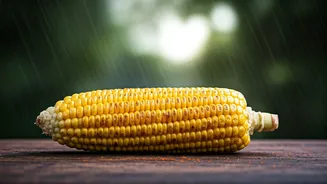
The world of Indian corn on the cob is largely divided into two camps. First, there is the classic ‘desi’ bhutta. This is the tougher, starchier, and less sweet variety, with smaller, chewier kernels. When roasted over coals, it develops a uniquely smoky, nutty flavour that is the heart and soul of the traditional experience. Then there is the American sweet corn, a more recent but popular alternative. Often boiled rather than roasted, its kernels are plump, juicy, and sweet. While children might prefer the gentler flavour of boiled sweet corn, purists will argue that the true monsoon experience lies in the rugged, smoky perfection of a roasted desi bhutta. The debate itself has become a part of the tradition, a friendly argument played out at street stalls across the country.
The Perfect Flavour Combination
The preparation of a classic roasted bhutta is a masterclass in balancing flavours. The magic happens after the cob leaves the fire. The vendor takes half a lemon, dips it generously into a mixture of salt, red chilli powder, and often a hint of chaat masala or black salt (kala namak), and then rubs it vigorously all over the hot corn. This simple act transforms the snack. The tartness of the lemon cuts through the smokiness of the char, the salt enhances the natural flavour of the corn, and the chilli provides a gentle, lingering heat that warms you from the inside out. Each bite is a perfectly engineered explosion of tangy, spicy, salty, and smoky notes—a flavour profile that feels custom-made for the grey, moody backdrop of a monsoon day.
A Shared National Memory
From the bustling lanes of Delhi and Mumbai to the quiet highways winding through the Western Ghats, the love for monsoon bhutta is a great unifier. It transcends age, class, and region. It’s the treat a child begs for on the way home from school and the nostalgic snack an adult seeks out to reconnect with simpler times. The experience is universal: the slight struggle to find the perfect cob, the patient wait as it roasts, and the final, satisfying reward. It is a shared memory woven into the fabric of Indian life, a reminder that some of the greatest pleasures are not found in fancy restaurants but on a humble street corner, served on a piece of husk, under a rain-filled sky.