






Meet the Sodium-Ion Battery
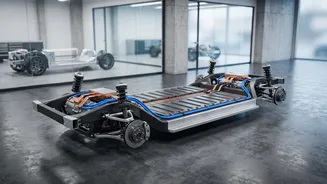
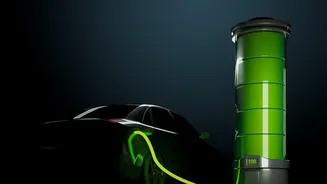
At its core, a sodium-ion battery works much like the lithium-ion batteries that power our phones and current electric cars. Positively charged ions travel between a cathode and an anode to store and release energy. The game-changing difference is the main
ingredient. Instead of lithium, which is relatively rare and geographically concentrated, these new cells use sodium. This is the same element found in common table salt, and it is over a thousand times more abundant in the Earth's crust than lithium. This abundance is the key to unlocking a more affordable and sustainable future for electric mobility.
The All-Important Cost Advantage
The primary driver behind the excitement for sodium-ion technology is its potential for significant cost savings. The battery pack is the single most expensive component of an EV, often accounting for 30-40% of the total cost. By swapping out expensive and price-volatile materials like lithium, cobalt, and nickel for cheap, stable sodium, manufacturers can drastically cut production expenses. Experts project that as manufacturing scales up, sodium-ion batteries could be 20-30% more economical than their lithium-iron-phosphate (LFP) counterparts, which are currently the go-to choice for budget EVs. Chinese battery giant CATL, a leader in this space, expects sodium-ion to reach cost parity with LFP by the end of 2026.
Performance, Safety, and Trade-Offs
Of course, this cost saving comes with some compromises, primarily in energy density. In simple terms, a sodium-ion battery of the same size and weight stores less energy than a lithium-ion one, which translates to a shorter driving range. However, this isn't a deal-breaker for every driver. For the millions in India who need a vehicle for daily city commutes, short-range EVs are a perfect fit. Furthermore, sodium-ion cells offer compelling advantages. They are less prone to overheating, making them safer, and perform significantly better in extreme temperatures—both hot and cold—which is a major plus for Indian climate conditions. They can also be fully discharged for transport or storage without damage, another safety benefit over lithium-ion cells.
The Automakers Leading the Charge
Chinese manufacturers are at the forefront of commercializing this technology. Battery maker CATL and automaker CHANGAN jointly unveiled the world's first mass-production passenger car with a sodium-ion battery, slated to hit the market in mid-2026. CATL plans to mass-produce the batteries in 2026, targeting a range of up to 600 kilometers in future versions. Meanwhile, automotive giant BYD has already launched its Seagull model, offering a version with a sodium-ion battery that provides around 300 km of range at an extremely competitive price point. These early models demonstrate that the technology is no longer confined to the lab; it's ready for the showroom.
The Impact on India's EV Market
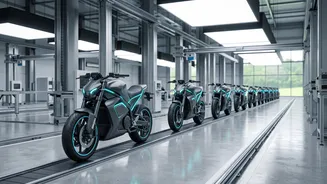
For India, sodium-ion technology represents a strategic opportunity to accelerate EV adoption and achieve greater self-reliance in energy storage. The country has abundant sodium resources but limited lithium reserves, making this an ideal technological path. Several Indian companies are already exploring this space. Jitendra EV, a two-wheeler manufacturer, aims to launch vehicles with India-made sodium batteries by early 2026. Meanwhile, Reliance Industries and other startups are looking to scale up the technology, initially focusing on the massive two and three-wheeler market, which forms the backbone of Indian transport. By making the entry point for EV ownership significantly lower, sodium-ion batteries can help electrify India's vehicle fleet from the ground up.