






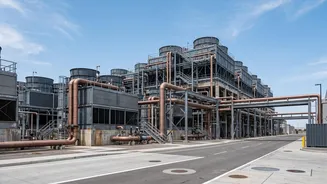

A Shock to the System
Researchers at Harvard University have put a number on what many in the tech industry have worried about: the immense environmental toll of the data centres that power our modern world. In a study published in 'Nature Sustainability', they estimated that just
403 of the largest 'hyperscale' data centres in the US produced approximately 25.7 million metric tons of carbon dioxide in a single year. That's a carbon footprint comparable to the entire nation of Denmark. The research, which covered the period between May 2024 and April 2025, found these facilities consumed up to 99 terawatt-hours of electricity, an amount similar to the annual usage of states like Michigan or Tennessee. More alarmingly, the study concluded that over half of this power—about 54%—was generated by burning fossil fuels, primarily natural gas and coal.
The AI and Cloud Computing Boom
What’s driving this insatiable hunger for energy? The answer lies in the explosive growth of artificial intelligence and the mass migration to cloud computing. Training and running large AI models, like those behind generative AI services, is an exceptionally power-intensive process. According to technology research firm Gartner, the worldwide power demand from data centres is expected to jump by 27% in 2026 alone, with AI-optimized servers being a primary cause. Traditional data centres operated at power densities of 5 to 10 kilowatts per rack; modern AI workloads now demand 50 to 100 kW per rack. This surge has made access to reliable electricity the single biggest bottleneck for building new AI infrastructure, even more so than securing funding. The International Energy Agency (IEA) has warned that data centres will consume twice as much electricity by 2030 as they do today, with AI accounting for three-quarters of that growth.
More Than Just Carbon
The environmental impact extends beyond just carbon emissions. These massive facilities also require enormous quantities of water for cooling. One data centre can use between 2 million and 19 million litres of water per day, putting a significant strain on local resources, especially in water-scarce regions. There are also public health consequences. A recent MIT study found that air pollution from the electricity needed to power data centres in 2023 resulted in an estimated 650 premature deaths across the United States. Furthermore, the rapid three-year hardware replacement cycle needed to keep up with AI advancements contributes to a growing e-waste problem, as servers filled with hazardous materials like lead and mercury are discarded.
The Search for Greener Data
The technology industry is not sitting idle, but the challenge is immense. Many of the largest tech companies are also the world's biggest corporate buyers of renewable energy. However, the sheer pace of AI-driven expansion means that demand is outstripping the supply of clean energy. As a result, some developers are turning back to fossil fuels, particularly natural gas, to power new facilities. In response, innovation in sustainable data centre technology is accelerating. Key solutions include advanced liquid cooling systems, which can be 30-40% more energy-efficient than traditional air cooling, and designing facilities to run on direct solar or wind power, often paired with large battery storage systems. Other strategies involve building data centres in colder climates to reduce cooling costs, recycling waste heat to warm nearby buildings, and improving server efficiency and utilization through virtualization and AI-driven management software.