







The Art of Scent Layering
A thoughtfully designed garden appeals to all the senses, but fragrance is perhaps the most powerful and memorable. The principle of pairing fresh herbs with a single, potent flowering plant is an exercise in scent layering. Think of it like a well-crafted
perfume. The herbs provide the bright, zesty top notes—the scents you notice first, which are often released when you brush against the leaves. The flowering plant offers the deep, complex heart or base note that provides a lingering, romantic backdrop. This contrast prevents any one scent from becoming overwhelming, creating a harmonious blend that is both invigorating and soothing. This approach works beautifully in garden beds, along pathways, or in containers on a balcony or patio.
Classic Romance: Rose and Rosemary
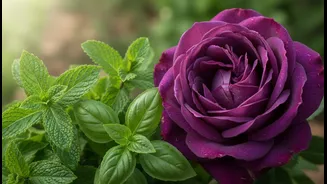
This is a timeless combination that evokes a Mediterranean garden. The deep, velvety fragrance of a classic rose finds its perfect counterpart in the pine-like, resinous aroma of rosemary. Both plants thrive in full sun and well-drained soil, making them excellent garden companions. The evergreen structure of rosemary provides a wonderful textural contrast to the softer rose blooms, offering visual interest year-round. For Indian gardens, consider a fragrant Desi Gulab (Indian Rose) paired with upright rosemary. The herb's strong scent is also known to deter pests like deer and rabbits, offering a layer of protection for your prized roses. When you brush past, the combined scent is both floral and freshly herbaceous.
Evening Magic: Mogra and Mint
For a fragrance that comes alive in the evening, there is no better combination than Jasmine, particularly the beloved Mogra (Jasminum sambac), and fresh Mint. Mogra releases its iconic, intoxicatingly sweet scent after dusk, perfuming the night air. Mint, with its sharp, cool, and clean aroma, cuts through the richness beautifully. This pairing creates a refreshing and utterly enchanting atmosphere for a patio or a window box. While both can be vigorous growers, it is best to grow mint in a container to prevent it from spreading and overwhelming the jasmine's roots. The combination is not just a treat for the nose; the bright green of the mint leaves looks stunning against the waxy white of the Mogra flowers.
Tropical Elegance: Tuberose and Lemongrass
Tuberose, or Rajnigandha, is another flower renowned for its powerful and long-lasting evening fragrance. Its creamy, sweet, and slightly spicy notes are luxurious and can fill an entire garden. To balance this richness, pair it with the zesty, citrusy scent of lemongrass. Lemongrass offers a clean, sharp counterpoint that brightens the heavy floral notes of the tuberose. Both plants enjoy sunny conditions and are well-suited to Indian climates. Lemongrass has the added benefit of being a natural mosquito repellent, making your garden a more pleasant place to be on warm evenings. Visually, the tall, grassy blades of lemongrass create a wonderful, modern contrast to the elegant, upright flower spikes of the Rajnigandha.
Sacred and Sunny: Marigold and Tulsi
For a pairing that is both beautiful and culturally significant in India, combine the sunny, slightly spicy scent of Marigolds with the holy fragrance of Tulsi (Holy Basil). Marigolds are robust, cheerful flowers that provide vibrant colour and have pest-repellent properties. Their scent is sharp and green. Tulsi, a revered herb, has a complex aroma that is peppery, clove-like, and slightly sweet. Planted together, they create a fragrant and beneficial combination that thrives in the sun. Basil, in general, is known to repel several garden pests, adding a layer of protection. This duo works exceptionally well in pots on a terrace or as a border in a kitchen garden, offering both beauty and utility.