






From Sugarcane to Sweetener
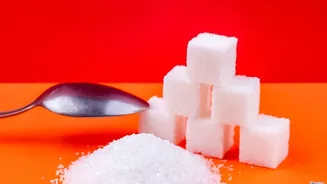
Both jaggery and sugar originate from sugarcane juice, but their paths diverge significantly in processing. White sugar undergoes intense refinement, a multi-step process involving bleaching and crystallisation that strips away all other compounds, leaving
behind pure sucrose—what many call 'empty calories'. Jaggery, on the other hand, is unrefined. The sugarcane juice is simply boiled and concentrated until it solidifies. This minimal processing allows it to retain molasses, the dark, syrupy part of the sugarcane that contains naturally occurring minerals. This fundamental difference in production is the source of all the health claims surrounding jaggery.
A Nutritional Edge, But a Small One
Because it retains molasses, jaggery contains trace amounts of essential minerals that white sugar lacks, including iron, magnesium, and potassium. Some studies note that 100 grams of jaggery can provide a significant amount of your daily iron needs. However, it is crucial to look at realistic serving sizes. You would need to consume a large, unhealthy amount of jaggery to get a major mineral boost, by which point the high sugar intake would negate any benefits. In the small quantities typically used to sweeten tea or a dessert, the mineral contribution is quite small.
Why Jaggery Is a Winter Favourite
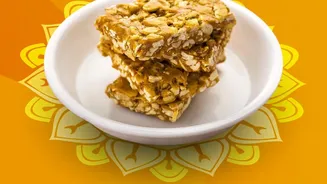
Jaggery's place in the winter diet is deeply rooted in tradition and Ayurveda. It is considered a 'warming' food, believed to generate heat in the body during its metabolism. This warming potency, or 'taseer', is why it's a star ingredient in winter delicacies like chikki, gajak, and til ladoo. Traditionally, it’s also used as a remedy for cold-weather ailments. It’s believed to soothe throat irritation, help clear the respiratory tract, and support the immune system, which is often under stress during colder months.
The Calorie and Blood Sugar Question
Here's where the comparison gets tricky. Despite its nutritional halo, jaggery is calorically almost identical to white sugar. 100 grams of jaggery has about 383 calories, while the same amount of white sugar has about 387. This means that swapping sugar for jaggery will not help with weight loss if the quantity remains the same. Furthermore, while some sources claim jaggery has a lower glycemic index (GI), other studies show its GI can be quite high, sometimes even higher than sugar, meaning it can cause a rapid spike in blood sugar levels. For this reason, people with diabetes are advised to avoid or strictly limit jaggery, just as they would with sugar.
The Verdict: Portion Is King
So, which one should you choose? Jaggery is marginally better than white sugar because it is less processed and offers a few extra nutrients. Its traditional role as a warming food also gives it a special place in winter diets. However, it is not a health food. Your body still recognizes it primarily as sugar, and consuming too much of it carries the same risks as excess white sugar, including weight gain and an increased risk of metabolic issues. The World Health Organization recommends limiting added sugars, and that includes jaggery. A reasonable daily limit for a healthy adult is often suggested to be around 10-15 grams, which is about one tablespoon.