




The Ultimate Desk-Job Exercise
The modern workday often involves hours of sitting, which can lead to weakened glutes and quadriceps. The wall sit is the perfect antidote. Why? First, it requires zero equipment—just you and a sturdy wall. Second, it’s an isometric exercise, meaning
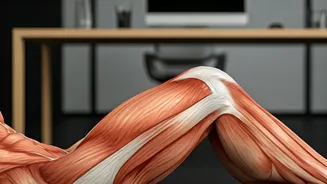
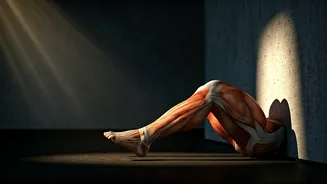
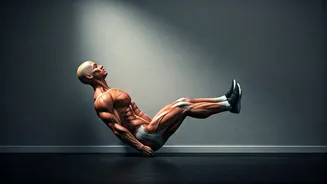
your muscles contract without moving your joints. This builds endurance and strength with very low impact, making it safe for most people. It primarily targets the quadriceps (the front of your thighs), but also engages your glutes, hamstrings, and core stabilisers. It’s a silent but mighty move that strengthens the exact muscles that get neglected at a desk, all without breaking a sweat or needing to change into gym clothes.
How to Do a Perfect Wall Sit
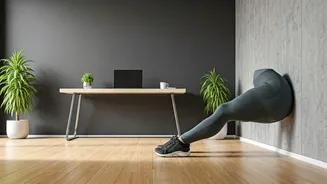
Mastering the form is key to getting the benefits and avoiding strain. Follow these simple steps: 1. **Find Your Wall:** Stand with your back flat against a smooth, solid wall. 2. **Position Your Feet:** Your feet should be shoulder-width apart and about two feet away from the wall. 3. **Slide Down:** Slowly slide your back down the wall until your thighs are parallel to the floor, as if you’re sitting in an invisible chair. Your knees should be directly above your ankles, creating a 90-degree angle. 4. **Check Your Form:** Ensure your back is pressed firmly against the wall, from your shoulders to your lower back. Engage your abdominal muscles to help maintain this position. 5. **Hold and Breathe:** Keep your arms relaxed by your sides or resting on your thighs. Breathe steadily and hold the position. Start with 20-30 seconds and gradually work your way up to 60 seconds or more as you get stronger.
Common Mistakes That Weaken Your Sit
A little attention to detail goes a long way. Watch out for these common errors to ensure your wall sit is both safe and effective. The most frequent mistake is letting your knees drift past your ankles. This puts unnecessary pressure on the knee joints. Always keep your knees aligned directly over your ankles. Another issue is not sliding down far enough; if your thighs aren't parallel to the floor, you're not fully engaging your quads. Conversely, sliding too low can also strain the knees. Also, avoid arching your lower back away from the wall or placing your hands on your thighs to push yourself up—this cheats the exercise. Finally, remember to breathe! Holding your breath creates tension and raises blood pressure. If you feel any sharp pain, especially in your knees, stop immediately and readjust your form.
Make It a Workday Ritual
The hardest part of any new habit is consistency. The beauty of the wall sit is its convenience. Try a “trigger-based” approach. For example, do a 30-second wall sit every time you get up to refill your water bottle. Or, set a recurring alarm for once every hour to remind you to get up and hold the pose. If you take phone calls where you don't need to be at your screen, find a quiet wall and do your sits while you talk. You can also make it a team challenge. Get a few colleagues involved and see who can hold the position the longest at the end of the day. Tying the exercise to an existing part of your routine makes it much easier to remember and helps integrate movement seamlessly into your workday.
Ready for a Challenge? Try These Variations
Once you can comfortably hold a standard wall sit for a minute or more, you might be ready to level up. These variations will add intensity and keep your muscles guessing. * **Single-Leg Lift:** While in the wall sit position, slowly lift one foot off the ground and extend the leg straight out in front of you. Hold for 5-10 seconds before switching legs. This dramatically increases the load on the supporting leg and challenges your core stability. * **Add Weight:** Hold a weight—like a heavy book, your laptop bag, or a full water bottle—on your lap to increase resistance and fire up your quads even more. * **Calf Raises:** While holding the wall sit, press up onto the balls of your feet, hold for a second, and then lower your heels back down. Repeat this for the duration of your sit to work your calf muscles simultaneously.