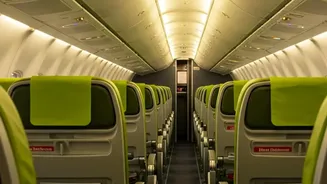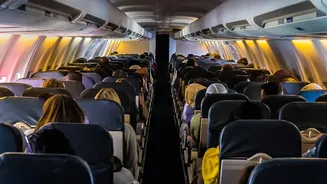






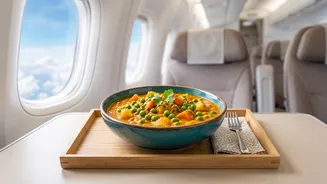
Ever peeled open a bag of your favourite crisps at 30,000 feet, only to find them disappointingly bland? It’s not your imagination, and the catering company isn't to blame. The culprit is the airplane cabin itself, a unique environment.
The High-Altitude Heist on Taste
The moment you're
cruising at altitude, a trio of factors begins to conspire against your senses: low air pressure, low humidity, and constant background noise. This isn't just a minor inconvenience; the combination can reduce your perception of saltiness and sweetness by up to 30 percent. So, if you think your meal tastes under-seasoned, you're experiencing a well-documented physiological phenomenon. Your taste buds aren't failing you; they're simply operating in an environment that dulls their abilities. This forces airline caterers to re-engineer their recipes, not just by adding more salt, but by understanding the science of how our senses change in the sky.
Pressure and Parched Palates
First, let's talk about pressure and humidity. A modern aircraft cabin is pressurized to the equivalent of being 6,000 to 8,000 feet up a mountain. This lower pressure reduces blood oxygen saturation, which can slightly numb the sensitivity of our taste receptors. Compounding this is the incredibly dry air. Cabin humidity levels can drop below 12-20%, which is drier than most deserts. Our sense of smell is responsible for about 80% of what we perceive as flavour. For our smell receptors to work properly, our nasal passages need to be moist. The dry cabin air dries them out, significantly dulling our ability to detect aromas and, by extension, taste. This dryness also reduces saliva, making it harder for our taste buds to register flavour molecules in the first place.
The Surprising Sound of Blandness
It’s not just the air; it's the noise. The constant, low-frequency hum of the jet engines, typically around 85 decibels, has a curious effect on our palate. Research, including studies from Cornell University and the University of Oxford, has shown that loud background noise suppresses our ability to taste sweetness. However, the same noise seems to enhance our perception of the fifth taste: umami. This is the savoury, rich flavour found in foods like tomatoes, mushrooms, aged cheese, and soy sauce. This finding helps explain a classic airline mystery: why so many people crave a Bloody Mary or a simple tomato juice on a flight, even if they rarely drink it on the ground. The umami flavour cuts through the sensory fog created by the cabin environment.
Airlines' Culinary Counter-Attack
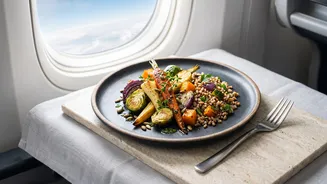
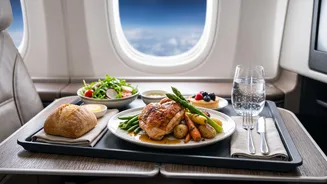
Faced with this sensory assault, airline caterers have turned to food science for solutions. Simply adding 30 percent more salt and sugar would result in meals that are unpleasantly overstuffed if eaten on the ground. Instead, chefs focus on building menus that are naturally resilient to the effects of altitude. This means prioritising ingredients rich in umami, which remains stable or is even enhanced by the cabin environment. You'll often find in_flight menus featuring dishes with tomato_based sauces, mushrooms, parmesan, and soy glazes. Curries and other spicy foods also perform well, as our perception of spice, along with sour and bitter tastes, is largely unaffected by the altitude. The goal is to create meals that are flavourful and balanced in the sky, not just in a test kitchen on the ground. Many airlines now employ advanced cooking techniques like sous_vide to lock in moisture and flavour, ensuring meals withstand the chill_and_reheat cycle.