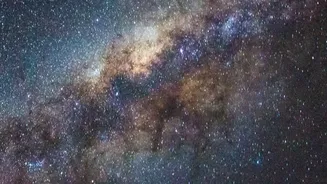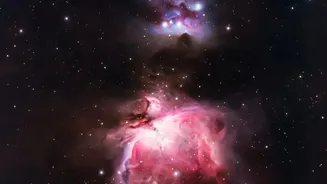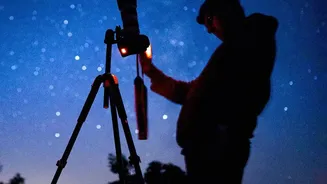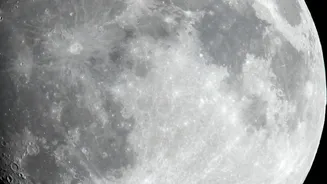




The Challenge of Dark Skies
Until a few years ago, capturing the cosmos was exclusively for professional photographers with expensive DSLR cameras, heavy tripods, and years of practice. For a tiny smartphone sensor, the task is even harder. In low light, camera sensors struggle
to gather enough information, resulting in 'noise'—that ugly, grainy texture that ruins photos. Furthermore, one long exposure would be a blurry mess due to the Earth's rotation and the natural shakiness of our hands. So how do phones overcome these physical limitations? They don't take one perfect photo; they take many imperfect ones.
The Power of Stacking Images
The core technique behind mobile astrophotography is 'image stacking'. When you use a feature like Google's Astrophotography mode or Apple's Night mode on a tripod, the phone isn't taking a single long picture. Instead, it rapidly captures a burst of many short-exposure photos, sometimes for up to four minutes. Each individual frame might look noisy and dark, but it contains valuable data. The phone's powerful processor then gets to work, layering these images on top of each other. This process is where the computational magic truly begins, transforming a noisy collection of images into a single, high-quality result.
Algorithms as the Digital Darkroom
Once the frames are captured, a series of complex algorithms takes over. First, the software must precisely align each image to account for the slight movement of stars caused by the Earth's rotation. Next, it averages out the data from all the frames. Since the digital noise in each photo is random, averaging them together effectively cancels it out, making the constant signal—the light from the stars—shine through clearly. The algorithm then intelligently brightens the scene, enhances details, and balances colours to make stars and nebulae pop without making the sky look artificially bright. Some phones even have AI trained on thousands of professional astrophotos to apply the final edits.
Artificial Intelligence Takes the Wheel
Modern smartphones are increasingly reliant on Artificial Intelligence (AI) to simplify this process. Many high-end phones from brands like Samsung, Google, and Apple can automatically detect when you're pointing the camera at the night sky and suggest using a special mode. This AI-powered scene recognition adjusts all the complex settings for you, from shutter speed to ISO. It can even differentiate between the foreground and the sky, processing them separately to ensure trees or buildings remain sharp while the stars are perfectly aligned. For specific subjects like the moon, some phones use AI to recognise the object and apply specific enhancements to bring out details like craters.
The Software-First Future of Photography
The rise of mobile astrophotography proves that the future of cameras isn't just about bigger lenses or sensors—it's about smarter software. While a larger sensor, like those found in Xiaomi phones, still provides a physical advantage in capturing more light, it's the computational algorithms that level the playing field. These intelligent systems have democratised a once-niche hobby, allowing millions of people in India and across the globe to capture the beauty of the universe with the device they already carry in their pocket. It's a powerful reminder that the best camera is the one you have with you, especially when it's powered by sophisticated software.