



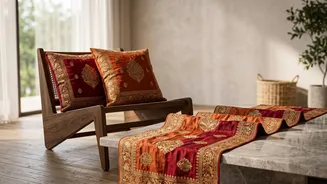
From Wardrobe To Wow
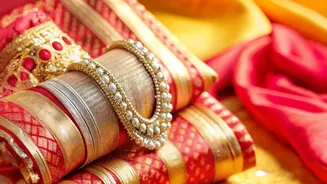
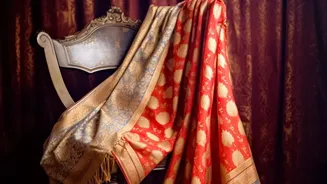
Many Indian households have a collection of sarees that are too precious to discard but are no longer worn. These fabrics, rich in colour, texture, and sentimental value, are ideal for upcycling. Whether it's a vibrant silk, a soft cotton, or a heavy
brocade, each piece has a story. Similarly, old drapes, often made of durable and high-quality material, can be repurposed instead of thrown away. Transforming them into festive decor is not just sustainable and budget-friendly; it's a way to weave personal history into your home's festive look, creating pieces that are conversation starters.
Your DIY Toolkit
Before you begin, gather a few basic supplies. You don't need to be a professional tailor to get started. You will need your chosen fabric (old sarees or drapes), a pair of sharp fabric scissors, a measuring tape, and pins to hold the fabric in place. For sewing, a basic sewing machine is helpful, but a simple needle and thread will work just as well for these projects. If you prefer a no-sew option, fabric glue is a great alternative. Finally, collect some embellishments like tassels, beads, lace, or decorative trim to add that extra festive sparkle.
Crafting Chic Cushion Covers
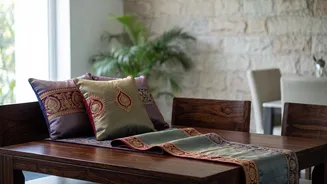
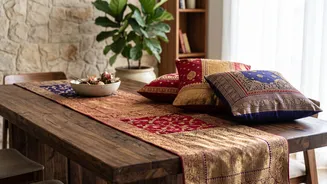
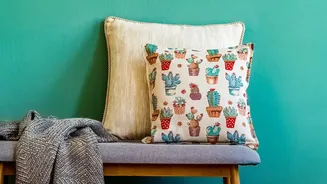
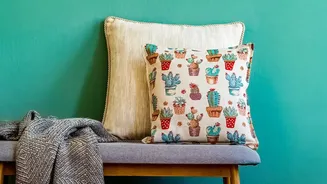
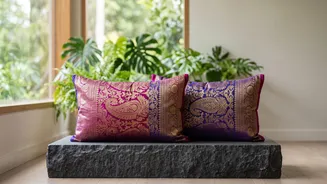
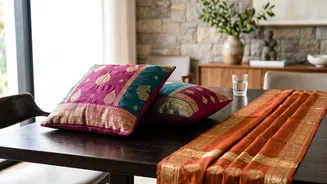
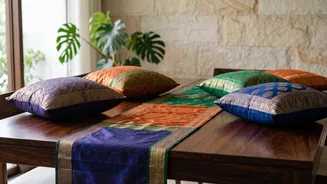
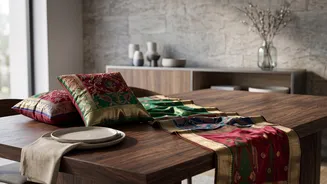
Cushion covers are one of the easiest ways to start your upcycling journey. For a standard 16x16 inch cushion, cut a piece of fabric that is 17 inches wide and 36 inches long. This allows for a half-inch seam on all sides and creates an 'envelope' closure, which requires no zippers or buttons. Simply hem the two shorter ends. Then, with the fabric's right side facing up, fold one end towards the centre and the other end over it, overlapping by about 4-5 inches, until the total length is 16 inches. Stitch along the two open sides, turn it right side out, and your cushion cover is ready. Strategically use the saree's 'pallu' or a decorative border for the front panel to create a designer look. For delicate fabrics like chiffon, adding a plain cotton lining will increase durability.
Designing Elegant Table Runners
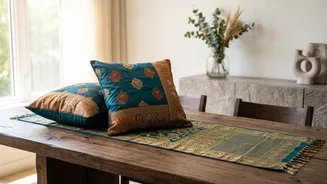
A table runner can instantly elevate your dining space. The rich border of a silk or Banarasi saree is perfect for this. First, measure the length and width of your table. A standard runner is typically one-third the width of the table and hangs about six inches over each end. Once you have your dimensions, cut the fabric, adding a one-inch allowance on all sides for the hem. Fold the edges over twice and stitch them down for a clean finish. You can also make a reversible runner by sewing two different fabrics together. Place the two pieces with their right sides facing each other, sew around the edges, leave a small opening, turn it inside out, and stitch the opening closed. This is a fantastic way to use both a patterned drape and a plain saree.
Adding Festive Flourishes
The final step is to add festive embellishments that make your creations stand out. Attaching colourful tassels or small pom-poms to the corners of your cushion covers can add a playful touch. You can buy these ready-made or make them yourself from leftover thread. Stitching a delicate lace or a vibrant 'g_ota p_atti' trim along the edges of your table runner can make it look exceptionally festive. If you have parts of a saree with mirror work or intricate embroidery, you can cut those motifs out and appliqué them onto plain cushion covers or runners. These small details are what transform a simple DIY project into an elegant piece of home decor.