




Choose Soft Bags, Not Hard Cases
The first rule of small car packing is to ditch the rigid suitcases. Hard-shell luggage is inefficient, creating awkward, unusable gaps. The friends' secret weapon is the soft-sided duffel bag. These bags are flexible and can be squeezed into the irregular
spaces of a car's boot, under seats, or around other items. By mandating one duffel bag per person, you establish a clear space limit from the start. This simple rule prevents the classic overpacking problem where one person's giant suitcase consumes half the available space. Duffels are also lighter than their hard-shell counterparts, which helps with fuel efficiency and makes them easier to carry into overnight stops.
Master the Art of Rolling
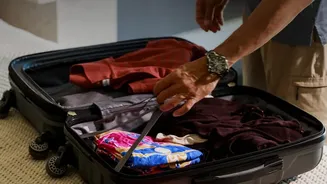
Folding clothes is for wardrobes; rolling is for travel. This is one of the most effective space-saving hacks in any packer's arsenal. Tightly rolling items like t-shirts, trousers, and shorts compresses them and minimizes wrinkles. It also allows you to see all your clothes at a glance inside your bag, so you aren't rummaging through neatly folded piles to find one specific shirt. For maximum efficiency, you can learn the 'ranger roll' or 'military roll', which involves a small fold and a tight tuck to keep the roll from coming undone in transit. This technique ensures every piece of clothing takes up the absolute minimum amount of space.
Divide and Conquer with Packing Cubes
Packing cubes are a game-changer for group travel. These small, zippered bags help compartmentalize your belongings within your main duffel bag. You can assign cubes for tops, bottoms, underwear, and socks. This keeps your bag tidy and makes finding things effortless. For even more space, consider compression packing cubes, which have an extra zipper that squeezes out excess air. The friends in our scenario can take this a step further by using different coloured cubes, so if bags are being shared or items are stored communally, it's easy to tell whose gear is whose at a glance.
Centralize and Share Toiletries
There is no need for all four friends to pack their own full-size bottle of shampoo, conditioner, or toothpaste. Before the trip, coordinate who is bringing what. One person can be responsible for hair care, another for sunscreen and moisturiser, and so on. Use travel-size containers to decant only what you need for the four days. Some travellers even use clever hacks like filling contact lens cases with small amounts of lotion or foundation. These shared items can be stored in a single, accessible toiletry bag, saving a surprising amount of space and redundancy across four individual luggage bags.
Create a 'Go-Bag' for the Cabin
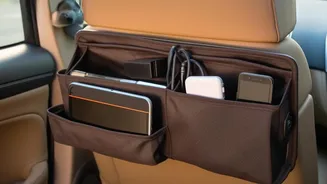
You don't want to pull over and unpack the entire boot just to find a phone charger or a snack. The solution is to have a shared 'go-bag' or 'day bag' in the cabin. This bag should hold all the essentials you'll need while driving: chargers, a power bank, snacks, wet wipes, hand sanitizer, sunglasses, and any necessary medications. Each person can also have a small personal item like a tote or backpack for their own essentials. By keeping these high-use items within arm's reach, you reduce distractions and the need to stop, ensuring the journey itself is as smooth as the packing.
Utilize Every Nook and Cranny
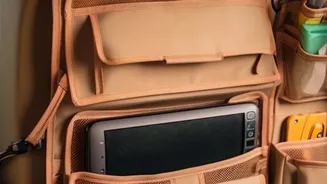
Small cars are full of hidden storage spots. Don't forget the space inside shoes, which can be stuffed with socks or small electronics. The compartments in the car doors, the glove box, and seat-back organizers are perfect for stashing small, frequently needed items. Heavier items should be placed low and in the center of the boot to maintain the car's stability. Once the main duffel bags are in, the smaller, softer items like jackets or pillows can be tucked into the remaining gaps. A well-packed car is not just about fitting everything in; it's about making the space work for you throughout the entire journey.