



The Science of a Sharper Sky
The magic of autumn stargazing starts with the air itself. After the heavy, moisture-laden skies of the monsoon, autumn ushers in cooler, drier air. This is crucial for skywatchers. Warm air can hold a lot of moisture, creating a haze that scatters light.
In a city, this is a double whammy: the haze not only blurs distant stars but also catches and amplifies the glow from streetlights, a phenomenon called skyglow. Cooler autumn air holds significantly less water vapour. Less moisture means less atmospheric haze and fewer particles for city light to bounce off of, resulting in a more transparent sky. This improved clarity, which astronomers call 'good transparency', creates a darker backdrop and makes fainter objects, like meteors, much easier to spot.
Longer Nights and Prime Viewing Hours
The second advantage is simple but significant: autumn nights are longer. As the sun sets earlier each day, the window for stargazing opens up long before you need to stay up past midnight. This is a welcome change from summer, when true darkness doesn't settle in until late. For city dwellers, this means you can find a suitable viewing spot, like a park or a quiet rooftop, at a more convenient time. Furthermore, the Earth's tilt during autumn positions us favourably for morning celestial events. Planets and meteor shower radiant points—the area in the sky from which meteors appear to originate—are often higher in the sky in the pre-dawn hours, placing them above the thickest, most turbulent layer of the atmosphere near the horizon.
Your Autumn 2026 Meteor Calendar
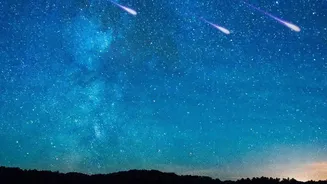
Autumn is a busy season for meteor showers, and 2026 offers some excellent opportunities. First up are the Draconids, peaking on the night of October 8-9. While a minor shower producing about 6 to 10 meteors per hour, the viewing conditions are perfect this year. The peak coincides with a near-new moon, meaning the sky will be exceptionally dark. A unique feature of the Draconids is that they are best viewed in the early evening, just after nightfall. Later in the month, the Orionids, debris from the famous Halley's Comet, will peak on the night of October 21-22. These are known for being fast and bright, with up to 20 meteors per hour. While a bright moon will interfere in the evening, it sets after midnight, leaving the pre-dawn hours dark for prime viewing. Looking ahead, the Leonids will peak on November 17-18, offering a display of about 10-15 fast, bright meteors.
Beating the Urban Glow
Even with ideal atmospheric conditions, the biggest challenge for a city skywatcher is light pollution. But don't be discouraged; a successful meteor watch is still possible. The key is to find the darkest possible spot available to you. This could be a local park, a sports field after the lights are out, or even a rooftop with a clear view of the sky. Try to put a building or a line of trees between you and the brightest sources of direct light. The most important tool you have is patience. It takes about 20 to 30 minutes for your eyes to fully adapt to the dark, a process called dark adaptation. Avoid looking at your phone during this time, as the bright screen will reset your night vision instantly. If you need a light, use a red flashlight, which is far less disruptive to your eyes.
Tools for the Urban Astronomer
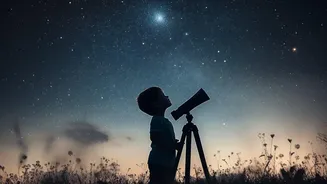
You don’t need any expensive equipment to enjoy a meteor shower. In fact, telescopes are not recommended because their narrow field of view makes it easy to miss the fleeting streaks of light. Your naked eyes are the best tools for the job, supplemented perhaps by a pair of binoculars for general sky scanning. To get your bearings, consider using a stargazing app on your smartphone, like Stellarium or SkyView. These apps can help you locate the radiant point of a meteor shower—for example, the constellation Draco for the Draconids or Orion for the Orionids. Knowing where to look increases your chances of spotting meteors as they streak across the sky. Just remember to turn your screen brightness to its lowest setting and enable any 'night mode' to preserve your night vision.