





Why Alignment is Your Foundation
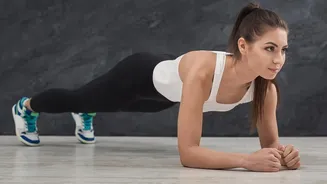
Think of a wall push-up not just as an arm exercise, but as a moving plank. The goal is to maintain a rigid, straight line from your head, through your spine and hips, all the way down to your heels. This alignment is non-negotiable for two main reasons.
First, it protects your joints, particularly your lower back and shoulders, from undue strain. When your hips sag or your back arches, you're putting pressure on your spine instead of making your muscles work. Second, proper alignment ensures you're actually targeting the intended muscles: the chest (pectorals), shoulders (deltoids), and triceps. A strong, straight body forces these muscles to do the work of pushing you away from the wall, which is the entire point of the exercise. Without it, you're just going through the motions and missing out on the strength-building benefits.
Setting Up for Perfect Form
Success starts before you even move. Stand about an arm's length away from a solid wall, with your feet about hip- or shoulder-width apart. Place your hands on the wall slightly wider than your shoulders, generally at shoulder or chest height. Having your hands too high can create a poor angle for your shoulders. Your fingers should point toward the ceiling. Before you begin the push-up, actively engage your core. A great cue is to brace your stomach as if you're about to be poked, while also squeezing your glutes. This action helps 'lock' your pelvis in a neutral position, creating that solid plank-like structure from head to heels. Your head should remain in line with your spine, not jutting forward or dropping down.
Common Alignment Mistakes and How to Fix Them
It's easy to fall into bad habits. The most common alignment error is letting the hips sag toward the wall, creating a 'cobra' or 'worm-like' movement. This indicates your core is disengaged. The fix is to consciously tighten your abs and glutes throughout the entire set. The opposite mistake is piking the hips up and back, breaking the straight body line. In this case, your body is folding at the hips instead of moving as one unit. The solution is the same: re-engage the core to maintain a flat back. Another issue is leading with your head, where your chin moves toward the wall first. To correct this, focus on leading with your chest, keeping your neck in a neutral position. Lastly, avoid flaring your elbows directly out to the sides into a 'T' shape, which can strain the shoulder joints. Instead, aim for a 45-degree angle, creating more of an 'A' shape with your body.
Engaging the Right Muscles Through Alignment
When your body is correctly aligned, you create a stable base that allows the primary movers to work effectively. As you inhale and lower your chest toward the wall, you should feel a stretch across your pectoral muscles. Your core and glutes must remain tight to prevent your lower back from arching. As you exhale and push back to the start, the force should come from your chest, the front of your shoulders, and the triceps at the back of your arms. Proper form even engages the serratus anterior, a key muscle for shoulder blade health and stability. By treating the wall push-up as a full-body exercise with a focus on stability, you turn a simple move into a highly effective strength builder that protects your joints and builds functional power.