






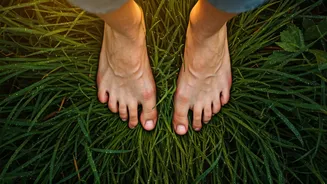


The Allure of a Simple Solution
In a world of desk jobs, long commutes, and constant screen time, back pain has become a near-universal complaint. It’s no wonder we’re drawn to simple, natural remedies. The headline’s promise taps directly into this desire. It paints a picture of effortless
healing—kicking off your shoes in a park or garden and letting nature do the work. This practice, often called 'earthing' or 'grounding', has gained a passionate following, with proponents claiming it can solve everything from inflammation to poor sleep. The idea that it could also 'automatically' correct our posture is the ultimate wellness dream, but does it hold up to scrutiny?
The Science of 'Earthing'
At its core, earthing involves direct physical contact with the Earth's surface. The theory is that our bodies, which are conductive, absorb free electrons from the ground, helping to stabilize our internal bioelectrical environment. Proponents believe this exchange can reduce inflammation, lower stress hormones like cortisol, and improve overall well-being. While some small studies have suggested potential benefits, the scientific community largely views the research as preliminary and inconclusive. Many of the reported benefits, such as feeling calmer or more relaxed, could also be attributed to the simple act of being outdoors in nature (a practice with well-documented psychological benefits) rather than an electrical exchange with the planet.
What Barefoot Walking *Can* Do
Putting aside the electrical theories, walking barefoot does have tangible, evidence-backed benefits for your body’s mechanics. When you walk without shoes, the hundreds of nerve endings in your feet get to feel the ground. This improves proprioception—your body's sense of its position in space. Your feet can spread naturally, strengthening the small, intrinsic muscles that support your arches. Over time, this can lead to better balance and a more natural gait. Unlike cushioned shoes that encourage a heavy heel-strike, walking barefoot often promotes a softer landing on the mid or forefoot, which can reduce impact forces travelling up your legs.
The Indirect Link to Your Spine
This is where we connect the feet to the back. Your feet are the foundation of your body. A weak or unstable foundation can lead to a chain reaction of misalignment that travels up through your ankles, knees, hips, and ultimately, your spine. By strengthening your feet and improving your balance, you are building a more solid base. A stable base allows for better posture, which in turn can reduce unnecessary strain on your back muscles. So, in an indirect way, developing healthier feet through barefoot walking *can* contribute to better postural habits. However, 'contributing to better habits' is very different from 'automatically correcting your spine.'
The Myth of Automatic Correction
Here's the crucial reality check: walking barefoot is not a medical treatment. It cannot 'correct' structural spinal issues like scoliosis, a herniated disc, or spinal stenosis. These are complex medical conditions that often require diagnosis and treatment from doctors, orthopedists, or physical therapists. The word 'correct' implies a fixing of a deformity or injury, which a walk in the park simply cannot achieve. Furthermore, for some people, walking barefoot can be risky. Those with flat feet or plantar fasciitis may find it painful without proper support. Walking on unclean or uneven surfaces also exposes you to potential cuts, infections, or injuries. The idea of an 'automatic' fix is a myth; improving spinal health requires conscious effort.
Real Ways to Improve Spinal Health
If you are genuinely concerned about your spine, there are far more effective strategies. Start with targeted exercises to strengthen your core—the muscles in your abdomen and lower back that act as a natural corset for your spine. Planks, bird-dog poses, and bridges are excellent for this. Regular stretching, especially for your hamstrings and hip flexors, can also relieve tension that pulls on your lower back. Pay attention to ergonomics: ensure your chair, desk, and computer screen are set up to support a neutral posture. Most importantly, if you have persistent back pain, don't rely on wellness trends. Consult a qualified professional who can provide a proper diagnosis and a personalized treatment plan.