





Persistent anxiety can feel overwhelming, but one of the most powerful tools for relief is always with you: your breath. Simple, structured breathing techniques are free, accessible to anyone, and can provide immediate calm when you need it most.
The Science of a Simple Breath
When
you feel anxious, your body enters a 'fight-or-flight' state, a response managed by the sympathetic nervous system. This triggers a cascade of physical symptoms: your heart races, your breathing becomes shallow, and your muscles tense up. Controlled breathing acts as a powerful countermeasure by activating the parasympathetic nervous system, often called the 'rest-and-digest' system. Slow, deep breaths stimulate the vagus nerve, a major nerve that runs from the brain to the abdomen. This sends a signal to your brain that you are safe, helping to slow your heart rate, lower your blood pressure, and reduce levels of the stress hormone cortisol. In essence, by consciously changing your breathing pattern, you can manually shift your body out of a state of high alert and into one of calm.
Technique 1: Diaphragmatic 'Belly' Breathing
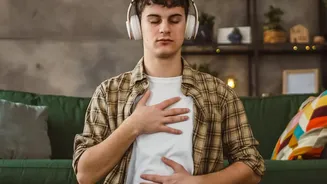
Many people experiencing anxiety tend to take shallow breaths from their chest. Diaphragmatic breathing, or belly breathing, encourages you to use your full lung capacity, maximizing oxygen exchange and promoting relaxation. It's a foundational technique that you can practice anywhere. To start, lie comfortably on your back or sit in a supported chair. Place one hand on your upper chest and the other on your belly, just above your navel. Inhale slowly and deeply through your nose, focusing on expanding your belly like a balloon. The hand on your stomach should rise, while the hand on your chest remains relatively still. Then, exhale slowly through pursed lips, feeling your belly fall. Practicing for just five to ten minutes a day can help make this your natural breathing pattern, especially during stressful moments.
Technique 2: Box Breathing for Focus
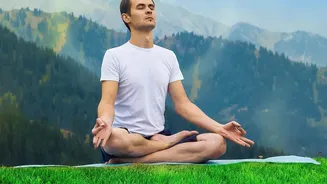
Used by everyone from Navy SEALs to surgeons to maintain calm under pressure, box breathing is incredibly simple and effective. The four-sided 'box' provides a mental anchor that can interrupt spiraling thoughts. The pattern is straightforward: inhale for a count of four, hold your breath for a count of four, exhale for a count of four, and hold your breath again for a count of four. Sit upright and exhale completely. Then, inhale slowly through your nose for four seconds. Hold the air in your lungs for four seconds. Exhale slowly through your mouth for four seconds. Finally, hold your breath with your lungs empty for four seconds before beginning the next cycle. The equal, rhythmic nature of this practice makes it easy to remember and deploy whenever you need to re-center yourself.
Technique 3: The 4-7-8 Breath for Deep Calm
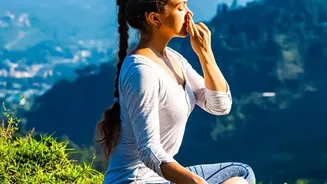
Developed by Dr. Andrew Weil and rooted in ancient yogic practices, the 4-7-8 technique is a natural tranquilizer for the nervous system, particularly useful for reducing anxiety before sleep. The extended exhale is key to its powerful calming effect. To begin, sit or lie down comfortably. Exhale completely through your mouth, making a 'whoosh' sound. Close your mouth and inhale quietly through your nose for a count of four. Hold your breath for a count of seven. Then, exhale completely through your mouth for a count of eight, again making a whooshing sound. This completes one cycle. It's recommended to start with no more than four cycles at a time until you become comfortable with the practice.
Making Breathing a Daily Habit
The true power of these techniques is realized through consistent practice. Instead of only using them reactively during a moment of high anxiety, try integrating them into your daily routine. You can practice a few rounds of belly breathing before getting out of bed, use box breathing to focus before an important meeting, or do a cycle of 4-7-8 breathing while waiting in a queue. By practicing when you are calm, you train your nervous system to respond more effectively when stress does arise. This proactive approach builds resilience and makes it easier to access a state of calm when you need it most, turning your breath into a reliable and immediate source of relief.