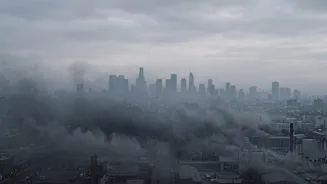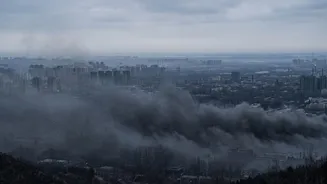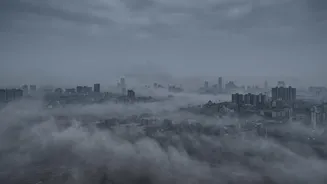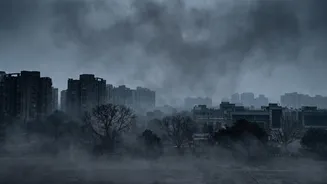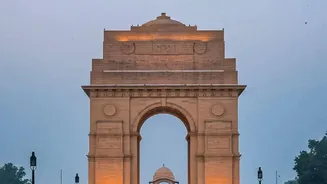






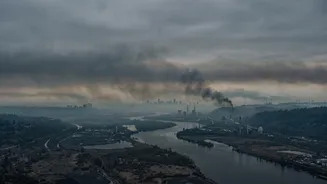
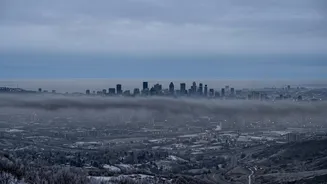
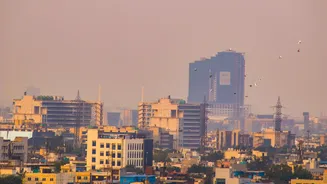
As November arrives, a familiar grey haze descends upon Delhi, and the Air Quality Index (AQI) climbs to hazardous levels. It’s an annual crisis that seems to defy the government’s seasonal advisories. So why does this toxic air return every year?
A Perfect Environmental Storm
Delhi's
November air pollution isn't caused by a single factor but a combination of unfortunate events. It's a perfect storm of agricultural practices in neighbouring states, disadvantageous weather patterns, and a high baseline of local pollution from the city itself. This convergence of sources and conditions turns the entire National Capital Region (NCR) into a gas chamber, a term once used by the city's Chief Minister to describe the crisis. While measures like the Graded Response Action Plan (GRAP) are in place, they are often reactive and struggle to combat the sheer scale of the problem.
The Smoke From Across the Border
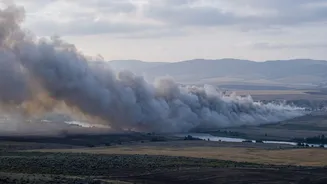
A significant and well-known contributor is the large-scale burning of crop residue, or stubble, in the neighbouring states of Punjab and Haryana. After the rice harvest in October and November, farmers have a very short window to clear their fields for the next crop, and burning the leftover stubble is the quickest and most cost-effective method. This practice releases enormous plumes of smoke containing particulate matter (PM2.5 and PM10). North-westerly winds carry this smoke directly over Delhi, and at its peak, stubble burning can be responsible for up to 45% of the city's pollution, dramatically worsening the air quality within days.
Weather's Cruel Trap
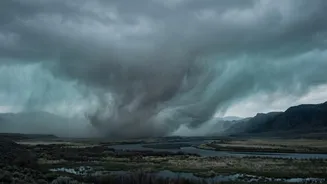
Meteorology plays a crucial role in trapping the pollution. During winter, a phenomenon called temperature inversion occurs, where a layer of warm air sits on top of cooler air near the ground, acting like a lid. This prevents pollutants from rising and dispersing. Compounding this issue are the low wind speeds common in the region during this season. Without strong winds to blow the polluted air away, the smoke from farm fires and local emissions gets trapped and concentrated over the city, leading to the dense, choking smog that defines Delhi's winters.
Delhi's Own Contribution
While outside sources are a major problem, Delhi has a high baseline of pollution year-round that it generates itself. Emissions from the millions of vehicles on its roads, dust from constant construction activity, and industrial pollution all contribute to the poor air quality. According to some studies, vehicular emissions alone can be responsible for a significant portion of Delhi's particulate pollution. This local pollution forms the foundation upon which the seasonal smoke from stubble burning accumulates, pushing the AQI from 'poor' or 'very poor' into the 'severe' and 'hazardous' categories.
Why Advisories and Actions Fall Short
Authorities implement the Graded Response Action Plan (GRAP) when pollution spikes, which involves emergency measures like halting construction and restricting vehicle use. However, these are shortterm, reactive measures. Their effectiveness is often limited because they are implemented after the air has already turned toxic. Furthermore, enforcement can be patchy, and the problem requires interstate coordination, which is a significant challenge. A study by the Centre for Research on Energy and Clean Air (CREA) found no consistent improvement in Delhi's winter air quality in recent years, suggesting these emergency actions are not enough to counter the powerful combination of pollution sources and weather.