


A New Window on the Cosmos
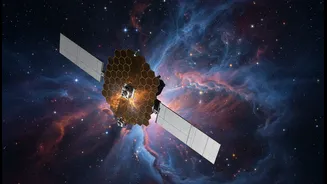
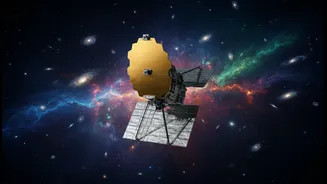
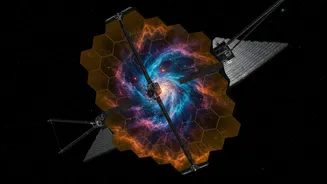
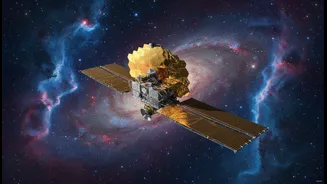
Since its first images were released in July 2022, the James Webb Space Telescope (JWST) has been on a relentless streak of discovery. Its power lies in its ability to see the universe in infrared light, a spectrum invisible to the human eye. This allows
it to peer through dense clouds of cosmic dust that have long hidden celestial objects from view, including the birth of stars and the hearts of distant galaxies. Unlike its predecessor, the Hubble Space Telescope, which primarily observes in visible and ultraviolet light, Webb's infrared sensitivity unlocks a different, older, and more hidden universe. The clarity and detail in its images have consistently surpassed even the most optimistic projections, providing unprecedented insights into everything from our own solar system to the dawn of time.
Peering into the Dawn of Time
One of Webb’s primary missions is to find the very first galaxies that formed after the Big Bang. It has succeeded spectacularly, discovering galaxies that are far more massive, bright, and structured than astronomers believed possible so early in the universe's history. Some of these galaxies were observed as they existed just 300 to 400 million years after the Big Bang, pushing the frontiers of known cosmic history. These findings have challenged and are actively reshaping cosmological models, forcing scientists to rethink how quickly galaxies and the supermassive black holes at their centers can grow. Webb has even found evidence of a black hole that formed before its host galaxy, providing new clues to the origin of these cosmic behemoths.
Unveiling the Secrets of Alien Worlds
Webb has also revolutionized the study of exoplanets—planets orbiting other stars. Its instruments can analyze the chemical composition of their atmospheres with stunning precision. For the first time, scientists have detected a whole menu of molecules like carbon dioxide, methane, and sulfur dioxide in the skies of distant worlds. On a rocky exoplanet named K2-18 b, the detection of carbon-bearing molecules fueled discussions about its potential to host a water ocean. On another, the gas giant WASP-39 b, Webb provided a complete chemical profile, revealing signs of active chemistry driven by the light from its parent star. These observations are crucial steps in the ongoing search for habitable worlds beyond Earth.
A Fresh Look at Familiar Neighbors
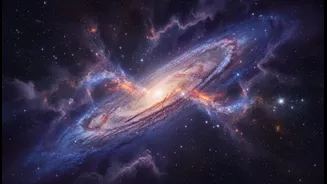
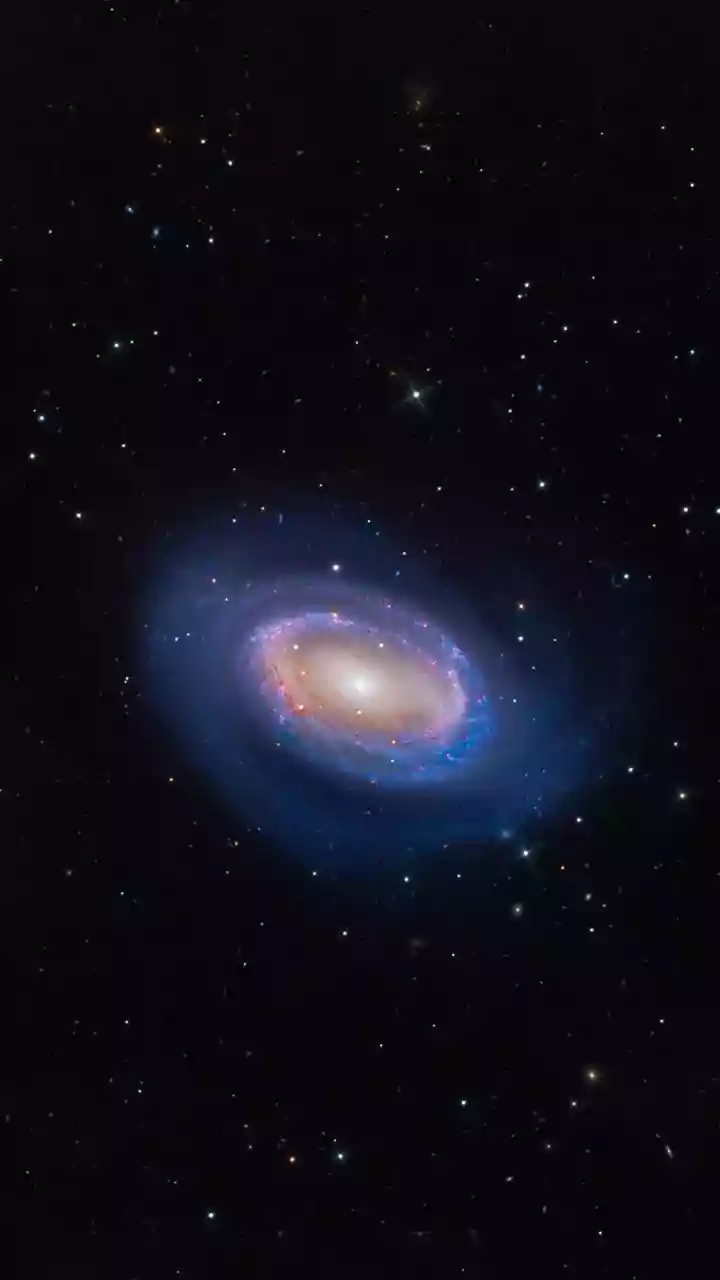
While famous for its deep-space views, Webb has not ignored our own cosmic backyard. It has delivered breathtaking images of planets in our solar system, revealing details never seen before. It mapped the upper atmosphere and auroras of Uranus and, joining forces with Hubble, provided the most comprehensive view of Saturn to date. These observations are not just for show; they provide valuable data on atmospheric dynamics and weather on neighboring planets. To celebrate its fourth anniversary of science operations, NASA and its partners released stunning new images of Centaurus A, a nearby galaxy whose turbulent core was previously obscured by dust. Webb’s infrared eyes pierced through the veil, resolving millions of individual stars and revealing the complex interplay between the galaxy's supermassive black hole and its star-forming regions.
An Engine of Discovery and Wonder
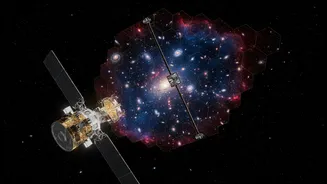
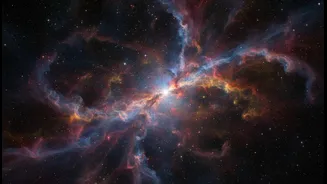
Beyond the specific findings, Webb's greatest contribution may be the sheer volume of new questions it has opened up. From the mysterious nature of the earliest galaxies to the chemical makeup of alien atmospheres, the telescope is providing data that will fuel astronomical research for decades. It has created the largest-ever 3D maps of the universe, showing the grand cosmic web in which galaxies are embedded. The beautiful, intricate images of nebulae and star-forming regions like the Pillars of Creation have captured the public's imagination, making abstract cosmic concepts tangible and inspiring a new generation. Each image is a piece of a puzzle, and with every new observation, our picture of the universe becomes richer and more complex.