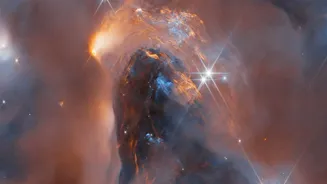




In the vast cosmic theater, some objects defy easy categorization. Meet brown dwarfs: too small to be stars, too massive to be planets. A new survey from NASA’s SPHEREx mission is peeling back the layers on these mysterious bodies.
The Universe's 'Failed Stars'
Imagine an object that
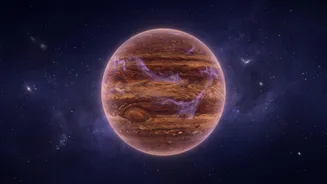
forms just like a star from a collapsing cloud of gas and dust but never quite makes it. That's a brown dwarf. These celestial bodies are more massive than giant planets like Jupiter but fall short of the mass needed to kickstart and sustain the nuclear fusion of hydrogen in their cores — the process that makes stars shine. Because of this, they're often nicknamed 'failed stars'. While they can fuse a heavier type of hydrogen called deuterium early in their lives, this fuel quickly runs out, and they spend the rest of their existence slowly cooling and dimming over billions of years. They exist in a fascinating middle ground, with masses between 13 and 80 times that of Jupiter and temperatures that can range from as hot as a cool star to colder than a planet.
An Infrared Eye on the Cosmos
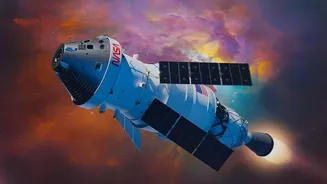
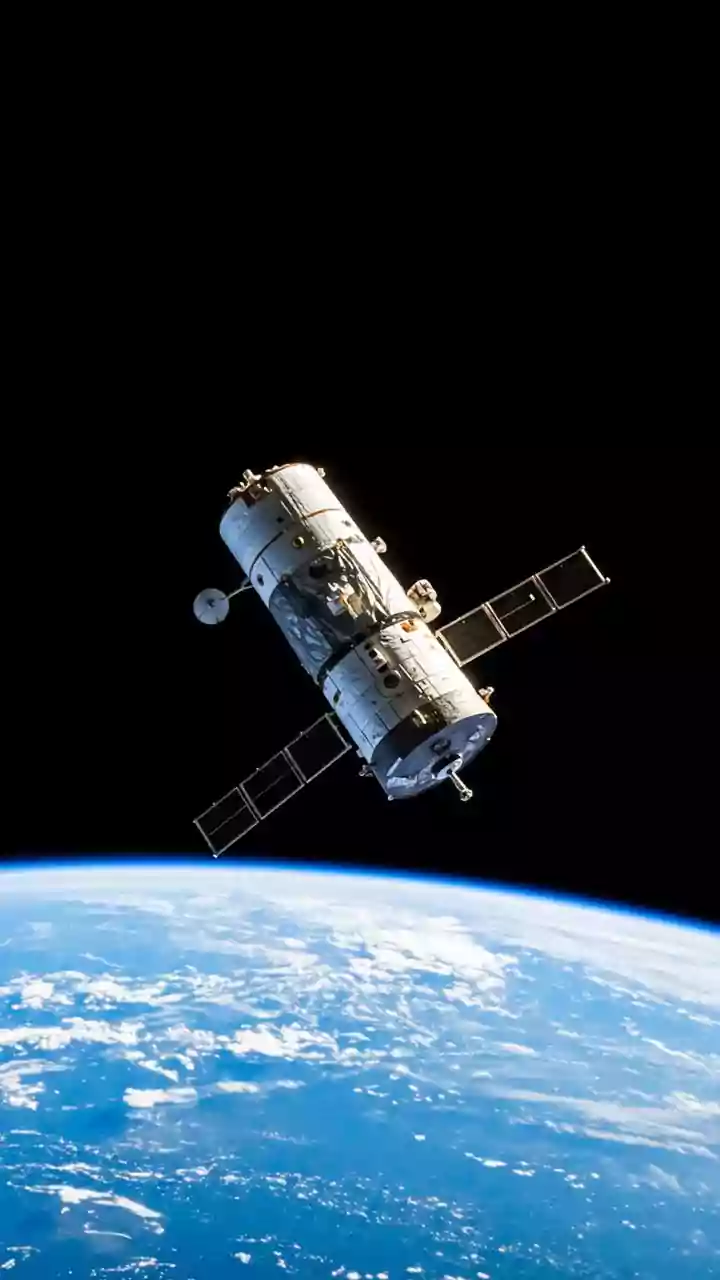
To study these dim and distant objects, astronomers need powerful tools. Enter SPHEREx, which stands for Spectro-Photometer for the History of the Universe, Epoch of Reionization, and Ices Explorer. Launched by NASA in March 2025, this space telescope is on a mission to map the entire sky in infrared light, which is invisible to the human eye but perfect for observing cooler objects like brown dwarfs. By using a technique called spectroscopy, SPHEREx splits the light from cosmic objects into 102 different colors, creating a unique 'spectrum' or chemical fingerprint for each one. This allows scientists to identify the specific molecules present in their atmospheres, even from light-years away.
A Surprising Chemical Cocktail
Scientists expected brown dwarfs of similar temperatures to be, well, similar. But the latest SPHEREx survey of 37 nearby brown dwarfs revealed a startling variety. The data showed that their atmospheres are chemically rich, containing a mix of water, carbon monoxide, carbon dioxide, and methane. More importantly, the specific blend of these chemicals changes significantly from one brown dwarf to the next, even among those with the same temperature. 'No two brown dwarfs are alike,' noted Zafar Rustamkulov, lead author of the study. This unexpected diversity suggests that the conditions in which these objects form, or the atmospheric processes happening on them, are far more complex than current models can explain.
Why This Diversity Matters
This discovery is more than just a cosmic curiosity. The chemical makeup of a brown dwarf's atmosphere provides crucial clues about its formation history and the environment it was born in. The observed variety challenges existing theories and forces scientists to reconsider their models. Since brown dwarfs bridge the gap between stars and planets, understanding their diversity helps us better understand the formation of both. Many of these objects float freely through space, making them easier to study in detail without the blinding glare of a parent star. By analyzing their complex atmospheres, which researchers have found are similar to gas giants like Jupiter and Saturn, we can gain insights into planetary science and the 'initial ingredients' available in different parts of our galaxy for building new worlds.