
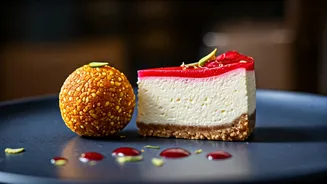


From Homely Mithai to Haute Cuisine
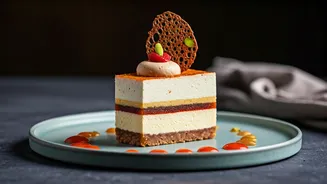
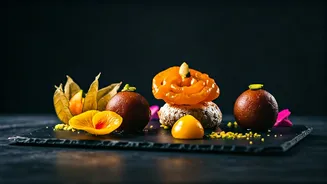
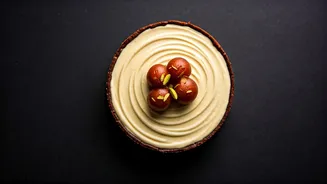
Across India's top restaurants and in modern Indian kitchens globally, a delicious transformation is underway. [1] Traditional sweets, long associated with family gatherings and festival platters, are being deconstructed, reimagined, and presented with the precision
of high-art. [3] This isn't about replacing the classics but elevating them. Chefs are taking the soul of a dessert—the familiar flavours of cardamom, saffron, and rosewater—and presenting it in an entirely new form. Imagine a Payasam Panna Cotta, where the comforting South Indian kheer adopts the silky, set texture of the Italian classic, or Gajar Halwa reinvented as bite-sized truffles coated in dark chocolate. [1] It’s a movement that honours memory while embracing innovation.
The Architects of Edible Art
This trend is driven by a new wave of culinary talent who are not afraid to experiment while holding deep respect for their roots. [3] Chefs like Sumant Sharma of the Michelin-starred Musaafer are using modern techniques to make traditional sweets lighter and more nuanced. [2] He and others are breaking down classic recipes to their essential components—flavour, texture, and aroma—and reassembling them in unexpected ways. [3] This might look like an imarti-waffle creation topped with a delicate mango shrikhand foam or crispy churros made from gulab jamun batter, ready for dipping. [3] The goal, according to HOSA Goa's head chef Suresh DC, is to find the right balance between flavour and texture, keeping recipes simple at their core to avoid overcomplicating them. [3]
Why Now? The Instagram Effect and Global Palates
Several factors are fueling this creative surge. The rise of social media, particularly Instagram, has placed a huge emphasis on visual appeal, turning every dish into a potential work of art. [1] Layered parfaits in glass jars and geometrically precise plating are designed to be as photogenic as they are delicious. [7] Furthermore, as the global palate for Indian food becomes more sophisticated, there's a growing desire to showcase the cuisine's artistic potential beyond the main course. [8] Diners are increasingly adventurous, seeking something that is both familiar and creative. [3] This trend also reflects a shift in wellness, with chefs using modern science to create lighter versions of desserts that are traditionally high in calories, making them more appealing to a health-conscious audience. [2, 8]
Reimagining the Classics
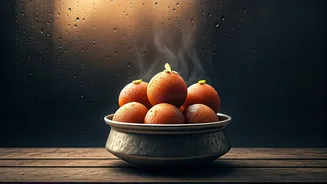
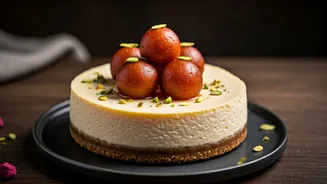
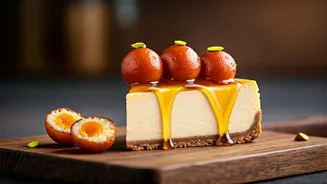
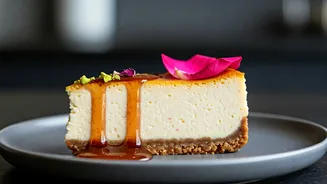
The creative adaptations are seemingly endless. Kheer, the quintessential rice pudding, is finding new life as a crème brûlée, with its creamy base hidden under a crisp, caramelized sugar crust. [1] Boondi laddoos are being crumbled and layered into cheesecake jars, providing a textural contrast to a smooth cream cheese filling. [1] Even the humble paan is being transformed into a delicate Paan Panna Cotta. [7] In some fine-dining establishments, the presentation becomes pure theatre. Masque in Mumbai serves a Sea Buckthorn and Rabri Foam with Kashmiri trout roe, blending sweet, savoury, and sour. [8] These creations prove that fusion isn't a gimmick; it’s a thoughtful dialogue between tradition and modernity.