






The Illusion of the Serving Size
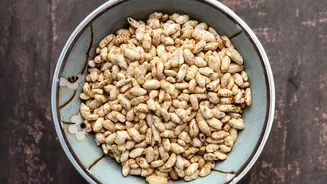
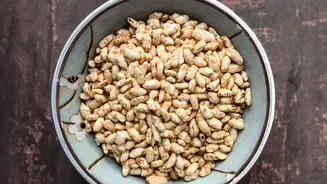
At first glance, a cup of puffed rice seems like the smarter choice for calorie-conscious snackers. It often contains fewer calories per cup than a cup of quinoa puffs. For example, a cup of plain puffed rice might have around 55-60 calories, while a cup of quinoa puffs could
be double that. This is where the confusion begins. The key is understanding the difference between volume (a cup) and weight (grams). Puffed rice is extremely light and airy, so a cup doesn't weigh much, often just 15 grams. Quinoa puffs are denser. A cup of quinoa puffs can weigh 30 grams or more, meaning you are consuming more food by weight in the same-sized scoop. This discrepancy in density is why comparing snacks by the cup can be so misleading.
A Fairer Fight: Comparing Gram for Gram
To get a true sense of which snack offers more nutritional bang for your buck, we need to ignore the cup and compare them by equal weight—the standard is 100 grams. On this playing field, the roles often reverse. A 100-gram serving of plain puffed rice contains around 360-400 calories, composed almost entirely of carbohydrates. In contrast, 100 grams of plain quinoa puffs typically provide a similar number of calories but a vastly different nutritional profile. This gram-for-gram comparison shows that by weight, the calorie counts can be quite close, but the quality of those calories is where the two snacks diverge significantly.
The Protein and Fibre Advantage
This is where quinoa puffs truly pull ahead. Per 100 grams, quinoa puffs can contain upwards of 14 grams of protein, while puffed rice offers a more modest 7-8 grams. More importantly, quinoa is a 'complete protein', meaning it contains all nine essential amino acids our bodies can't produce on their own. This is rare for a plant-based food and makes it a more robust building block for muscle and tissue repair. Rice protein is not complete. Furthermore, quinoa puffs boast significantly more dietary fibre. A 100-gram serving of quinoa puffs can offer around 7 grams of fibre, whereas puffed rice has very little, sometimes less than 3 grams. Fibre is crucial for digestive health, feeling full, and maintaining stable blood sugar levels.
The Glycemic Index Factor
The glycemic index (GI) measures how quickly a food raises your blood sugar. Foods with a high GI are digested quickly, which can lead to energy spikes and subsequent crashes. Puffed rice, derived from white rice, generally has a high glycemic index. Quinoa, on the other hand, has a naturally lower GI of around 53. This is due to its higher protein and fibre content, which slows down the absorption of carbohydrates into the bloodstream. The result is more sustained energy and better appetite control, making quinoa puffs a more favourable choice for preventing that mid-afternoon slump or for individuals managing their blood sugar.
The Final Verdict: Which Should You Choose?
There is no single 'bad' choice here, only choices that are better for different goals. If your primary aim is a low-calorie, high-volume snack to satisfy a craving for crunch with minimal caloric impact, puffed rice is an effective option. It is light, airy, and easy to digest. However, if you are looking for a snack that provides more substantial nutrition—one that will keep you fuller for longer, deliver quality protein, offer more fibre, and provide a host of minerals like iron and magnesium—quinoa puffs are the clear winner. They are more nutrient-dense and offer more sustained energy. The key lesson is to be a savvy label reader; always check the serving size in grams, not just cups, to understand what you're really eating.