




A New Milestone for Urban India
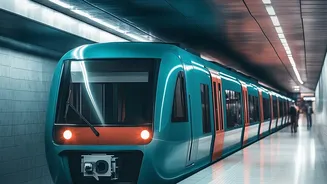
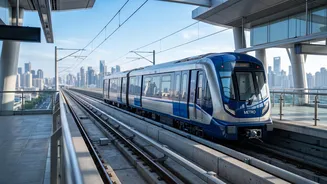
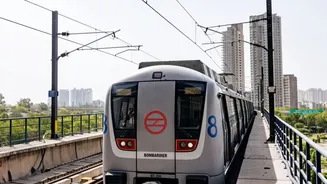
On November 2, ahead of the busy Diwali season, the Delhi Metro's driverless lines—the Magenta and Pink Lines—carried a staggering 1.6 million passengers in a single day. This figure accounted for nearly a quarter of the entire network's massive daily
ridership, signalling a significant vote of public confidence in the Unattended Train Operation (UTO) technology. Since the first driverless train was launched in December 2020, the system has become an integral part of the capital's transport backbone. Currently, 100 UTO trains operate over a 120-kilometre stretch, making it one of the largest driverless networks in the world. This successful large-scale implementation is now serving as a powerful case study for other Indian cities grappling with urban congestion.
How Driverless Tech Works
Driverless metros operate using a sophisticated system called Communication-Based Train Control (CBTC), which allows for real-time monitoring and control. This technology, graded at the highest level of automation (GoA4), removes the need for an onboard driver, eliminating the potential for human error. Advanced signalling and sensors manage everything from speed and braking to precise platform docking and door operation. The key benefits are a significant boost in operational efficiency and flexibility. Trains can run at higher frequencies—as close as every 100 seconds in some global examples—reducing wait times for passengers. Furthermore, the automated systems are designed for smoother acceleration and deceleration, enhancing passenger comfort and optimising energy consumption.
A Vision for National Expansion
With the success in Delhi, the Delhi Metro Rail Corporation (DMRC) is positioning itself as a leader and consultant for other metro projects nationwide. Vikas Kumar, the Managing Director of DMRC, has publicly advocated for other cities to adopt the driverless model, citing improved service availability and reliability. DMRC has already established a subsidiary, Delhi Metro International Limited (DMIL), to offer consultancy and operational services across India and abroad. This push aligns with the 'AatmaNirbhar Bharat' initiative, especially with the development of an indigenous Automatic Train Supervision system (i-ATS) by DMRC and Bharat Electronics Limited (BEL). This homegrown technology reduces reliance on foreign vendors and could make future deployments more cost-effective for other Indian cities.
The Challenges on the Track Ahead
Despite the clear advantages, a nationwide rollout of driverless metros faces significant hurdles. The primary concern is the high upfront capital investment required for the advanced CBTC signalling infrastructure and automated rolling stock. Some government officials have expressed reservations about these costs, particularly for new metro systems in Tier-2 and Tier-3 cities. Another major consideration is the impact on employment. While DMRC has stated that no train operators have been laid off—instead being redeployed to roles in station management and crowd control—the concern about job redundancy remains a sensitive topic. Experts also caution against a one-size-fits-all approach, urging each city to conduct its own cost-benefit analysis based on local conditions rather than simply following a global trend.