


A Return to Regional Roots
For decades, the Indian dessert landscape in many urban centres was dominated by a handful of popular sweets. While delicious, these often represented a simplified version of India’s vast confectionery heritage. Today, there's a growing appetite for authenticity
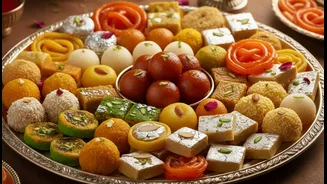
and uniqueness. This has sparked a movement to rediscover and champion sweets that are deeply connected to a specific town, region, or even a particular community. It's a shift from sweets that are merely sweet to sweets that tell a story, carrying with them the essence of their origin's climate, ingredients, and history. This trend is about celebrating the sheer diversity of Indian mithai, where the flavour profile can change dramatically every couple of hundred kilometres.
The Power of a GI Tag
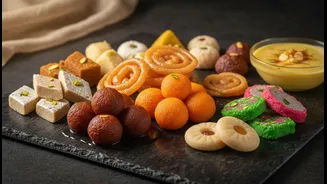
A significant driver and indicator of this trend is the increasing use of the Geographical Indication (GI) tag. This tag formally recognizes that a product's unique qualities are tied to its place of origin. Recently, sweets like West Bengal's Nolen Gur-er Sandesh, made with seasonal date palm jaggery, and Murshidabad's Chhanabora have received this status, protecting their heritage. Other examples include Silao Khaja from Bihar, known for its flaky texture attributed to the local water and climate, and Kovilpatti Kadalai Mittai from Tamil Nadu, a peanut chikki whose flavour is credited to the use of water from the Thamirabarani River. This formal recognition not only preserves tradition but also boosts culinary tourism, encouraging food lovers to seek out these authentic tastes at their source.
A Taste of Terroir
This movement champions the idea of 'terroir'—a concept often associated with wine—in the context of Indian sweets. It acknowledges that local ingredients and environment create distinct flavours. For instance, the Dharwad Peda from Karnataka gets its unique character from the milk of Dharwadi buffaloes. West Bengal's Sitabhog, a delicate sweet resembling vermicelli, is made with a specific local variety of powdered rice. Similarly, Sarpuria from Krishnanagar, a baked sweet made from kheer and malai, has a history stretching back over 500 years and is distinct from its fried cousin, Sharbhaja. These are not just recipes; they are edible emblems of a place, passed down through generations.
From Home Kitchens to Modern Menus
The revival is happening on two fronts. At home and through social media, culinary enthusiasts are documenting and sharing heirloom recipes for forgotten sweets like the Gujarati Kopra Pak or the Odia Arisa Pitha. Simultaneously, chefs at modern Indian restaurants are reinterpreting these regional classics for a contemporary audience. They are not just replicating old recipes but are acting as storytellers, bringing lesser-known desserts to mainstream menus. This can mean presenting a classic sweet with modern plating techniques or creating fusion desserts like a Motichoor Cheesecake or Gulab Jamun Cupcakes that pay homage to the original's flavour profile while offering a new experience. This ensures that India's culinary heritage remains vibrant and relevant for today's diners.