
The New Lunar Gold Rush
For future lunar colonists, water is more valuable than gold. It's essential for drinking and life support, but its true strategic importance lies in its chemical components: hydrogen and oxygen. Through a process called electrolysis, lunar water can
be split into these elements, which are the primary components of rocket propellant. This concept, known as in-situ resource utilization (ISRU), could transform the Moon from a desolate stopover into a bustling refueling station. Being able to manufacture rocket fuel on the Moon would dramatically lower the cost of deep space exploration, enabling more ambitious missions to Mars and beyond. Instead of launching everything from Earth, a costly and difficult endeavor, spacecraft could top up their tanks at a lunar base. This turns the Moon into a critical piece of infrastructure, the foundational asset in a future off-world economy.
Seeing the Invisible With Infrared
The challenge is finding this ice. Much of it is thought to be hiding in Permanently Shadowed Regions (PSRs) near the lunar poles—frigid craters where the sun never shines and temperatures plummet to some of the lowest in the solar system. To peer into this darkness, scientists use a special kind of light our eyes can't see: infrared. Just as different colored shirts absorb and reflect different wavelengths of visible light, different materials have unique 'fingerprints' in the infrared spectrum. Water ice, in particular, has a very distinct spectral signature, absorbing specific near-infrared wavelengths. Orbiting spacecraft and rovers equipped with infrared spectrometers can analyze the faint light reflected from the lunar surface. By looking for the tell-tale dips in the spectrum that indicate water ice absorption, they can create detailed maps of potential deposits without ever physically touching them.
The Tools of the Trade
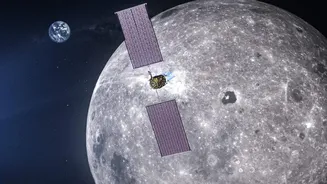
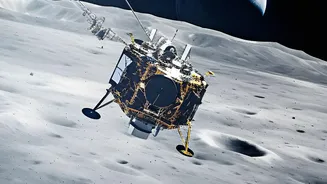
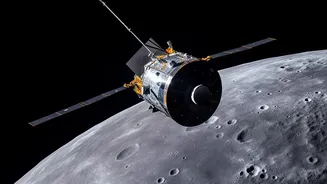
Several missions have provided crucial pieces of the lunar water puzzle. The Moon Mineralogy Mapper (M3) instrument, which flew on India's Chandrayaan-1 spacecraft, provided the first definitive, direct evidence of water ice on the surface in 2018. It confirmed that ice was present in the PSRs. NASA’s Lunar Reconnaissance Orbiter (LRO) has been mapping the Moon for years, using its instruments to identify the cold, dark locations where ice should be stable. Other missions were designed to take an even closer look. The Lunar Trailblazer orbiter, for instance, was equipped with a High-resolution Volatiles and Minerals Moon Mapper (HVM3) and a Lunar Thermal Mapper (LTM) to simultaneously map water and temperature. Unfortunately, the spacecraft failed shortly after its 2025 launch, highlighting the immense challenges of space exploration. Now, all eyes are on the next generation of lunar prospectors.
From Data Maps to Drilling Rigs
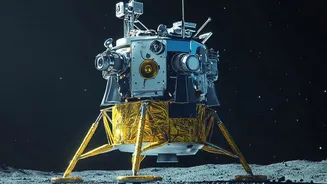
The next crucial step is to move from orbital mapping to ground truth. This is the job of NASA’s Volatiles Investigating Polar Exploration Rover, or VIPER. Scheduled for a 2027 landing near the south pole, VIPER is a golf-cart-sized robot designed to be the ultimate water hunter. It carries a suite of instruments, including a neutron spectrometer to sniff out hydrogen below the surface and a one-meter drill—the first of its kind to be used on the Moon since the Apollo era. Once a promising spot is found, VIPER will drill into the lunar soil, or regolith. The cuttings will then be analyzed by its Near-Infrared Volatiles Spectrometer System (NIRVSS). This instrument will study the material up close, confirming if the hydrogen is in the form of water ice and determining its concentration. VIPER's data will create the first-ever resource maps of the Moon, guiding future human and robotic missions to the most valuable deposits, much like geological surveys on Earth point oil companies toward rich reserves.