





Why Humidity is a Packing Problem
Packing for a humid destination presents unique challenges that go beyond just fitting everything in your bag. The primary issue is moisture. In high-humidity environments, clothes take significantly longer to dry. That swimsuit you wore for a morning
dip might still be damp by evening, and a towel used after a shower could remain wet for days. Packing even slightly damp items can lead to mildew and unpleasant smells that permeate your entire wardrobe. Furthermore, the air itself is laden with moisture, which can make clean, dry clothes feel clammy. An airtight seal is the only way to truly protect fabrics from the ambient humidity, as well as from potential mould and insect issues that can be more common in such climates.
The Solution: Vacuum Compression Pouches
Enter vacuum compression pouches, the travel gadget you didn't know you needed. These are durable plastic bags with a zip-top closure and a one-way valve. The concept is simple: you place your soft goods inside, seal the bag, and then remove all the air. This act of removing air can reduce the volume of bulky items by up to 80 percent. There are generally two types. The first requires a vacuum cleaner or a small, often battery-powered, travel pump to suck the air out. The second, more convenient for travel, is the roll-up version. After sealing the bag, you simply roll it tightly from the zipper end towards the bottom, forcing the air out through the one-way valves. Both methods transform a puffy pile of clothes into a dense, compact, and perfectly sealed package.
Beyond Space: Beating Moisture and Odours
While the space-saving benefit is the main draw, the real magic for a beach trip is the protection these bags offer. The airtight seal creates an impenetrable barrier against external moisture, dust, and odours. This means the clean, dry clothes you packed will arrive at your destination just as fresh as when you packed them, no matter how damp the air is. The benefits work both ways. On the return journey, you can use a separate pouch to quarantine your wet swimsuits, damp towels, and dirty laundry. That musty beach smell will be safely contained, keeping your souvenirs and any remaining clean clothes fresh and dry.
How to Pack Like a Pro
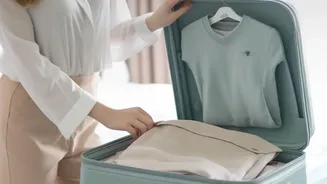
Using compression pouches effectively requires a bit of strategy. First, ensure every item you pack is completely dry to prevent trapping moisture inside, which could lead to mould. Fold or roll items neatly before placing them in the bag to minimise wrinkling. These bags are ideal for bulky, soft items like towels, t-shirts, shorts, and casual wear. However, you should avoid using them for delicate fabrics like silk, or structured items like leather jackets, as the intense compression can set permanent creases. Also, avoid compressing down-filled jackets or pillows, as it can damage their loft and structure. Don't overfill the bags; leave a few centimetres of space from the zipper to ensure a perfect seal. Once sealed, place the compressed pouches in your suitcase like flat panels to keep your luggage organised.
Important Things to Remember
While these bags are fantastic space-savers, they don't reduce weight. In fact, by allowing you to pack more into your suitcase, it's easier to exceed airline weight limits. Always weigh your packed bag before heading to the airport. Another common concern is wrinkles. The intense pressure can cause creases, especially in natural fibres like cotton. Rolling clothes instead of folding them can help, as can unpacking and hanging your clothes as soon as you arrive at your hotel. Finally, remember that if you use a vacuum-dependent bag, you'll need access to a vacuum for the return trip. The roll-up style bags are often a more practical choice for multi-stop travel for this very reason.