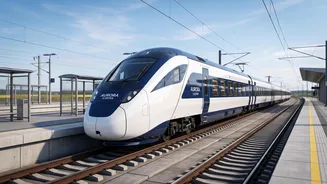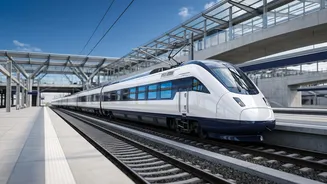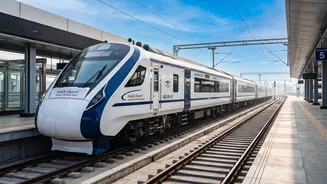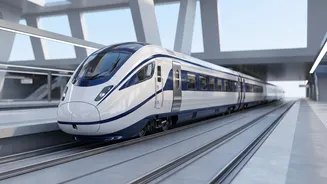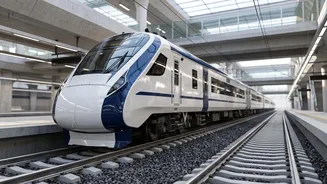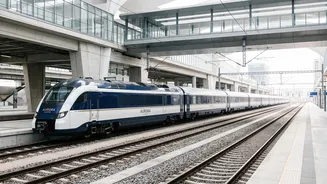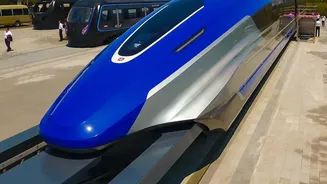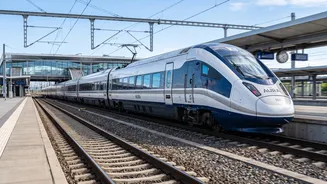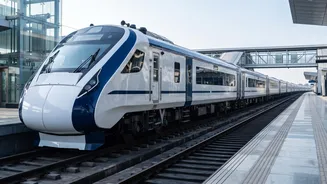





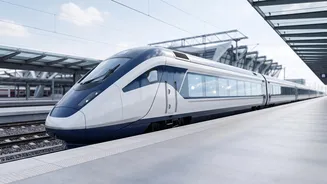
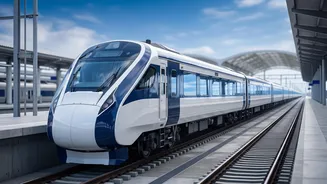
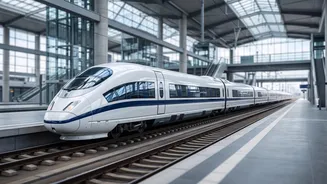
The long-awaited Vande Bharat Sleeper Express has officially begun its journey, connecting India's IT capital, Bengaluru, with its financial hub, Mumbai. This launch marks a significant milestone in Indian Railways' mission to modernize its fleet.
A New Chapter in Overnight Travel
On November
1, 2026, the first-ever Vande Bharat Sleeper Express embarked on its inaugural run from Bengaluru to Mumbai, ushering in a new era for long-distance train travel in India. While this was a ceremonial launch, railway officials have indicated that regular commercial services are expected to commence within the next few weeks, forever changing the overnight journey between these two bustling metropolises. The train-set, celebrated for its semi-high-speed capabilities and superior comfort, now extends its offerings to sleeper coaches, directly challenging the existing premium trains and even low-cost airlines that dominate this popular route. This move is seen as a direct response to the demands of passengers seeking a more comfortable, efficient, and modern alternative for overnight travel without the hassle of airport procedures.
Redefining Comfort and Convenience
The Vande Bharat sleeper is not just an incremental update; it is a complete reimagining of the overnight train experience. The interiors are designed to rival the comfort of a hotel room, a stark departure from conventional sleeper coaches. Each berth is wider and features better cushioning. The train boasts sensor-based lighting in common areas and washrooms, ambient floor lighting to guide passengers in the dark, and aesthetically designed panels that reduce noise and vibrations, promising a quieter and more peaceful journey. The air conditioning system is more efficient, with better airflow control for individual comfort. Furthermore, the toilets are modern, bio-vacuum systems, similar to those found on airplanes, ensuring higher levels of hygiene throughout the journey. Every detail, from the ladder design for accessing upper berths to the provision of charging points for every passenger, has been thoughtfully engineered to enhance convenience.
Speed, Time, and Safety First
One of the most significant advantages of the Vande Bharat Sleeper is its speed. Capable of reaching speeds up to 160 km/h, the train is expected to reduce the travel time between Bengaluru and Mumbai to approximately 12 to 13 hours. This is a substantial improvement over the 17 to 20 hours taken by most other sleeper trains on the same route. This time saving makes it a highly competitive option for business and leisure travellers alike. Safety has also been a paramount focus in its design. The train is equipped with the indigenous KAVACH automatic train protection system, which is designed to prevent collisions. Additionally, the distributed power system allows for faster acceleration and deceleration, contributing to both a shorter journey time and enhanced operational safety. CCTV cameras are installed throughout the coaches for increased security.
A Viable Alternative to Air Travel?
With its combination of speed, comfort, and convenience, the Vande Bharat Sleeper Express is strategically positioned to compete with air travel. While a flight is faster in the air, the total travel time, including travel to and from airports, check_in, and security, can often exceed six to seven hours. The Vande Bharat offers a compelling proposition: board in the evening from a city_centre station, enjoy a comfortable night's sleep, and arrive in the heart of the destination city the next morning, ready for the day. While official fare structures are yet to be announced, they are expected to be competitive with premium train fares and potentially lower than last_minute flight tickets. For many, the ability to avoid airport stress and save on a hotel night makes the sleeper train an attractive and practical choice.
The Future of Indian Railways Rolls In
The Bengaluru–Mumbai service is just the beginning. Indian Railways has ambitious plans to roll out Vande Bharat sleeper trains on major high–demand routes across the country. This initiative is a cornerstone of a larger vision to modernize the entire rail network, offering a world–class travel experience to millions of Indians. These trains are manufactured in India, aligning with the 'Make in India' initiative and showcasing the nation's growing prowess in advanced engineering. As more of these train–sets enter service, they are set to become the new standard for long–distance travel, replacing the ageing Rajdhani and Duronto Express fleets on key corridors and fundamentally upgrading the passenger experience nationwide.