




A Galaxy of Opportunity
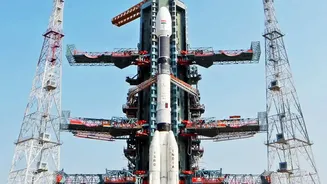
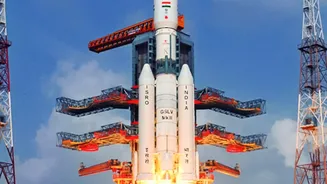
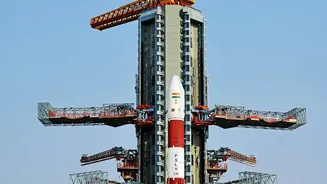
India's space economy, currently valued at around $8.4 billion, is on a powerful growth trajectory. Projections suggest it could surge to over $44 billion by 2033. This ambitious target is not just wishful thinking; it's being fueled by a strategic opening
of the sector that began in earnest around 2020. The core idea is to transition from a model dominated by the Indian Space Research Organisation (ISRO) to a more dynamic ecosystem where private enterprises play a crucial role. This move allows ISRO to focus on its primary mandate of advanced research and development, deep space exploration, and national security missions, while private players drive commercial manufacturing and services. The result has been an explosion of entrepreneurial energy, with the number of space startups growing from just a handful a decade ago to over 400 today.
The New Rulebook: IN-SPACe and NSIL
To guide this new era, the government introduced the Indian Space Policy in 2023, which clarifies the roles of key institutions. Two new bodies are central to this reform: IN-SPACe and NSIL. Think of IN-SPACe (Indian National Space Promotion and Authorisation Centre) as the single-window enabler and regulator. It's the go-to agency for any private company wanting to undertake space activities, from building satellites to launching rockets. It authorises their missions and facilitates access to ISRO's invaluable infrastructure, like testing facilities and launchpads, significantly lowering the barrier to entry for startups. NewSpace India Limited (NSIL), on the other hand, is the commercial arm of ISRO. Its job is to commercialise technologies developed by ISRO, manage demand-driven production of launch vehicles, and procure services from the private sector, effectively acting as a bridge between public-sector capabilities and private industry.
The Rise of India's 'Space-preneurs'
The reforms have already given rise to a vibrant startup scene. Companies like Skyroot Aerospace, which became the first Indian private company to launch a rocket, and Agnikul Cosmos, known for its 3D-printed rocket engines, are pioneering launch vehicle development. In the satellite domain, Pixxel is making waves with its constellation of hyperspectral Earth-observation satellites, which provide incredibly detailed data. Other startups like Dhruva Space are offering full-stack solutions, including satellite platforms and deployment services. These companies are not just building hardware; they are creating new business models in areas like satellite communications, downstream data analytics, and space situational awareness. The liberalised Foreign Direct Investment (FDI) policy, allowing up to 100% FDI in certain segments, is also set to attract more global capital and expertise.
Down-to-Earth Applications
The impact of a thriving private space sector extends far beyond rocket launches. The real value for the broader economy lies in downstream applications. Satellite data is becoming indispensable for a host of sectors. For example, Earth-observation satellites can provide crucial insights for agriculture by monitoring crop health, for disaster management by assessing flood or wildfire damage in real-time, and for urban planning by tracking infrastructure development. Enhanced satellite communication (SATCOM) services can bring high-speed internet to remote corners of the country, bridging the digital divide. These space-enabled services are where the bulk of the economic growth is expected, transforming traditional industries and creating new efficiencies.
Navigating the Challenges Ahead
Despite the optimism, the path for private space companies is not without its hurdles. Securing funding remains a major challenge, as space ventures are capital-intensive and have long development cycles before they can generate revenue. While investments are growing, they are still a fraction of what is seen in established space economies like the US. Another significant challenge is the talent gap. There is a need for experienced professionals in highly specialised fields like propulsion engineering and satellite systems integration. Finally, while the 2023 policy provides a framework, a comprehensive Space Activities Act is still awaited to provide greater legal and regulatory certainty on complex issues like liability and insurance, which are crucial for long-term planning and attracting large-scale investment.