





A Hidden Ocean Revealed
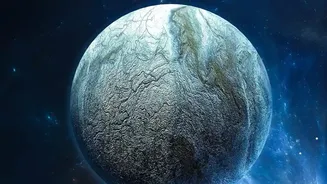
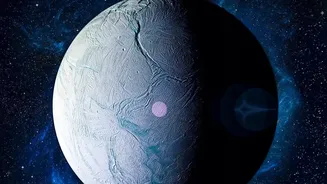
For decades, Enceladus was just another small, frozen moon. But that all changed when NASA's Cassini spacecraft flew past it in 2005. Cassini discovered enormous plumes of water vapour and ice particles erupting from giant cracks in the moon's southern
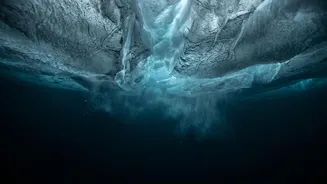
pole, dubbed 'tiger stripes'. This was a stunning revelation. Geysers in space meant something was keeping the moon’s interior active and warm. Further analysis of Cassini's data, which measured the moon's subtle wobble as it orbited Saturn, confirmed what scientists had begun to suspect: beneath its thick ice shell, Enceladus conceals a global ocean of salty liquid water. This discovery transformed our understanding of where water—and potentially life—could exist in the solar system.
The All-Important Recipe for Life
The primary reason Enceladus commands so much attention is that its hidden ocean appears to contain the three essential ingredients for life as we know it. First, there is liquid water, which has been confirmed. Second, there are the right chemical building blocks. The plumes contain a rich cocktail of organic molecules, including methane and, crucially, hydrogen cyanide—a molecule considered key to the origin of life. Data has also confirmed the presence of all six essential elements: carbon, hydrogen, nitrogen, oxygen, phosphorus, and sulphur. The third ingredient is an energy source. Since Enceladus is too far from the sun for photosynthesis, any life would need a chemical energy source. Evidence strongly points to hydrothermal vents on the ocean floor, similar to those on Earth that support entire ecosystems in total darkness. These vents would provide the heat and chemical energy needed to power life.
A Window into How Icy Worlds Work
Studying Enceladus isn't just about the search for extraterrestrial life. It also offers a natural laboratory for understanding how icy worlds function. The ocean on Enceladus doesn't freeze because of a phenomenon called tidal heating. As Enceladus orbits the gas giant Saturn, its immense gravity constantly squeezes and stretches the small moon. This gravitational friction generates enough heat in its core to keep the ocean liquid and power the geological activity we see on the surface. By studying this process, scientists can learn more about the dynamics of moons across the solar system, including Jupiter's moon Europa, which also has a subsurface ocean. It fundamentally changes our ideas about 'habitable zones', showing that a planet or moon doesn't need to be close to its star to host liquid water.
Geysers Offer a Convenient Sample
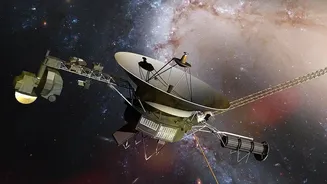
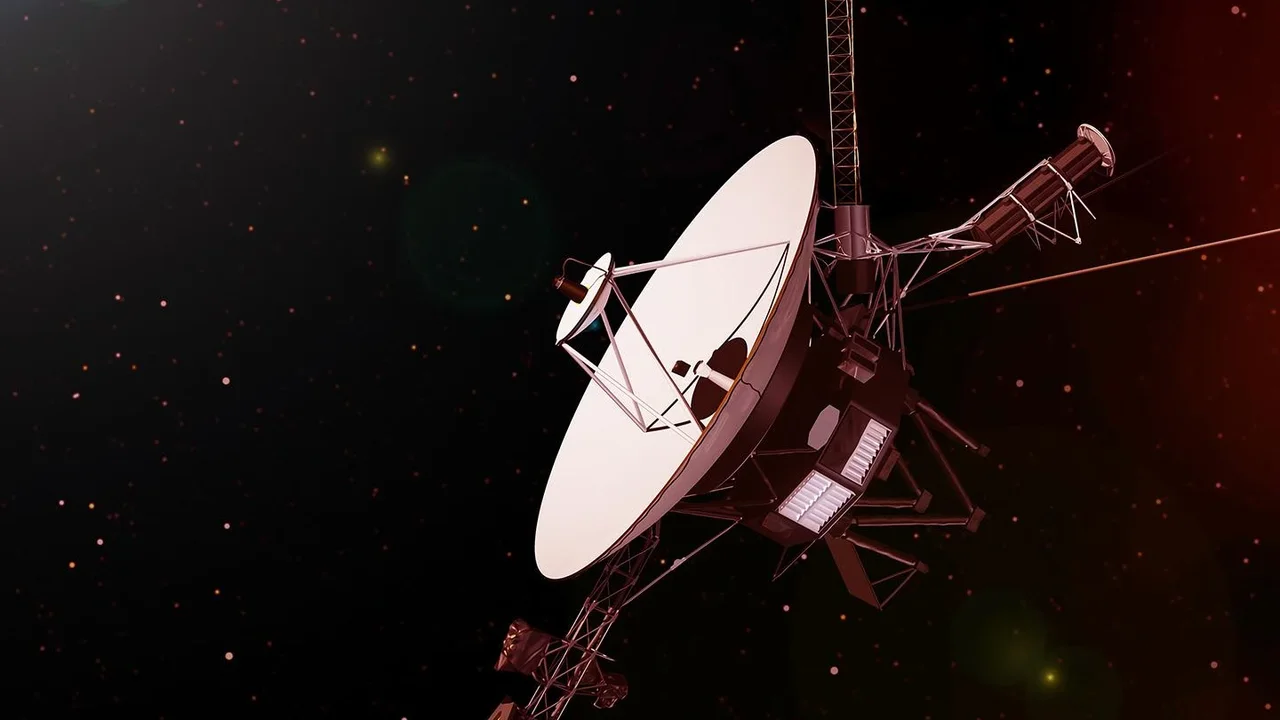
One of the most compelling reasons to focus on Enceladus is accessibility. Drilling through kilometres of solid ice to reach a hidden ocean is a monumental engineering challenge that is currently beyond our capabilities. But Enceladus provides a convenient workaround. The plumes that erupt from its surface are essentially 'free samples' of the ocean below. These geysers shoot material from the ocean directly into space, where a spacecraft can simply fly through and analyse its composition. This is exactly what the Cassini mission did, allowing scientists to discover the ocean's chemical makeup without ever touching the surface. It makes Enceladus one of the most accessible ocean worlds for scientific investigation, offering a direct line of sight into a potentially habitable environment.
The Next Chapter: Future Missions
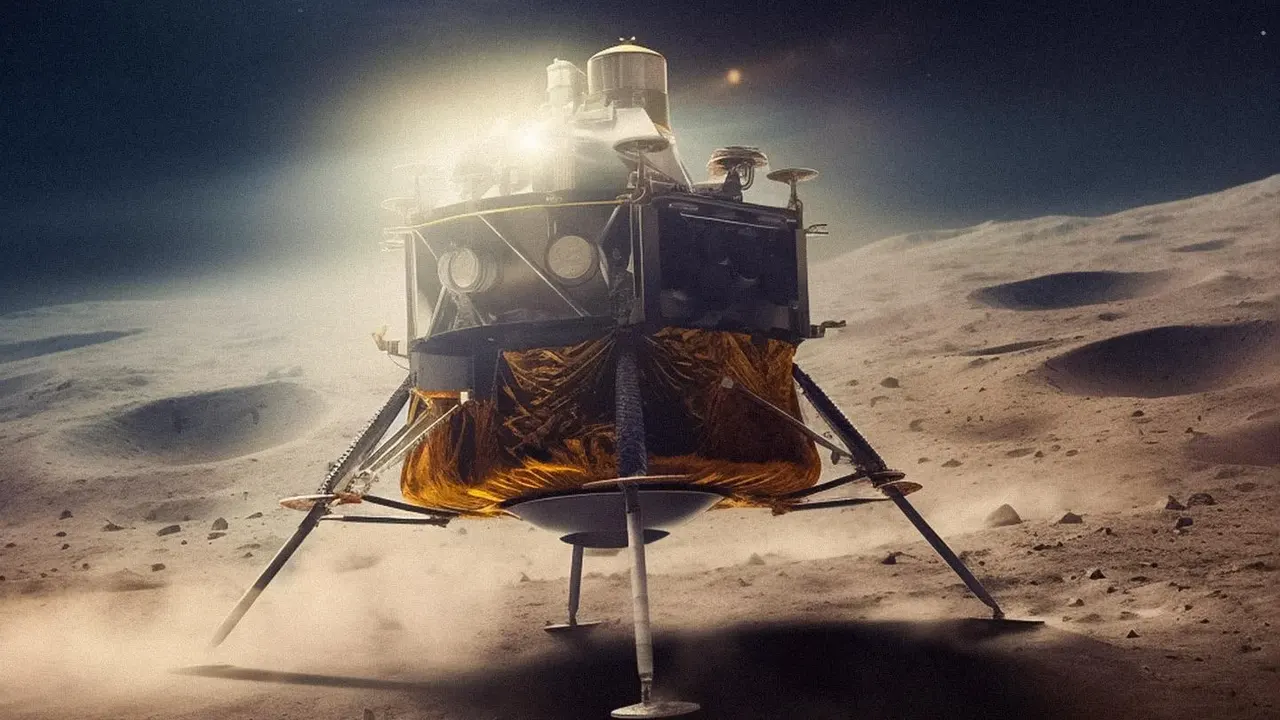
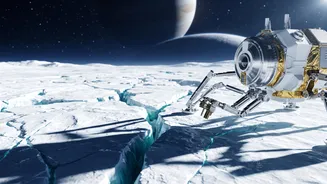
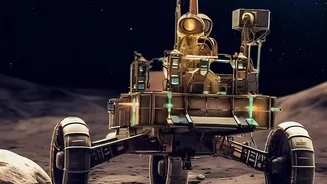
The discoveries made by Cassini were so profound that both NASA and the European Space Agency (ESA) are actively planning return trips. In the United States, a mission concept called the 'Enceladus Orbilander' is a high priority for planetary scientists. This ambitious mission would first orbit the moon to analyse its plumes in far greater detail, then land on the surface to directly search for biosignatures—the chemical traces of life. Similarly, ESA is exploring concepts for its own mission to the Saturn system, with Enceladus identified as a top target for the 2040s and 2050s. These future missions will carry much more advanced instruments designed specifically to answer the ultimate question: is Enceladus inhabited?