







Why Put Fibre First?
Dietary fibre, found mainly in fruits, vegetables, whole grains, and legumes, is a powerhouse nutrient. A high-fibre diet is celebrated for its ability to aid digestion and prevent constipation. But its benefits go much further. It can help you maintain
a healthy weight by making you feel fuller for longer. Soluble fibre, found in oats, beans, and apples, plays a role in lowering cholesterol levels and can slow the absorption of sugar, which helps in managing blood sugar. Many fibre-rich foods also feed the good bacteria in your gut, supporting overall wellness. Given these benefits, making fibre a priority is a clear win for your health.
The Satisfaction Factor
The challenge for many isn't knowing that fibre is good for them, but sticking with it. The perception of high-fibre food is often one of mushy bowls and dry crackers. But a truly satisfying meal engages all your senses. This is where texture and colour come in. When food has visual appeal and an interesting mouthfeel, it becomes more enjoyable. Combining different textures—like the crunch of nuts with the creaminess of yoghurt—makes eating a more dynamic and memorable experience. This sensory engagement is what elevates a meal from simple fuel to a genuinely satisfying dish, making healthy eating a pleasure rather than a chore.
Mastering the Mix of Textures
Texture is a critical, though often overlooked, component of food satisfaction. It can be the difference between a meal you tolerate and one you crave. A variety of textures keeps your palate engaged. Think about combining creamy, crunchy, chewy, soft, and crisp elements in a single dish. A salad, for example, is instantly more exciting with crunchy croutons, creamy avocado, and firm chickpeas. A simple bowl of dal can be transformed with a topping of crispy fried onions or crunchy roasted seeds. Even breakfast gets an upgrade: instead of plain oatmeal, try adding chewy dried fruit, crunchy nuts, and a sprinkle of seeds. These textural contrasts don't just add interest; they can signal freshness and quality to our brains.
Eating a Rainbow of Colour
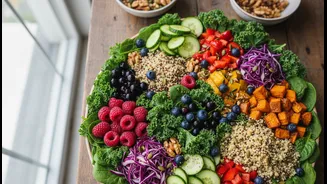
We eat with our eyes first, and a colourful plate is inherently more appealing. Different colours in fruits and vegetables are often linked to the presence of different vitamins, minerals, and antioxidants. A vibrant meal is a visual cue that you're getting a wide array of nutrients. Imagine a bland, beige plate versus one filled with the deep green of spinach, the bright red of bell peppers, the orange of carrots, and the purple of beetroot. The second option is not only more exciting to look at, but it also promises a more complex flavour experience. Building your meals around a variety of colourful whole foods—like in a vegetable sambar, a mixed bean salad, or a quinoa bowl with roasted vegetables—is an easy way to ensure both nutritional diversity and visual appeal.
Building the Perfect Fibre-First Plate
Applying these principles is simple. For any meal, start with a whole-food, high-fibre base, then add layers of texture and colour. For breakfast, consider a bowl of ragi or oat porridge. Top it with creamy yoghurt, the crunch of almonds or walnuts, the chewiness of dates, and the vibrant colour of pomegranate seeds or bananas. For lunch, a whole wheat roti can be paired with a colourful vegetable curry and a side of crunchy salad. A satisfying dinner could be a hearty bowl of rajma or chana masala, served with brown rice and a side of steamed green beans. Think of it as a formula: Fibre Base (legumes, whole grains) + Colourful Veggies + Textural Toppings (nuts, seeds, herbs). This approach makes creating satisfying, fibre-rich meals an intuitive and creative process.