

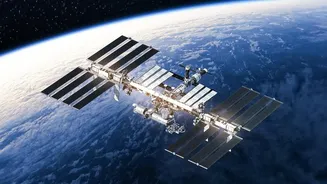
An Era Ends, An Industry Begins
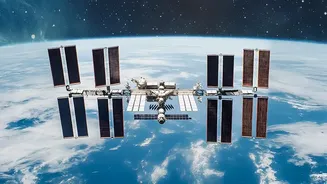
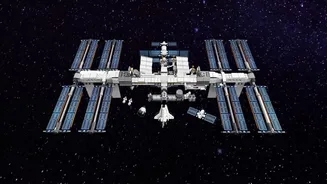
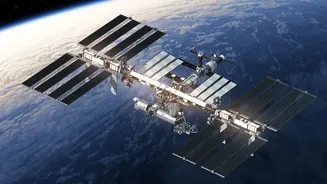
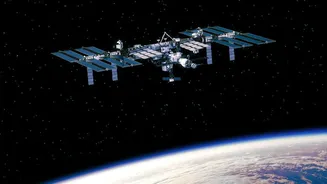
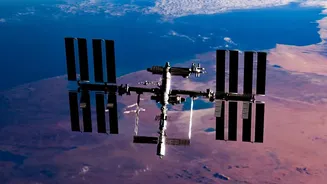
The International Space Station (ISS), a monumental achievement of global cooperation involving 15 countries, is slated for decommissioning around 2030. For a quarter of a century, it has been the primary center for microgravity research and human spaceflight
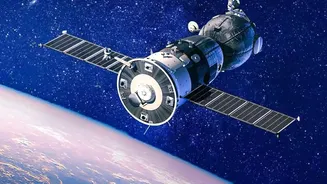
operations. Its retirement, however, isn't an end but a catalyst. NASA is intentionally stepping back from owning and operating hardware in low-Earth orbit (LEO) to become just one of many customers in a new, commercially driven space economy. This strategic pivot, managed through initiatives like the Commercial LEO Destinations (CLD) program, is designed to prevent a gap in US human presence in space and stimulate a robust market for orbital services. By funding the initial development of private stations, NASA is seeding an entire industry, hoping to transition from being a landlord in orbit to a tenant.
The New Architects of Orbit
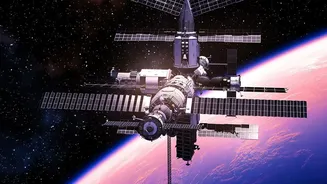
Several key players have emerged, each with a unique vision for the future of orbital habitats. Axiom Space is taking a phased approach, planning to first attach its modules to the ISS starting as early as 2027 before separating to become a free-flying station. Vast is developing Haven-1, a single-module station aiming to be the first standalone commercial platform in orbit, with a launch targeted for early 2027. Meanwhile, a partnership between Blue Origin and Sierra Space is developing Orbital Reef, envisioned as a 'mixed-use business park' in space. Sierra Space is contributing its Large Integrated Flexible Environment (LIFE) modules—inflatable habitats that launch in a compact form and expand to the size of a three-story building in orbit. Another venture, Starlab from Voyager Space and Airbus, is designing a station that could launch on a single heavy-lift rocket.
More Than Just a Laboratory
These next-generation stations are being designed for a much broader range of activities than the research-focused ISS. While science will remain a core function—with dedicated facilities for biotechnology, pharmaceutical development, and materials science—the business model is far more diverse. Companies see a future in in-space manufacturing, producing items like high-purity fiber optics or 3D-printed human organs that are difficult or impossible to make in Earth's gravity. Furthermore, these destinations are being built to accommodate space tourism, offering private citizens the chance to live and work in orbit. Other potential markets include media production, advertising, and serving as a staging point for deeper space missions. This diversification is critical for creating a sustainable economic ecosystem in low-Earth orbit that doesn't rely solely on government contracts.
The Challenge of Building in a Vacuum
The path to a commercialized LEO is fraught with immense challenges. The financial hurdles are steep, with development costs running into the billions, and companies must create viable business models to ensure long-term profitability. Technical challenges abound, from ensuring the reliability of life support systems to protecting inflatable habitats from micrometeoroid impacts. There is also the critical issue of timing. A significant gap between the ISS retiring and the new commercial stations becoming fully operational could leave the US without a human presence in LEO for the first time in decades, a scenario with geopolitical implications, especially as China's Tiangong space station is already operational and expanding. Recent policy shifts and funding uncertainties within NASA's CLD program have also added complexity, though the agency has reaffirmed its commitment to the commercial model.