

The Heart of the Harvest
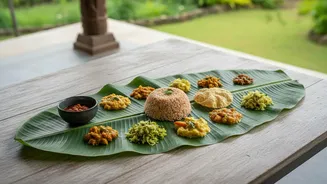
Sadhya, which means 'banquet' in Malayalam, is the culinary centrepiece of Onam, Kerala's most important festival. This elaborate, multi-course vegetarian meal is traditionally served as lunch on a banana leaf, featuring a stunning variety of anywhere
from 20 to over 30 dishes. It's a celebration of the harvest and a symbol of prosperity and equality, reflecting the spirit of the legendary King Mahabali, whose return is honoured during the festival. The meal is designed to be a harmonious blend of all six tastes—sweet, salty, sour, pungent, bitter, and astringent—creating a balanced and deeply satisfying gastronomic experience.
The Banana Leaf Canvas
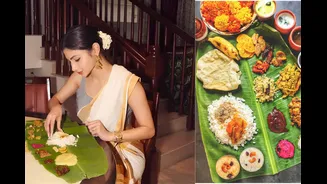
The Sadhya experience begins before the first bite is taken. A fresh banana leaf is laid horizontally before each guest, with the narrow end always pointing to the left. This isn't just for aesthetics; tradition dictates this placement. The leaf acts as a plate, and its large surface is methodically mapped out. The upper half is reserved for smaller portions of side dishes, pickles, and snacks, while the lower, wider half is for the rice and main curries. Serving food on a banana leaf is also eco-friendly, and it's believed that when warm food is placed on the leaf, it absorbs natural antioxidants called polyphenols.
A Symphony of Flavours
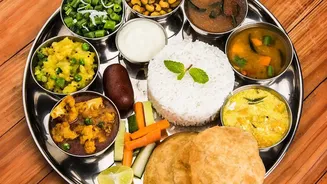
The sheer number of dishes can be overwhelming, but they fall into distinct categories. Accompaniments like Sharkara Upperi (jaggery-coated banana chips), crisp Pappadam, and a range of pickles (Achar) like mango and lime are served first on the top left. Then come the vegetable preparations. Avial is a standout mixed vegetable dish in a thick coconut and yoghurt gravy. Thoran is a dry stir-fry of vegetables with grated coconut, while Olan is a milder stew of ash gourd in coconut milk. Pachadi and Kichadi are refreshing yoghurt-based dishes, one slightly sweet and the other tangier.
The Main Course Progression
Once the side dishes are arranged, a mound of Kerala's distinctive red Matta rice is served in the centre of the leaf's lower half. The meal then proceeds in courses, with different curries ladled over the rice. The first course is Parippu, a simple moong dal curry, served with a spoonful of ghee. This is followed by Sambar, a robust lentil and vegetable stew. Next comes Rasam, a tangy and peppery soup that aids digestion, and sometimes Pulissery, a tart yoghurt curry. Each stage is meant to be mixed with rice and savoured.
The Sweet Conclusion
No Sadhya is complete without Payasam, the traditional dessert. Often, two or three varieties are served. Ada Pradhaman, made with rice flakes, jaggery, and coconut milk, is a classic. Palada Payasam is a creamy, milk-based pudding with rice flakes. These are served directly on the leaf, and it's common practice to mash a small banana into the payasam to add another layer of flavour and texture. The feast often concludes with a sip of buttermilk to cleanse the palate and aid digestion.
The Art of Eating Sadhya
Traditionally, Sadhya is eaten with the right hand, without any cutlery. This is not only practical for mixing the rice and curries but is also seen as a way to connect with the food. The proper etiquette is to start with the rice and parippu, then move through the sambar and other curries, using the side dishes to create different flavour combinations with each bite. At the end of the meal, showing your satisfaction is key. You should fold the banana leaf in half towards you, which signals that you thoroughly enjoyed the feast. Folding it away from you is considered a sign of dissatisfaction.