





Rule 1: Labelling Is Not Optional
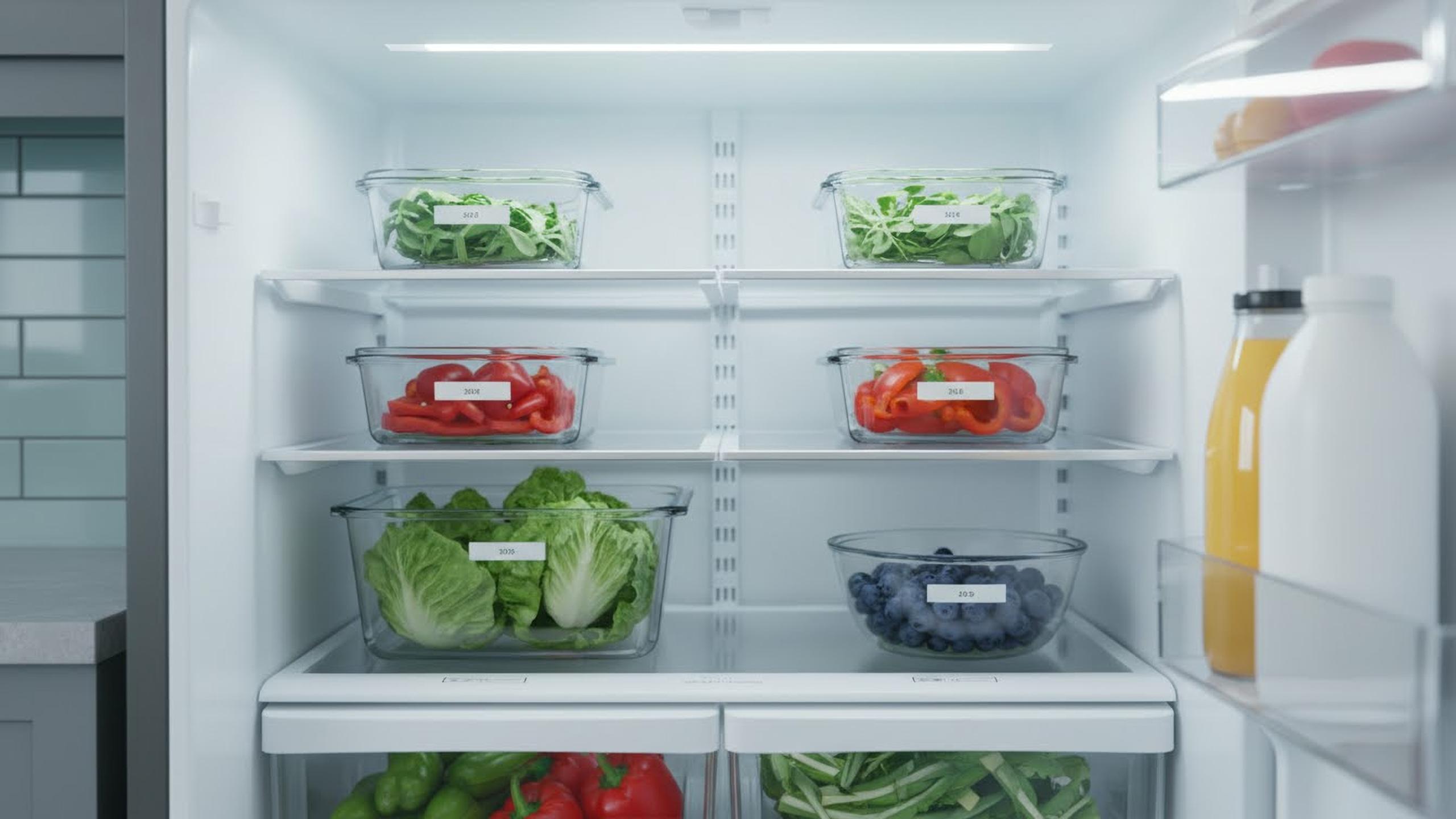
The foundation of any successful shared-fridge system is the label. Every item that enters the fridge must be clearly marked with your name. This single act prevents the classic, 'I thought it was communal!' mix-up. Encourage the use of permanent markers
and durable tape that won’t fall off in the cold. For added clarity, also write the date the item was placed in the fridge. This helps everyone, not just the owner, identify what's fresh and what might be entering science-experiment territory. Think of it as a passport for your food; without it, it has no rights in this communal space.
Rule 2: Understand Date Labels
Confusion over date labels contributes to a significant amount of food waste. It’s crucial for everyone sharing the space to understand what they mean. In India, the FSSAI has clarified these terms. 'Best Before' indicates peak quality; the food is likely still safe to eat after this date, but the taste or texture might decline. 'Use By' or 'Expiry' dates, however, relate to safety. These are found on more perishable items like dairy and meat. Consuming items past their 'Use By' date is a risk. The 'Sell By' date is for retailers to manage inventory and can generally be ignored by the consumer. Establishing this shared knowledge prevents unnecessary disposal of perfectly good food.
Rule 3: Establish Clear Zones
To prevent a daily game of food Tetris, assign specific areas to each person. This could be a designated shelf or a particular section of a shelf. One effective method is to create symmetry, dividing the fridge down the middle if there are two users, or by shelf for three or more. The door can be designated as a communal space for shared items like condiments, milk, or butter. This prevents shared staples from cluttering up personal shelf space. Likewise, crisper drawers can be assigned to individuals. Having defined zones reduces clutter and the frustration of having to move someone else's meal to get to your own.
Rule 4: The Leftover Lifecycle
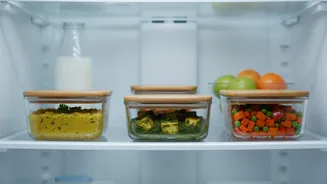
Leftovers are the number one cause of fridge friction. Institute a strict 48-hour rule: if you bring in or create leftovers, they must be consumed or removed within two days. Anything left after that time is considered abandoned and can be thrown out. This policy must be applied universally, with no exceptions. For containers, they should be fully sealed to prevent odours and spills. Don't leave a salad or pasta uncovered. If you are leaving leftovers from a group meal for others, send a notification so people know they are available to be eaten.
Rule 5: The Weekly Purge Is Sacred
Designate a specific time each week for a mandatory fridge clean-out. Friday afternoon is often a good choice, as people prepare to leave for the weekend. During this time, every person is responsible for removing their old food. Any unlabelled items or food that has clearly expired should be disposed of without a trial. A schedule for a deeper clean—wiping down shelves and drawers—should also be created. This shared responsibility ensures that the cleaning duty doesn't repeatedly fall on one person, a common source of resentment.
Rule 6: Clean Your Own Mess, Immediately
This rule is simple but often ignored: if you spill something, clean it up right away. Don't leave a sticky drip of sauce or a puddle of milk for someone else to deal with. These small messes can quickly make a shared appliance feel unhygienic and unpleasant for everyone. Keeping cleaning supplies near the fridge is a great way to encourage this behaviour. A small act of immediate tidiness goes a long way in maintaining a respectful and clean environment for all users.