



The Ancient Spiritual Roots
Yoga's origins trace back more than 5,000 years to northern India. Evidence from the Indus Valley Civilization suggests early forms of meditative postures. The first written references appear in the Vedas, ancient sacred texts dating back to around 1500
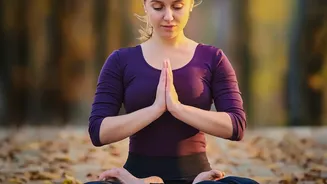
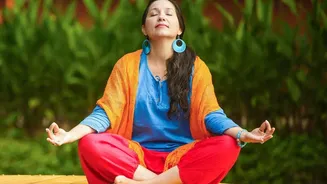
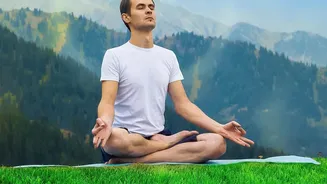
BCE. In these early stages, yoga was not about physical fitness. It was an intricate spiritual discipline focused on meditation, breath control (pranayama), and connecting with the divine. The practice was primarily a way for priests and ascetics to achieve a state of harmony between the mind and body, with the ultimate goal of liberation or 'moksha'. The physical postures, or asanas, were just one small part of a much larger system aimed at spiritual growth and self-realisation.
Patanjali and the Codification of Yoga
A pivotal moment in yoga's history came around the 2nd century BCE with the sage Patanjali. He compiled and systematized existing yogic knowledge into the Yoga Sutras, a collection of 196 concise aphorisms. This text provided a philosophical foundation for the practice and is often why Patanjali is called 'the father of modern yoga'. The Sutras introduced the concept of the 'Eight Limbs of Yoga', a comprehensive guide to living a yogic life. These limbs cover everything from ethical principles (Yamas) and personal observances (Niyamas) to concentration (Dharana) and enlightenment (Samadhi). Asana, the physical practice, is only the third limb, highlighting that the physical aspect was intended as preparation for deeper states of meditation.
The Journey to the West
For centuries, yoga remained primarily an Indian spiritual tradition. Its journey to the West began in earnest in the late 19th and early 20th centuries. Swami Vivekananda is widely credited with making a major impression at the 1893 Parliament of the World's Religions in Chicago, where he introduced Hindu philosophy and yoga to a Western audience. This sparked significant interest. Following in his footsteps, other gurus like Paramahansa Yogananda, who arrived in the US in 1920, helped popularize the practice. Yogananda's book 'Autobiography of a Yogi' reached millions, further embedding yoga's spiritual teachings in the Western consciousness. These early ambassadors focused on yoga's philosophical and meditative aspects, not just the physical postures.
The Modern Postural Boom
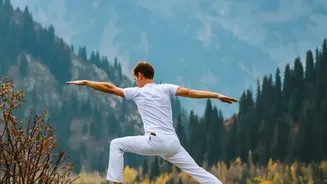
The mid-20th century marked a significant shift towards the physical side of yoga. Teachers like B.K.S. Iyengar and K. Pattabhi Jois, both students of the influential T. Krishnamacharya, developed dynamic, physically demanding styles of yoga. Iyengar, in particular, wrote 'Light on Yoga' in 1966, a detailed guide to asanas that is still considered a foundational text. These new forms, like Iyengar Yoga and Ashtanga Vinyasa Yoga, made the practice more accessible as a form of exercise. As Westerners became more interested in physical fitness and stress relief, this emphasis on asana resonated deeply. Yoga studios began to open, first with Indra Devi's in Hollywood in 1947, and the practice started to look more like the yoga we know today.
A Global Lifestyle Brand
In the 21st century, yoga has exploded from a niche spiritual practice into a multi-billion-dollar global industry. The business now encompasses classes, teacher training, clothing like yoga pants, high-tech mats, and wellness retreats. This commercialization has made yoga incredibly accessible but has also sparked debate. Critics argue that the focus on 'yoga fashion' and the practice as a mere workout can dilute its spiritual essence and disconnect it from its Indian roots. The practice has been adapted, modified, and packaged for mass consumption, leading to questions about authenticity and cultural appropriation. Today, yoga exists in a dual state: for some, it is a path to enlightenment; for others, it is a popular and effective way to stay fit and manage stress.